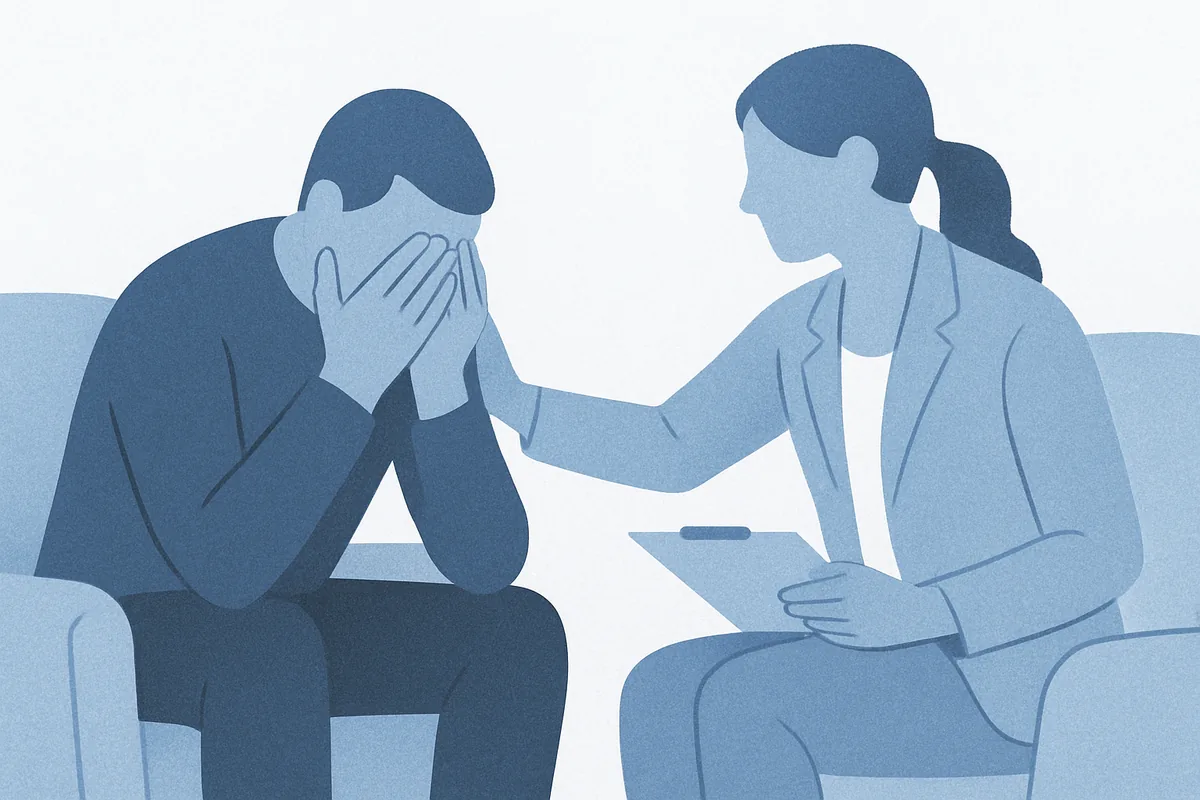
- PTSD is a clinical diagnosis defined by four symptom clusters (intrusion, avoidance, negative changes in thinking and mood, and heightened arousal) persisting for more than one month after a traumatic event, as specified in DSM-5.
- Globally, approximately 3.9% of people will develop PTSD at some point in their lifetime, according to the World Health Organization (2023); women are approximately twice as likely as men to receive the diagnosis.
- A normal acute stress reaction after trauma is not PTSD: research shows 14.2% of trauma-exposed individuals met criteria for acute stress disorder at two weeks post-trauma, while only 9.6% still met PTSD criteria at nine weeks, meaning most acute reactions resolve on their own.
- In Dubai's multicultural expat population, post-traumatic distress is frequently unrecognised because it can present through physical complaints, reduced functioning at work, or social withdrawal rather than the explicit psychological symptoms standard screening tools look for.
- PTSD is treatable: evidence-based therapy that targets traumatic memory processing and reduces avoidance behaviour produces measurable symptom reduction, and the first step is an accurate clinical assessment.
Globally, post-traumatic stress disorder (PTSD) affects an estimated 3.9% of the world population at some point during their lifetime, according to the World Health Organization (2023). If you are living in Dubai and someone has recently used the word "PTSD" to describe what you or a family member is going through, you may be looking for a clear explanation that does not read like a textbook. That is exactly what this article provides. We will explain what PTSD actually is in clinical terms, what it is not, the kinds of events that cause it, and how the diagnosis is made, with particular attention to the ways that post-traumatic stress shows up in Dubai's multicultural, high-pressure expat setting.
At CAYA World, we see people from a wide range of backgrounds who have been carrying the effects of traumatic experiences for months or years before they find the right language to describe what is happening. Getting the definition right is the first step toward getting the right support.
What does PTSD actually mean?
PTSD stands for post-traumatic stress disorder. The name tells you three things: it follows a traumatic event, it involves stress symptoms, and it meets the threshold of a clinical disorder. Each of those three elements matters.
"Post-traumatic" means the condition arises after exposure to a traumatic event. "Stress symptoms" refers to a specific, recognisable set of responses rather than a vague sense of being upset. And "disorder" means the symptoms are severe enough, and persistent enough, to interfere significantly with daily life: relationships, work, sleep, physical health, or the ability to feel present in ordinary moments.
The clinical definition comes from the Diagnostic and Statistical Manual of Mental Disorders, Fifth Edition (DSM-5), published by the American Psychiatric Association. DSM-5 organises PTSD into four distinct symptom clusters, each of which must be present for a diagnosis to be made.
The four DSM-5 symptom clusters
| Cluster | What it involves | Common examples |
|---|---|---|
| Intrusion | Involuntary re-experiencing of the traumatic event | Flashbacks, distressing nightmares, intense distress when reminded of the event |
| Avoidance | Persistent efforts to avoid reminders of the trauma | Avoiding people, places, conversations, or feelings connected to the event |
| Negative alterations in cognition and mood | Persistent negative beliefs, distorted blame, emotional numbness | "I am permanently broken," inability to feel positive emotions, detachment from others |
| Alterations in arousal and reactivity | Heightened nervous system activation | Irritability or angry outbursts, difficulty concentrating, hypervigilance, exaggerated startle response, disturbed sleep |
For a diagnosis of PTSD, symptoms must be present from all four clusters, must last for more than one month, and must cause significant impairment or distress. The diagnosis also requires that the symptoms are not attributable to medication, substance use, or another medical condition. DSM-5 Criterion A specifies that the individual was exposed to actual or threatened death, serious injury, or sexual violence, either directly or indirectly (for instance, by witnessing it happening to someone else, learning it happened to someone close, or being repeatedly exposed to graphic details of trauma as part of a professional role).
One important clarification: PTSD is not simply "being very upset after something bad happened." Many people experience intense distress, grief, or anxiety after a difficult event without meeting the criteria for PTSD. The distinction matters clinically, because the treatment for PTSD specifically addresses how traumatic memory is stored and processed, and that treatment differs from general support for grief or situational stress.
What kinds of events cause PTSD in Dubai and beyond?
There is no single type of event that causes PTSD, and the severity of the event does not always predict who develops the disorder. Two people can experience the same accident: one recovers fully within weeks, while the other develops PTSD that persists for years. Individual biology, prior trauma history, the presence or absence of social support immediately after the event, and whether the trauma was one-off or ongoing all influence outcomes.
The DSM-5's Criterion A covers a broader range of experiences than many people realise. Commonly recognised causes include:
- Road traffic accidents, which are one of the more frequent trauma presentations we see at CAYA World, given the volume of driving in the UAE
- Physical assault, including domestic violence
- Sexual assault or abuse
- Witnessing a sudden or violent death
- Life-threatening medical procedures or diagnoses
- Disasters, whether natural or structural
- Combat and conflict exposure
- Childhood abuse or neglect
- Workplace incidents, including in high-risk professions
In Dubai's expat population specifically, we also regularly see post-traumatic presentations following experiences that do not make headlines: the sudden loss of employment and visa status, a difficult childbirth experience, medical emergencies far from family, or the cumulative weight of living in a high-performance environment while simultaneously managing the stresses of relocation and cultural adjustment. These experiences may not match the cultural image of "trauma," but they can meet Criterion A when they involved a credible threat to safety or when they were experienced as overwhelming and inescapable at the time.
Research from the UAE context is informative, even where it focuses on specific populations. A 2021 study published via PMC/NCBI found that during the early COVID-19 pandemic, approximately 25% of foreign workers in the UAE screened positive for probable PTSD. This is a specific sample and not a general-population figure, but it illustrates that PTSD risk in Dubai is real and is not confined to people who have experienced conventional high-danger events. Social dislocation, uncertainty, and loss of control are legitimate stressors that, in the right circumstances, can produce the full clinical picture of post-traumatic stress disorder.
How is PTSD different from a normal stress reaction?
One of the questions we hear most often at CAYA World is some version of: "Is this PTSD, or is it just a normal reaction?" It is a reasonable question. After a frightening or distressing event, the human nervous system is supposed to activate. Heightened alertness, difficulty sleeping, intrusive thoughts, and emotional volatility in the days after a traumatic experience are not signs of pathology. They are signs that the brain is doing its job of processing a threat.
The clinical difference between a normal acute stress reaction and PTSD is primarily a matter of time and persistence.
The one-month threshold
Most people who experience a traumatic event will have significant symptoms in the first two to four weeks. Research published in PMC/NCBI (2017) found that 14.2% of trauma-exposed individuals met criteria for acute stress disorder at two weeks post-trauma, while only 9.6% still met PTSD criteria at nine weeks. This is a significant finding: it means that many people who feel acutely distressed after trauma will recover naturally, without meeting the full criteria for a longer-term disorder. The DSM-5's one-month minimum duration for a PTSD diagnosis reflects this recovery window deliberately.
What distinguishes PTSD from a normal reaction, then, is that the symptoms do not fade with time and do not respond to ordinary support and rest. Instead, they become entrenched. The nervous system stays on high alert. Avoidance of reminders expands to limit more and more of the person's life. Negative beliefs about the self and the world solidify rather than soften. Sleep fails to restore. And functioning at work, in relationships, or in basic daily tasks becomes increasingly difficult.
Why Dubai's context complicates recognition
In Dubai's fast-moving professional environment, there is strong cultural pressure to stay functional and project stability. This pressure can delay recognition of PTSD significantly. People may attribute poor sleep, irritability, and difficulty concentrating to work stress. They may increase alcohol use, throw themselves into longer working hours, or avoid the social contexts that remind them of what happened, without connecting those choices to a traumatic event. Research on mental health stigma and help-seeking in the UAE, published via PMC (2022), confirms that both public stigma and self-stigma remain significant barriers to care in the region.
There is also a cultural dimension to how distress is expressed. In many communities represented in Dubai, post-traumatic symptoms may present primarily through physical complaints: headaches, gastrointestinal problems, chronic pain, and fatigue. A person may not describe themselves as anxious or traumatised but will notice that their body has stopped working the way it used to. Recognising this somatic expression as a potential marker of PTSD rather than a purely physical condition is an important part of good clinical care in a multicultural setting.
If you are noticing persistent changes in how you function, how you sleep, and how you relate to people around you following a distressing event, speaking with a clinical psychologist is a reasonable next step. At CAYA World, our team offers confidential consultations to help you work out whether what you are experiencing is PTSD, a related condition, or something else entirely. You can reach us by WhatsApp or phone to ask a question before committing to a full assessment.
What is PTSD in Dubai, and how is it diagnosed?
A diagnosis of PTSD in Dubai follows the same clinical framework used internationally: the DSM-5 criteria described above. The difference in the Dubai context is not the diagnostic standard but the access point and the cultural factors that shape how a person arrives at (or avoids arriving at) a clinical assessment.
At CAYA World, a clinical assessment for PTSD begins with a structured clinical interview. The psychologist will ask about the traumatic event or events, the timeline of symptoms, how symptoms affect daily functioning, and whether there are other conditions that might explain the presentation. Validated screening instruments such as the PCL-5 (PTSD Checklist for DSM-5) are commonly used alongside the clinical interview. A PCL-5 total score of 31 or above is used as a threshold for probable PTSD in research and clinical settings, providing an objective reference point to complement the clinician's judgment.
Who makes the diagnosis?
In Dubai, a PTSD diagnosis is made by a licensed clinical psychologist or psychiatrist. At CAYA World, our licensed psychologists are trained to conduct thorough trauma assessments that account for cultural context, language, and the way distress is expressed across different communities. We work closely with psychiatry when a combined psychological and medical approach is indicated, for example when sleep disruption is severe or when co-occurring depression requires medication evaluation.
What the diagnostic conversation covers
The clinical interview for PTSD typically explores several areas beyond symptom checklists. It examines the specific nature of Criterion A exposure (what happened, when, and in what relationship the person stood to it), the onset and duration of symptoms, the degree to which symptoms are triggered versus constant, the functional impact across different domains of life, and the presence of any co-occurring conditions. Anxiety and depression commonly occur alongside PTSD, and substance use can develop as an attempt to manage intrusive memories or hyperarousal. A thorough assessment considers all of these factors before arriving at a diagnosis.
In Dubai's expat population, the assessment also takes into account the person's access to social support: whether family is nearby, whether the person has community connections, and whether there are active stressors (such as visa uncertainty or workplace conflict) that are maintaining symptoms independently of the original trauma. These contextual factors shape not just the diagnosis but the treatment plan that follows.
A 2024 study published in PLOS ONE found that 40.6% of UAE university students screened at risk for PTSD. This is a screening-based estimate in a specific student sample, not a general-population prevalence figure, but it highlights that post-traumatic stress is not a rare or unusual presentation in the UAE and that structured assessment is both available and necessary.
Wondering if It's Time to Talk to Someone?
Our specialist team at CAYA World offers comprehensive assessment and evidence-based treatment, conducted from our clinic in Palm Jumeirah, Dubai.
How does PTSD differ from acute stress disorder and complex PTSD?
Two conditions are frequently confused with PTSD, and understanding the distinctions helps clarify what a diagnosis actually means.
Acute stress disorder
Acute stress disorder (ASD) is the diagnosis that applies when PTSD-like symptoms appear within three days of a traumatic event and persist for between three days and one month. The symptom picture overlaps significantly with PTSD: intrusion symptoms, negative mood, dissociation, avoidance, and arousal. The critical difference is time. If symptoms resolve within one month, ASD is the appropriate designation. If they persist beyond one month, the diagnosis shifts to PTSD.
ASD is not a lesser version of PTSD, nor is it a guaranteed precursor. Many people who meet ASD criteria recover fully. The data cited above (14.2% meeting ASD criteria at two weeks, 9.6% meeting PTSD criteria at nine weeks) illustrates this clearly: the majority of people with acute post-traumatic stress do not go on to develop chronic PTSD. Early psychological support after a traumatic event can reduce that transition rate further.
Complex PTSD
Complex PTSD (C-PTSD) is a related but distinct condition recognised in the International Classification of Diseases, 11th edition (ICD-11). It shares the core PTSD symptom clusters but includes additional features that reflect the effects of prolonged, repeated, or interpersonal trauma: severe disturbances in emotional regulation, a persistently damaged sense of self, and profound difficulties in sustaining relationships. C-PTSD typically arises from experiences such as childhood abuse, prolonged domestic violence, or repeated interpersonal trauma rather than a single-incident event.
The distinction between PTSD and C-PTSD has important clinical implications, because the treatment approach requires some adaptation: the sequencing of interventions, the weight given to stabilisation work, and the depth of attention to identity and relational patterns all differ. For a detailed look at how complex trauma presents and what treatment involves, our article on complex PTSD therapy in Dubai covers this in full. This article focuses on standard PTSD, which is the appropriate starting point for most people who have experienced a single traumatic event or a bounded traumatic period.
It is also worth noting that PTSD is not the same as general anxiety disorder, depression, or grief, even though these conditions frequently co-occur with it. The mechanism that needs to be addressed in PTSD, the way traumatic memory is encoded and retrieved, is specific and requires a specific clinical response.
What does recovery from PTSD look like?
PTSD is treatable. This is one of the most important facts to communicate clearly, because one of the cognitive hallmarks of PTSD is the belief that things will not and cannot change. That belief is itself a symptom, not a realistic appraisal of the situation.
Evidence-based treatment for PTSD works by addressing traumatic memory directly. The general mechanism involves helping the brain process the traumatic event in a way that integrates it into ordinary memory rather than keeping it in a state of constant retrieval. Alongside this memory-processing work, treatment addresses the avoidance behaviours that have developed around the trauma, because avoidance maintains symptoms by preventing the nervous system from ever learning that the threat is no longer active. Rebuilding a sense of safety in the body and in relationships is also a central element of effective PTSD therapy.
The VA National Center for PTSD, drawing on NESARC-III data (2022), cites a lifetime PTSD prevalence of approximately 6.1% in US adults, with significant proportions achieving recovery through structured treatment. Women are approximately twice as likely as men to develop PTSD following trauma exposure (WHO/APA, 2023), a pattern that holds across cultures and that clinical care should account for.
What to expect in the early stages of therapy
In the first phase of PTSD therapy, the clinical focus is not immediately on the traumatic event itself. Most evidence-based approaches begin with stabilisation: building the person's capacity to manage distressing emotional states before the deeper processing work begins. This phase might address sleep, identify avoidance patterns, and introduce strategies for managing physiological arousal. For someone in Dubai who has been holding the effects of trauma alone while trying to stay functional professionally, this initial phase of therapy often produces immediate and tangible relief, even before the core trauma work begins.
What good treatment actually addresses
Effective PTSD treatment addresses several specific targets:
- Reducing the frequency and intensity of intrusive memories and nightmares
- Reducing the avoidance behaviours that have shrunk the person's life
- Correcting the distorted beliefs that have developed about the self, other people, and the world
- Bringing the hyperarousal of the nervous system back toward a regulated baseline
- Rebuilding the person's capacity for meaningful connection with other people
At CAYA World, our approach to trauma therapy uses cognitive-behavioural principles as the clinical foundation. For a full account of the treatment approaches our team uses and how they are sequenced, our trauma therapy service in Dubai describes the process in detail. The article explains what assessment involves, what a course of therapy typically looks like, and what you can expect at each stage.
Recovery does not mean forgetting what happened. It means that the memory of the traumatic event is no longer constantly intruding, no longer commanding the nervous system's full alarm response, and no longer organising the person's choices and relationships around avoidance. People who have completed effective PTSD treatment describe being able to think about what happened without being overwhelmed by it. That is a concrete, measurable outcome, and it is achievable.
For further reading on the evidence base for PTSD treatment, the guide to trauma therapy in Dubai on this site explains what peer-reviewed research says about treatment effectiveness and what to look for when choosing a trauma therapist.
Frequently Asked Questions About PTSD in Dubai
The key clinical markers are duration and functional impact. Intense distress in the first weeks after a traumatic event is a normal acute reaction, not PTSD. PTSD is the appropriate designation when four specific symptom clusters (intrusion, avoidance, negative changes in thinking and mood, and heightened arousal) persist beyond one month and interfere significantly with daily life. If you are more than a month past the event and still struggling to sleep, feeling on edge, avoiding reminders, and finding that your ability to work or connect with people has not returned to baseline, a clinical assessment is the right next step.
Yes. DSM-5 includes a specifier called "delayed expression" for cases where the full diagnostic criteria are not met until at least six months after the traumatic event. In some cases, symptoms may have been present at a sub-threshold level for years before reaching clinical severity, often triggered by a life change, a secondary stressor, or simply the accumulated weight of carrying unprocessed traumatic material. This delayed presentation is not rare, and it is not a sign that the person is being dramatic or exaggerating. At CAYA World, we regularly assess people whose trauma exposure occurred years or even decades before they sought help.
PTSD looks meaningfully different across individuals, cultures, and life stages. In Dubai's multicultural population, post-traumatic distress frequently presents through physical symptoms rather than explicit psychological complaint: chronic pain, fatigue, gastrointestinal problems, or persistent headaches that do not have a clear medical cause. Children may express PTSD through play re-enactment or regressive behaviour rather than verbal description. Men may present primarily with irritability and risk-taking rather than the tearfulness and withdrawal more commonly associated with trauma. A culturally informed clinical assessment accounts for these differences and does not require a person to present in any particular way.
Yes, though the clinical picture depends on how the experience meets DSM-5 Criterion A. Events involving a credible threat to life or physical integrity, even when no physical harm occurred, can qualify: a terrifying medical procedure, a difficult childbirth, or a coercive relationship in which physical threat was real, even if injury did not result. Emotional abuse and chronic interpersonal stress that did not involve physical danger may produce significant trauma-like symptoms but are more likely to be captured under the complex PTSD (C-PTSD) framework rather than standard PTSD. A clinical assessment will clarify which diagnosis fits and what treatment approach follows.
In Dubai, PTSD therapy is provided by licensed clinical psychologists at DHA-regulated clinics. When looking for a therapist, confirm that they are licensed, that they have specific training in trauma-focused therapy, and that the clinic conducts a proper clinical assessment before beginning treatment rather than moving straight to sessions. At CAYA World, the process starts with a structured assessment appointment where the psychologist establishes the diagnosis, identifies any co-occurring conditions, and discusses a treatment plan specific to your situation. Treatment typically runs across multiple phases, beginning with stabilisation and progressing to memory processing work. Most people begin noticing meaningful change within the first eight to twelve weeks of structured therapy.
Sources and Further Reading
- Post-traumatic stress disorder fact sheetWorld Health Organization (2023)
- PTSD: National Center for PTSD. Epidemiology of PTSDU.S. Department of Veterans Affairs / NESARC-III (2022)
- Prevalence of PTSD among UAE university studentsPLOS ONE (2024)
- PTSD among foreign workers in the UAE during COVID-19PMC/NCBI (2021)
- Acute stress disorder and PTSD: DSM-5 criteria and epidemiologyPMC/NCBI (2017)
- Mental health stigma and help-seeking in the UAEPMC (2022)
- Diagnostic and Statistical Manual of Mental Disorders, Fifth Edition (DSM-5). American Psychiatric Association (2013)