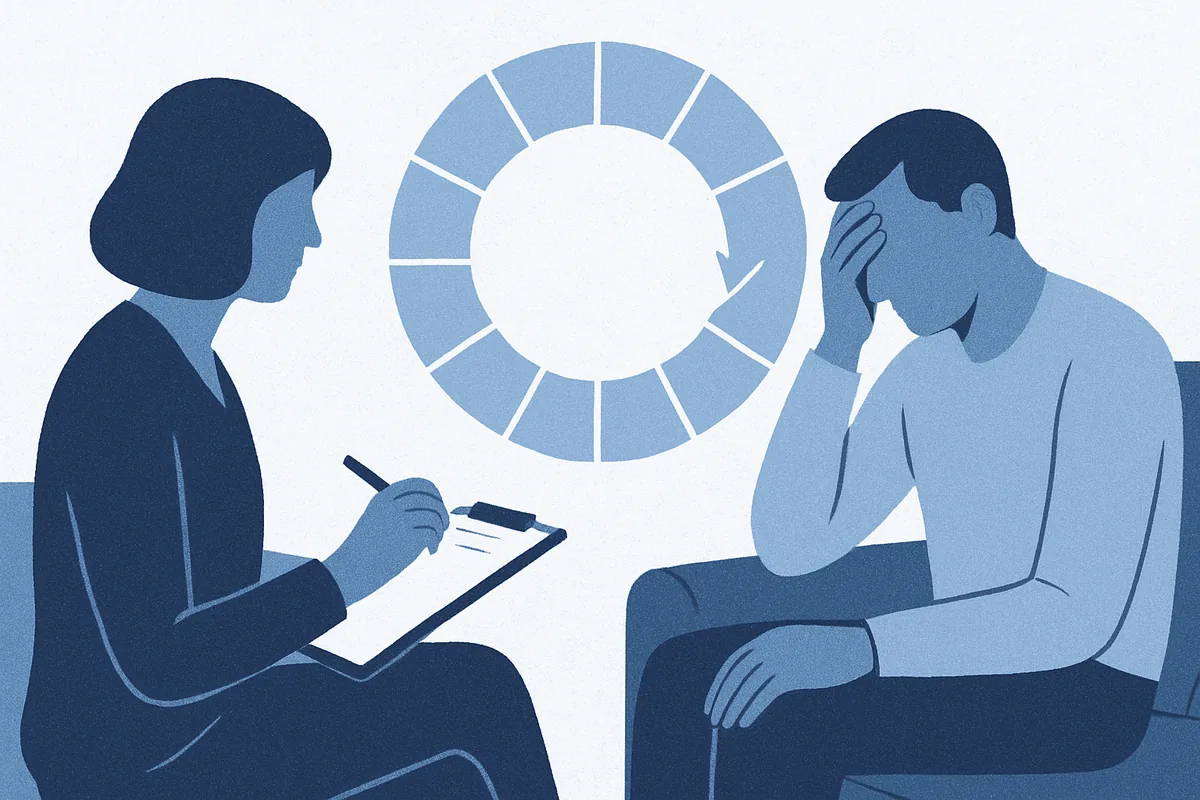
- EMDR (Eye Movement Desensitisation and Reprocessing) is a first-line treatment for PTSD recommended by both NICE (Guideline NG116, 2018) and the World Health Organization, placing it on the same evidence tier as trauma-focused CBT.
- 84–90% of adults with single-incident PTSD no longer met diagnostic criteria after three 90-minute EMDR sessions in controlled trials, and 77% of individuals with multiple-trauma PTSD reached PTSD-free status after six sessions.
- EMDR follows a structured 8-phase protocol across roughly 9–15 sessions for single-incident trauma; complex PTSD and childhood trauma require longer courses with additional stabilisation work in the early phases.
- Unlike talk therapy, EMDR does not require you to describe the traumatic event in detail, the protocol works by having you hold the memory in mind while a bilateral stimulus (eye movement, tapping, or sound) is applied.
- In Dubai, clients should verify that their therapist holds both a current DHA licence and formal EMDR training accredited by EMDRIA or an equivalent body before beginning treatment.
Considering EMDR? Our trauma therapy service in Dubai offers EMDR alongside TF-CBT and somatic approaches, book an assessment to find the right fit.
EMDR, Eye Movement Desensitisation and Reprocessing, is a first-line treatment for post-traumatic stress disorder recommended by both NICE Guideline NG116 (2018) and the World Health Organization, placing it on the same evidence tier as trauma-focused CBT. Despite that standing, most Dubai adults seeking trauma therapy in Dubai with EMDR arrive knowing only that it involves eye movements. What it actually involves: the structured protocol, what happens in the room, and why bilateral stimulation helps the brain do something talking alone cannot, is poorly explained by the handful of service pages that rank locally.
This guide is written for Dubai adults who want a clear, clinically grounded answer to the question: what is EMDR, how does it work, and is it appropriate for what I have been through? At CAYA World, we offer trauma therapy from our clinic in Palm Jumeirah, and we regularly see clients who have carried unprocessed traumatic material for years, sometimes decades, before reaching out. The clinical picture those clients describe is almost always the same: they have tried talking about it, but talking does not seem to reach it. That gap is precisely where EMDR is designed to work.
What is EMDR and how does it differ from regular talk therapy?
Talk therapies, including standard cognitive behavioural therapy and psychodynamic work, operate primarily through language. The client describes what happened, the therapist reflects, challenges, or reframes, and insight accumulates over time. For many difficulties, this is exactly what is needed. For trauma, it is often insufficient, because the problem with traumatic memories is not that the person lacks insight about them. Most trauma survivors know, intellectually, that the event is over. The issue is that the nervous system has not received that message.
When a traumatic event occurs, the brain's normal memory consolidation process is disrupted. Instead of being filed as a past event, the memory remains stored in an unprocessed, fragmented form, vivid, emotionally raw, and wired into the body's threat-detection system. This is why a car backfire can feel, physiologically, exactly like the road accident it resembles. The memory has not been processed and filed; it sits live and accessible, triggering a full stress response when any element of it is contacted.
EMDR targets that unprocessed storage directly. Rather than building insight about the memory, the protocol activates the memory while simultaneously applying a bilateral stimulus, typically a therapist's moving fingers tracked with the eyes, though tapping or auditory tones are equally valid alternatives. The dual attention load of holding the memory in mind while tracking movement appears to engage the same neural processes involved in REM sleep, during which the brain ordinarily consolidates and contextualises emotional experience. Over sets of bilateral stimulation, the emotional charge attached to the memory reduces, and the brain begins to file it as past rather than present.
The critical practical distinction for anyone considering trauma therapy in Dubai with EMDR is this: you do not need to narrate the event in detail. You are asked to hold an image, a feeling, or a physical sensation connected to the memory, not to tell the story. Many clients find this a significant relief. Verbal accounts of trauma can, when handled without the right protocol scaffolding, inadvertently re-traumatise rather than resolve. EMDR is designed to avoid that by processing the memory at the experiential level, not the narrative one.
At CAYA World, we often see clients who have had difficult experiences in general counselling settings where repeated verbal retelling of a traumatic event left them feeling worse, not better. EMDR does not ask you to do that. It asks you to notice, and to let the bilateral stimulation work alongside your nervous system's natural capacity to adapt.
What does trauma therapy with EMDR actually involve? The 8-phase protocol explained
EMDR is not a single technique applied uniformly across sessions. It is a structured 8-phase protocol that progresses in a specific order, and that order is clinically important, phases cannot be skipped without undermining safety and outcome. Here is what each phase involves in practice.
Phase 1. History-taking and case conceptualisation. The therapist takes a full clinical history: what brought you to treatment, the specific memories and triggers identified as targets, your current functioning, and any factors (ongoing threat, dissociation risk, substance use) that affect the pace of treatment. This phase may take one to three sessions. It is not EMDR processing; it is preparation for it.
Phase 2. Preparation and stabilisation. Before any traumatic material is processed, the therapist teaches you grounding and containment techniques, ways to bring yourself back to a regulated, present-moment state if processing becomes intense. Common tools include a calm-place visualisation, a container exercise for distressing images, and body-based grounding. Clients with complex trauma or limited current stability spend more time here, and that is appropriate. Processing before stability leads to destabilisation, not resolution.
Phase 3, Assessment. The therapist identifies the specific target memory: the worst image associated with it, the negative belief it produced about yourself (for example, "I am powerless" or "I should have known"), the positive belief you would prefer to hold, the emotions it evokes, and where you feel those emotions in your body. This creates a precise clinical map for the processing work that follows.
Phases 4 and 5, Desensitisation and installation. The therapist activates the target memory and begins sets of bilateral stimulation, typically 20–30 passes per set, followed by a brief check-in. Between sets the client reports whatever came up, images, emotions, body sensations, associated memories. The therapist does not analyse these; they instruct the client to hold what emerged and begin the next set. Over multiple sets, the distress rating (measured on a 0–10 Subjective Units of Distress scale) typically reduces. When distress reaches zero, the positive belief identified in Phase 3 is installed using further bilateral stimulation until it feels fully true.
Phase 6, Body scan. With the memory and positive belief processed, the therapist guides you through a scan of your body to identify any residual tension or discomfort. If any remains, further bilateral stimulation is applied until the body scan is clear.
Phases 7 and 8, Closure and re-evaluation. Each session ends with a structured closure, a return to present-moment calm regardless of where processing reached. At the start of the next session, the previous target is re-evaluated to confirm the gains held, before proceeding to new targets or moving toward termination.
For single-incident PTSD, a full course of EMDR typically spans 9–15 sessions. For complex PTSD or developmental trauma, additional time in the stabilisation phases and a larger number of memory targets mean courses are longer, often 20–30 sessions or more, though this varies considerably depending on the individual's history and resources.
What types of trauma is EMDR used for in Dubai?
EMDR was developed initially for single-incident PTSD, a road traffic accident, a physical assault, a medical emergency, a witnessed death. It remains most studied in this context, and the evidence for single-event trauma is the most robust. But EMDR's application has expanded considerably, and the clinical picture in Dubai reflects a broader range of trauma presentations.
Dubai's population is composed of more than 88% expatriates, and we see trauma presentations shaped by that demographic directly. Relocation trauma, the cumulative stress of repeated uprooting, loss of extended family networks, and the identity dislocation that accompanies life across multiple countries, does not map onto a single incident but can produce a chronic hypervigilance and emotional dysregulation that responds well to EMDR when the specific attached memories are identified and targeted systematically.
Occupational trauma is also common: medical professionals who have been involved in serious patient outcomes, construction workers following site accidents, and finance professionals who experienced the extreme stress of the 2020 economic contraction. EMDR addresses the specific incident-bound memories that sit beneath chronic occupational stress in these cases.
Childhood and developmental trauma, neglect, emotional abuse, domestic violence witnessed in childhood, physical abuse, requires an adapted approach. The Phase 2 stabilisation work is more extensive, and targeting may address clusters of related memories rather than discrete incidents. Complex PTSD (formally C-PTSD in the ICD-11) involves pervasive disturbances to self-organisation alongside the classic PTSD symptom cluster, and EMDR for C-PTSD is increasingly well-supported in the literature when delivered by a trained clinician who adjusts the protocol accordingly.
EMDR is also used in Dubai for trauma that sits alongside other primary presentations: panic disorder with a trauma antecedent, specific phobias with an identifiable traumatic origin, complicated grief, and adjustment difficulties following acute medical diagnoses. A 2024 cross-sectional study published in PLOS ONE found that 40.6% of UAE school students (n=3,745) showed PTSD risk symptoms following COVID-19 lockdowns, a figure that signals how broadly traumatic stress is distributed across the UAE population, including adults who may have dismissed pandemic-period experiences as not sufficiently severe to warrant clinical attention.
At CAYA World, our clinical team reviews each client's history in a thorough intake assessment to determine the appropriate evidence-based approach, whether that is a trauma-focused modality, a combination with other approaches such as anxiety-focused therapy, or a different intervention entirely. No single modality is right for every presentation, and a thorough intake assessment is what distinguishes a clinically sound treatment plan from an approach applied indiscriminately.
If you would like to understand the trauma treatment options available at CAYA World, our trauma therapy service page provides a fuller overview of the approaches our clinical team works with.
Wondering if It's Time to Talk to Someone?
Our specialist team at CAYA World offers comprehensive assessment and evidence-based treatment, conducted from our clinic in Palm Jumeirah, Dubai.
What does the evidence say about EMDR for PTSD and complex trauma?
The evidence base for EMDR is substantial and spans more than three decades of research. The VA National Center for PTSD lists more than 38 randomised controlled trials supporting EMDR efficacy across diverse populations and trauma types, a volume of RCT evidence comparable to the most-studied psychological interventions in clinical practice.
The headline efficacy figures are compelling. Data from the EMDR Institute's meta-analytic review indicates that 84–90% of adults with single-incident PTSD no longer met diagnostic criteria after just three 90-minute EMDR sessions in controlled trials. For multiple-trauma PTSD, a closer approximation to the presentations seen in clinical practice, the EMDR Research Foundation reports that 77% of participants achieved PTSD-free status after six sessions.
Guideline bodies have reflected this evidence in their formal recommendations. NICE Guideline NG116 (2018) recommends EMDR alongside trauma-focused CBT as a first-line psychological treatment for adults with PTSD. The World Health Organization's guidelines for conditions related to stress similarly list EMDR as a recommended psychological intervention, placing it in a very small group of treatments with sufficient evidence for global-level endorsement.
A key question for clinicians and clients alike is whether EMDR holds advantages over trauma-focused CBT, which is the other dominant evidence-based option. A meta-analytic review by De Jongh et al. published in PMC (2018) and drawing on findings consistent with subsequent AHRQ reviews, found EMDR and trauma-focused CBT equally effective across eight RCTs in reducing core PTSD symptoms, with EMDR showing a particular advantage in reducing depression and intrusive symptoms. The practical implication is that client preference, trauma type, and the therapist's training depth are the most important differentiating factors, not a headline superiority of one modality over the other.
For complex PTSD and childhood developmental trauma, the evidence is more recent but increasingly positive. Phased protocols that extend stabilisation before processing, consistent with the standard EMDR 8-phase model, show meaningful symptom reduction in C-PTSD populations, though the research consistently notes that treatment length is greater and outcomes more variable than in single-incident PTSD.
What the evidence does not support is EMDR delivered without proper protocol adherence. Studies comparing structured EMDR to ad hoc applications of bilateral stimulation show that the protocol itself carries the therapeutic mechanism. Bilateral eye movement alone, without the full assessment, targeting, and reprocessing structure of the 8 phases, does not produce the same outcomes. This has direct implications for how clients in Dubai should evaluate any therapist offering EMDR, a point addressed in the section that follows.
How to Verify an EMDR Therapist's Credentials in Dubai
Dubai has a growing number of therapists who offer EMDR, but the quality of training and protocol adherence varies considerably. Given that EMDR's outcomes depend substantially on proper protocol delivery, the credentials and training background of the therapist matter more here than in some other modalities.
There are four things worth verifying before beginning EMDR therapy in Dubai.
DHA or CDA licensure. All practising psychologists and psychotherapists in Dubai must hold a current licence from the Dubai Health Authority (DHA) or, for healthcare professionals in Dubai Healthcare City, the Dubai Healthcare City Authority (DHCCA). A licence confirms that the clinician has met the regulatory requirements for practice in Dubai, including qualification verification and professional conduct standards. Asking to see a licence number or confirming it through the DHA's online practitioner register is entirely appropriate.
Formal EMDR training accredited by EMDRIA or an equivalent body. The EMDR International Association (EMDRIA) sets international standards for EMDR training, which includes a combination of didactic training (typically 50 hours) and supervised clinical practice (10+ hours with a certified consultant). Equivalent bodies in Europe include the EMDR Europe Association. A therapist who attended a one-day EMDR introduction workshop and applies bilateral stimulation in sessions is not practising structured EMDR in the sense that the evidence base describes. Ask directly: where did you train in EMDR, how many hours of supervised EMDR practice have you completed, and are you a certified EMDR therapist or working toward certification?
Experience with your specific trauma type. EMDR for single-incident PTSD and EMDR for complex developmental trauma are related but distinct clinical competencies. A therapist with extensive experience in single-incident trauma (road accidents, medical events, assault) may have limited experience with the adapted protocols required for C-PTSD or childhood abuse histories. Ask about their caseload and experience with presentations similar to yours.
A clear treatment plan with defined phases. A well-trained EMDR therapist will begin with a clinical assessment and history-taking before any processing work begins. If a therapist proposes beginning bilateral stimulation in the first session without a structured intake, that is a significant departure from the protocol and a reasonable reason to seek a second opinion.
At CAYA World, our clinical team combines DHA regulation with formal training in evidence-based trauma modalities. We begin every trauma intake with a thorough history and stability assessment, and adapt the pace and approach of treatment to the client's clinical profile rather than a fixed session count. If you want to understand which trauma treatment approach fits your history, an initial consultation with our team is the right starting point.
Frequently Asked Questions About Trauma Therapy and EMDR in Dubai
For single-incident PTSD, most clients notice meaningful symptom reduction within 6–9 sessions, with a full course typically running 9–15 sessions. Research shows 84–90% of adults with single-incident PTSD no longer meet diagnostic criteria after three 90-minute sessions in controlled settings, though real-world courses are usually longer due to intake, stabilisation, and closure phases. Complex PTSD and developmental trauma require longer treatment, often 20–30 sessions or more. Your therapist will give you a more specific projection after a Phase 1 assessment, which maps your trauma targets and current stability.
No. This is one of the most frequently misunderstood aspects of EMDR. Unlike narrative-based therapies, EMDR does not require you to describe the traumatic event in detail. In Phase 3, you identify the most distressing image associated with the memory, the emotion it produces, and where you feel it in your body, but you do not recount the event as a story. During processing sets, you hold those elements in awareness while the bilateral stimulation is applied. Many clients who struggled in talk therapy precisely because verbal retelling felt overwhelming find this a significant relief.
Yes, EMDR is available at several DHA-licensed clinics in Dubai. Insurance coverage for EMDR sessions varies considerably by plan and insurer: some plans cover psychology sessions without modality restrictions, while others specify conditions or require pre-authorisation for trauma-focused treatment. We recommend contacting your insurer directly to ask whether outpatient psychology sessions are covered and whether PTSD or trauma is listed as an approved diagnosis under your plan. If you are enquiring about CAYA World specifically, our admin team can assist with insurance queries during the booking process.
EMDR can address childhood and developmental trauma, though the approach differs from single-incident work. Complex PTSD and attachment-related trauma require a more extended Phase 2 stabilisation period before processing begins, and the targeting phase identifies clusters of related memories rather than a single discrete event. The evidence base for EMDR in C-PTSD is newer than that for single-incident PTSD but is growing, with phased EMDR protocols showing clinically meaningful reductions in C-PTSD symptom severity. At CAYA World, our team assesses the complexity and developmental history of each client before determining treatment pace and protocol adaptations.
Ask two questions directly: do you hold a current DHA or DHCCA licence, and where did you complete your EMDR training? Formal EMDR training accredited by EMDRIA (EMDR International Association) or EMDR Europe involves a minimum of 50 hours of didactic training plus at least 10 hours of supervised clinical practice with a certified consultant. A therapist who attended a brief introductory workshop is not delivering the same protocol that the evidence base describes. You can also ask whether they are a certified EMDR therapist or working toward certification, certification requires a documented case consultation log and examination by a certified consultant.
Sources and Further Reading
- Post-traumatic stress disorder (PTSD): Guideline NG116, recommendations, National Institute for Health and Care Excellence (2018)
- EMDR Therapy Efficacy, EMDR Institute (2023)
- EMDR Research Overview, EMDR Research Foundation (2023)
- EMDR for PTSD, Treatment Essentials, VA National Center for PTSD (2023)
- EMDR versus trauma-focused cognitive behaviour therapy for post-traumatic stress disorder: systematic review and meta-analysis, De Jongh et al. Clinical Psychology Review (2018)
- Post-traumatic stress disorder symptoms and associated factors among school students in the UAE following COVID-19, PLOS ONE (2024)
- Guidelines for the Management of Conditions Specifically Related to Stress, World Health Organization (2013)