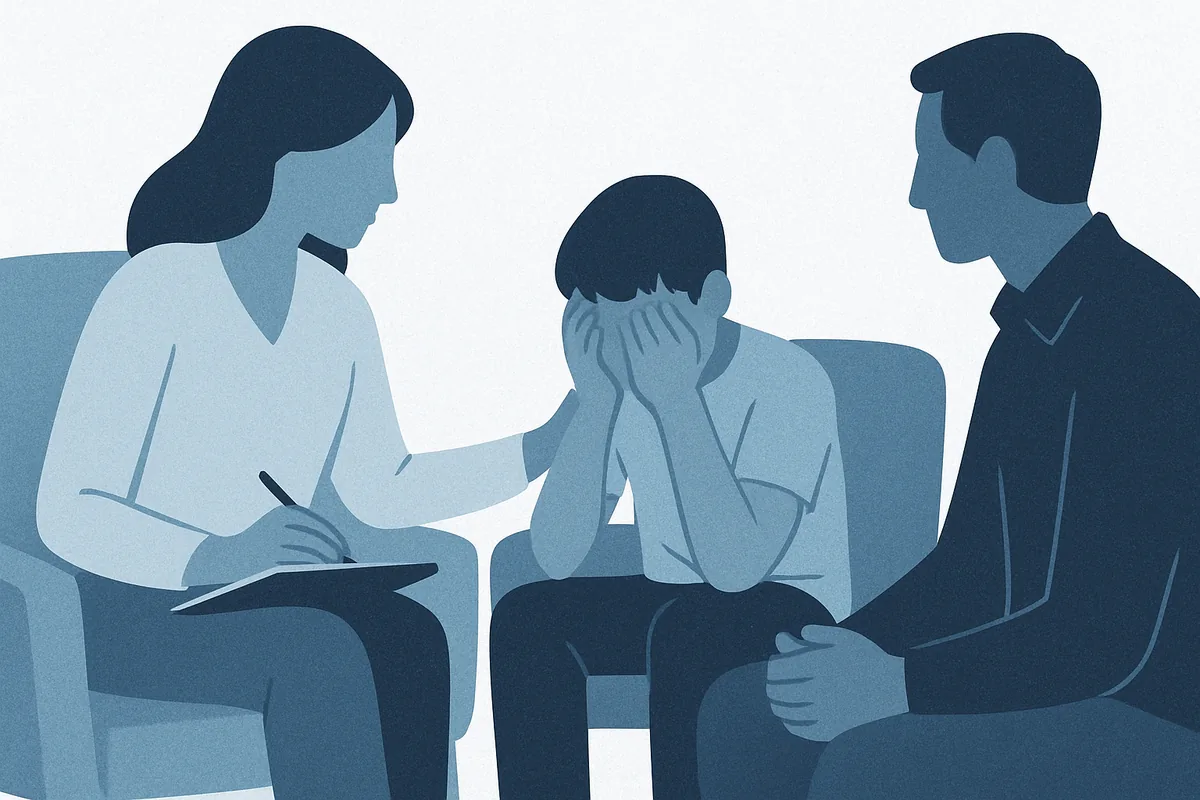
- A 2024 network meta-analysis in JAMA Psychiatry found trauma-focused CBT produced the largest short- and long-term reductions in paediatric PTSD among all psychological interventions reviewed, making it the first-line recommendation for children.
- TF-CBT is structured around eight PRACTICE components delivered sequentially across 12 to 25 sessions, covering psychoeducation, relaxation, emotion regulation, cognitive coping, trauma narrative, and safety planning.
- Parent involvement is built into the TF-CBT model from session one: caregivers run a parallel skills track and join conjoint sessions with their child, which research shows produces better outcomes than child-only therapy.
- TF-CBT is suitable for children aged three and older, including children with multiple or complex trauma histories, and adapts delivery style for developmental stage rather than requiring a minimum age.
- A UAE community study published in 2024 found 65% of respondents reported at least one adverse childhood experience, underlining the high underlying need for evidence-based trauma services for children across the Emirates.
A 2024 network meta-analysis published in JAMA Psychiatry reviewed every major psychological intervention for paediatric PTSD and reached one clear conclusion: trauma-focused cognitive behavioural therapy produced the largest reductions in PTSD symptoms in children, both immediately after treatment and at follow-up, and should be the first-line recommendation for this age group. If a specialist has told you that your child needs trauma-focused CBT, or if you have been researching options and this term keeps appearing, you are in the right place. This guide explains exactly what trauma-focused CBT involves for children, walks through every PRACTICE component in plain language, and describes the parent parallel track in detail, because that is the part most families do not expect and the part that matters most for long-term outcomes.
At CAYA World, our clinical team works with children and families navigating a wide range of trauma presentations, from single-incident events to prolonged adversity. We see parents arrive at their first appointment knowing only that their child has been through something difficult. This article is designed to change that, so you arrive informed, ready, and clear on what the coming months of structured treatment will look like.
What is Trauma-Focused CBT and why is it used for children in Dubai?
Trauma-Focused Cognitive Behavioural Therapy, universally abbreviated as TF-CBT, is a structured, evidence-based treatment developed specifically for children and adolescents who have experienced trauma and their caregivers. It was developed by Drs. Judith Cohen, Anthony Mannarino, and Esther Deblinger in the 1990s and has since been evaluated in more than 25 randomised controlled trials, consistently outperforming community treatment and alternative conditions on child PTSD, depression, anxiety, behavioural difficulties, and adaptive functioning, as well as on caregiver outcomes, according to the National Child Traumatic Stress Network (2024).
What distinguishes TF-CBT from general CBT or supportive counselling is its architecture. It does not ask a child to simply talk about what happened. Instead, it builds coping skills systematically before asking the child to engage with trauma memories at all. The sequence is non-negotiable: you cannot skip to the narrative phase before the skills phases are in place, because the skills are what make the narrative processing tolerable and therapeutically productive.
In Dubai, the relevance of this model is supported by local data. A 2024 UAE community study published via PubMed found that 65% of respondents reported at least one adverse childhood experience (ACE), with a mean of 1.74 ACEs per person. A separate study published in the International Journal of Mental Health Systems (2021) found that 33.9% of participants in a UAE sample reported emotional abuse, 12.6% reported physical abuse, and 12.1% reported neglect in the past year. These figures describe an underlying need for structured, child-specific trauma therapy that is well above what most families would estimate.
Dubai Health Authority's Mental Health Screening Guidelines (2024) identify traumatic and stressful life events as key risk factors that clinicians must assess from a patient's first primary-care contact. DHA's Standards for Mental Health (2025) define the scope of practice within which structured trauma interventions are delivered by licensed psychologists in the emirate. This means that when your child's school, paediatrician, or GP refers them for trauma therapy broadly in Dubai, the referral pathway and clinical standards are already regulated and coordinated.
Who is trauma-focused CBT suitable for? Age range and trauma types
TF-CBT was originally validated for children aged three to 18, and current evidence supports its use across this full developmental range. The three-year lower threshold is meaningful: very young children can engage with psychoeducation and relaxation through play-based delivery, and the parent parallel track (described in detail below) takes on an even larger role the younger the child is. Therapists adapt language, metaphors, and activity formats to developmental level rather than applying a single script across all ages.
The model was initially developed for children who had experienced sexual abuse, but the evidence base has since expanded substantially to cover a broad range of trauma types, including:
- Physical abuse and family violence
- Traumatic grief and bereavement
- Medical trauma (serious illness, painful procedures, hospitalisation)
- Accidents and injuries
- Community violence and war exposure
- Disaster and displacement
- Bullying and peer victimisation
- Relocation trauma and repeated uprooting, which is clinically relevant for many expat families in Dubai
TF-CBT is also appropriate for children with multiple or complex trauma histories, not only single-incident events. In these cases, the therapist may extend the standard 12 to 25 session model to allow more time in the skills phases before moving into narrative processing. The model has a modified protocol, TF-CBT for complex trauma, that explicitly addresses prolonged or interpersonal trauma, and a grief-specific module has been validated for children experiencing traumatic bereavement. Parents who are supporting a child through grief and loss in children may find that elements of the TF-CBT grief module are directly relevant alongside broader bereavement support.
TF-CBT is not recommended as a standalone approach if the child is in an actively unsafe environment, or if a caregiver is themselves so severely affected by their own trauma or mental health difficulties that they cannot participate in the parallel track. In those situations, the presenting parent's needs are typically addressed first, or concurrently with a separate therapist, before or alongside the child's TF-CBT course.
The PRACTICE components of TF-CBT: what happens in each phase of therapy
The defining feature of TF-CBT is its PRACTICE acronym, which describes eight sequential components delivered in a specific order. Understanding what each component involves helps parents track where their child is in the process and why the therapist is not yet doing what the parent expected.
P: Psychoeducation
The first component normalises trauma responses. Children learn that their symptoms, including nightmares, avoidance, irritability, and physical tension, are understandable biological and psychological reactions to an overwhelming event, not signs that they are broken or permanently damaged. Psychoeducation also covers the specific trauma the child has experienced, delivered in age-appropriate language. For younger children, this often happens through stories, drawings, or puppets. For adolescents, it may involve a more direct, conversational explanation of how the nervous system responds to threat.
R: Relaxation
Children who have experienced trauma frequently live in a state of heightened physiological arousal. Their nervous system has learned to treat the world as dangerous, and this produces physical symptoms including muscle tension, shallow breathing, racing heart, and difficulty sleeping. The relaxation component teaches specific, practised techniques to down-regulate the nervous system: controlled breathing, progressive muscle relaxation, and mindfulness-based body awareness. These are not optional extras. A child who cannot calm their body cannot engage productively with the trauma narrative later in treatment.
A: Affective Modulation
Affective modulation builds the child's vocabulary and management skills for difficult emotions. Many traumatised children either suppress emotions entirely (appearing flat or disconnected) or become overwhelmed by them (explosive, tearful, dysregulated). This component teaches children to identify emotions by name, understand where they feel them in the body, and use strategies to manage emotional intensity without avoidance. Techniques vary by age but commonly include emotion identification cards, mood tracking, self-soothing plans, and thought-stopping strategies adapted from standard CBT.
C: Cognitive Coping
This component introduces the connection between thoughts, feelings, and behaviours, which is the core mechanism of all cognitive behavioural approaches. Children learn to notice unhelpful thoughts that have grown out of their trauma experience, for instance "it was my fault" or "nowhere is safe," and to evaluate them against evidence. This is not about telling a child their feelings are wrong. It is about giving them the cognitive tools to examine whether their current thinking accurately reflects their present reality, and to construct alternative, more accurate thoughts where it does not.
T: Trauma Narrative Development and Processing
This is the component that most parents feel anxious about. The trauma narrative involves the child constructing a detailed account of their traumatic experience in a format that suits them: written story, drawings, a book, a recorded voice memo, or a digital presentation. The therapist guides the child through this process gradually, revisiting and elaborating the account across multiple sessions. The key insight from trauma neuroscience is that avoiding the memory maintains the distress; gradual, supported engagement with the memory allows the brain to process and integrate it into the child's broader life story. By the time a child reaches this phase, they have the relaxation and emotional regulation skills to tolerate the distress without becoming overwhelmed.
I: In Vivo Mastery of Trauma Reminders
Some children develop avoidance of specific places, objects, sounds, or situations that remind them of the trauma, even when those reminders are now objectively safe. A child who experienced a car accident may refuse to travel in cars. A child who was bullied at a particular school may be unable to enter any school building. In vivo mastery uses graduated exposure to help the child re-engage with safe reminders at a pace they can manage, reducing avoidance and restoring their normal range of movement through the world. This component is only used when avoidance is clinically indicated; not every child requires it.
C: Conjoint Child-Parent Sessions
Conjoint sessions bring the child and caregiver together for the first time in the therapy process. The child shares their trauma narrative with the parent, and the parent, having been prepared in their own parallel track (described below), responds in a way that communicates safety, belief, and connection without minimising or catastrophising. These sessions are among the most therapeutically powerful moments in the TF-CBT model, and they require thorough preparation of both the child and the parent beforehand. They are not improvised; the therapist structures and scaffolds them carefully.
E: Enhancing Safety and Future Development
The final component focuses on equipping the child with skills for the future: body safety knowledge, personal boundaries, strategies for identifying and reporting unsafe situations, and a clear understanding of which adults in their life they can trust and approach. For children in Dubai's international school environment, where peer networks shift frequently with the expat cycle, this component also addresses how to seek help when adults in the immediate circle are unavailable.
If you are wondering whether your child needs this structured, component-by-component approach to trauma recovery, our team at CAYA World is here to help you think it through. You can read more about trauma therapy for children and families at our Palm Jumeirah clinic or reach out to start a conversation about what the right first step looks like for your child.
The parent parallel track: why TF-CBT is a family treatment, not just a child treatment
This is the aspect of TF-CBT that most parents do not expect, and it is arguably the most important structural feature of the model. TF-CBT is not a child-sits-in-the-room-for-fifty-minutes-while-parent-waits approach. It runs a parent parallel track throughout, in which the caregiver meets separately with the therapist, covers all the same PRACTICE components their child is learning, and builds skills that allow them to support the child's progress at home between sessions.
The rationale is straightforward but important. A child who learns a relaxation technique in therapy and then returns to a household where a parent is visibly overwhelmed by their own distress, or dismissive of the child's feelings, or inadvertently reinforcing avoidance by accommodating every trigger, will not consolidate those skills. The home environment either amplifies or undermines everything that happens in the therapy room. The parent parallel track is the mechanism that makes the home environment amplifying rather than undermining.
What does the parent track actually cover?
Caregivers work through psychoeducation about trauma and its effects on child development, relaxation and stress management techniques for themselves, communication strategies for discussing trauma with their child without causing distress, how to respond when their child is dysregulated or avoiding, cognitive coping skills to manage their own distress-related thoughts, preparation for the conjoint sessions, and general parenting strategies that reinforce the child's treatment gains. This typically accounts for roughly half of each session, with the other half dedicated to the child.
In some formats, the child and parent each have their own session within the same weekly appointment block. In others, a single session is divided between child-only, parent-only, and, later in treatment, conjoint time. The specific structure depends on the child's age, the severity of the trauma, and the presenting needs of the caregiver.
What if I as a parent am also struggling?
Many parents of traumatised children are themselves affected by secondary distress, or by their own trauma history that the child's experience has reactivated. The TF-CBT model acknowledges this explicitly. If a caregiver's own distress is significant enough to interfere with their participation in the parallel track, the treating clinician may recommend that the parent access their own individual therapy concurrently. At CAYA World, our team can coordinate this through our parenting therapy and support service, which works alongside child therapy to ensure both the child and the caregiver are receiving appropriate support at the same time.
The evidence for including caregivers is consistent. The 2022 meta-analysis of 34 studies and 4,261 participants published in the Journal of Counseling and Development found TF-CBT superior to no treatment (effect size g = 1.22) and to alternative treatments (g = 0.27) on child PTSD, with additional benefits for depression. Studies that have directly compared parent-included versus child-only formats consistently show better outcomes when the caregiver is an active participant throughout.
Wondering if It's Time to Talk to Someone?
Our specialist team at CAYA World offers comprehensive assessment and evidence-based treatment, conducted from our clinic in Palm Jumeirah, Dubai.
TF-CBT vs EMDR for children: what Dubai parents need to know
Parents researching trauma therapy for their child in Dubai frequently encounter both TF-CBT and Eye Movement Desensitisation and Reprocessing (EMDR) as evidence-based options and want to know which to request. The honest answer is that both have strong evidence for paediatric PTSD, and the choice depends primarily on the clinical presentation, the child's age and verbal capacity, the clinician's training, and the specific nature of the trauma.
TF-CBT is the more structured of the two: it teaches skills explicitly before addressing the trauma memory, it requires significant caregiver involvement throughout, and it produces a tangible trauma narrative that becomes part of the therapeutic record. It is particularly well suited to children who have experienced abuse or interpersonal trauma where caregiver involvement is therapeutically central, and to children who benefit from explicit skill-building before exposure. EMDR uses bilateral stimulation (typically eye movements, taps, or tones) to help the brain reprocess traumatic memories, and it tends to be more image-focused and less reliant on verbal articulation, which can make it more accessible for children who find talking about the trauma directly difficult. EMDR typically moves to the trauma memory more quickly than TF-CBT, without the extended skills-building phase. Neither approach requires the child to describe the event in full detail to a parent or third party, though TF-CBT's trauma narrative is designed to be shared in the conjoint session. When choosing between them, the most reliable guide is the clinical recommendation of the psychologist who has assessed your child, because that recommendation will be based on your child's specific developmental level, symptom profile, and history, not on a general hierarchy of one approach over the other.
What to expect in the first TF-CBT session in Dubai
The first session of structured trauma-focused therapy is typically an extended intake and clinical assessment, not the start of the PRACTICE sequence itself. Understanding this prevents a common source of parent concern: that "nothing happened" in the first appointment.
At CAYA World, the initial consultation for a child referred for trauma-focused therapy involves a thorough clinical interview with the caregiver, a separate age-appropriate conversation with the child, and often the completion of validated symptom measures. The clinician is building a picture of the trauma history, the current symptom presentation, the family context, the child's developmental level and verbal capacity, and any co-occurring difficulties such as anxiety, behavioural changes, sleep disturbance, or school-related problems. This foundation determines whether trauma-focused structured therapy is the right fit, what the treatment plan will look like, how many sessions are likely to be needed, and what the parent's parallel involvement will involve.
How to prepare your child for the first appointment
Children are understandably anxious about seeing a psychologist for the first time, particularly if they associate the visit with the difficult things that have happened to them. A few straightforward steps help reduce that anxiety:
- Tell your child they will be talking with a specialist who helps lots of children work through difficult feelings, and that the doctor is kind and it is normal to feel nervous the first time.
- Avoid telling them exactly what you expect to happen, since the first session will be a conversation rather than a treatment session, and over-preparing can increase anticipatory anxiety.
- Do not promise the appointment will be "fun," but do reassure them that no one will make them talk about anything they are not ready to talk about on the first visit.
- Let them know you will also be in the building and that you will hear about how it went together afterward.
What the clinician will ask you before your child joins
In most protocols, the caregiver meets with the clinician first, before the child enters the room. The clinician will take a background history covering the child's development, medical history, school functioning, the nature of the trauma or traumas, the timeline, and the family's current understanding of what happened. This context shapes how the clinician then approaches the child-facing portion of the session. Parents sometimes worry that this initial focus on "their side of the story" will colour the clinician against the child; in practice, experienced trauma clinicians are explicitly trained to hold multiple perspectives and to allow the child's own account to emerge without assumption.
Dubai's international school system adds one specific practical consideration: if your child's school is already involved in a safeguarding or concern process, let the clinician know in advance. DHA safeguarding circulars require formal child-protection reporting pathways that connect schools, healthcare providers, and where necessary, statutory authorities. A clinician who knows the school is involved can coordinate communication appropriately from the start, rather than navigating it mid-treatment.
Frequently Asked Questions About Trauma-Focused CBT for Children in Dubai
The standard TF-CBT protocol runs across 12 to 25 sessions, typically delivered weekly. For children with a single-incident trauma and no significant co-occurring difficulties, 12 to 16 sessions is a reasonable expectation. Children with complex or multiple trauma histories, or those with significant behavioural or emotional difficulties alongside the PTSD symptoms, may require closer to 20 to 25 sessions. The treating clinician will give a more specific estimate after the initial assessment, and the timeline is reviewed at regular intervals throughout treatment.
Yes. TF-CBT has been validated from age three, and the model adapts delivery to developmental level. For a four-year-old, psychoeducation happens through picture books and play, relaxation through games and physical movement, and the trauma narrative might take the form of drawings or a simple picture story rather than a written account. The parent parallel track takes on a proportionally larger role the younger the child, because a four-year-old's capacity to generalise therapy skills to daily life depends heavily on what the caregiver is doing at home to reinforce and model those skills.
Caregiver involvement is built into the TF-CBT model by design, not offered as an optional add-on. In most delivery formats, roughly half of each session is dedicated to the parent parallel track. You will work through the same PRACTICE components your child is learning, develop strategies to support their progress at home, and prepare for the conjoint sessions in which you and your child come together. If attending every session is logistically difficult due to work schedules, the clinician can discuss how to structure involvement practically, but removing the parent track entirely changes the model and typically reduces outcomes.
TF-CBT teaches coping skills across several structured phases before engaging with trauma memories, requires active caregiver involvement throughout, and culminates in the child sharing a trauma narrative with their parent. EMDR moves to trauma memory reprocessing more quickly and uses bilateral stimulation rather than explicit skill-building as its primary mechanism. Both have strong evidence for paediatric PTSD. The deciding factor is usually your child's specific presentation: their age, verbal capacity, trauma type, and how they respond to structure. Rather than requesting a specific modality by name, the most productive question to ask is: "Based on what you know about my child, which approach fits best and why?"
Keep it simple and honest: tell them they will meet a specialist who helps children when big or scary things have happened, that the doctor is kind, that it is normal to feel nervous, and that no one will force them to talk about anything they are not ready for. Avoid over-explaining or rehearsing specific details about the trauma in advance. Reassure them that you will be nearby and that you will hear together about what comes next. Children pick up on parental anxiety, so managing your own feelings about the appointment before the conversation with your child makes the preparation more calming for both of you.
Sources and Further Reading
- Psychological Treatments for Posttraumatic Stress Disorder in Children and Adolescents: A Network Meta-analysisJAMA Psychiatry (2024)
- Trauma-Focused Cognitive Behavioural Therapy: Evidence Base and ImplementationNational Child Traumatic Stress Network (2024)
- A Meta-Analysis of TF-CBT Outcomes for Children and AdolescentsJournal of Counseling and Development (2022)
- Trauma-Focused CBT for Children and Adolescents: Pre-to-Post Treatment Effect SizesChild Abuse and Neglect (2022)
- Adverse Childhood Experiences in a UAE Community SampleUAE University / PubMed (2024)
- Child Maltreatment Prevalence in the UAEInternational Journal of Mental Health Systems (2021)
- Dubai Mental Health Screening Guidelines. Dubai Health Authority (2024)
- Standards for Mental Health. Dubai Health Authority (2025)