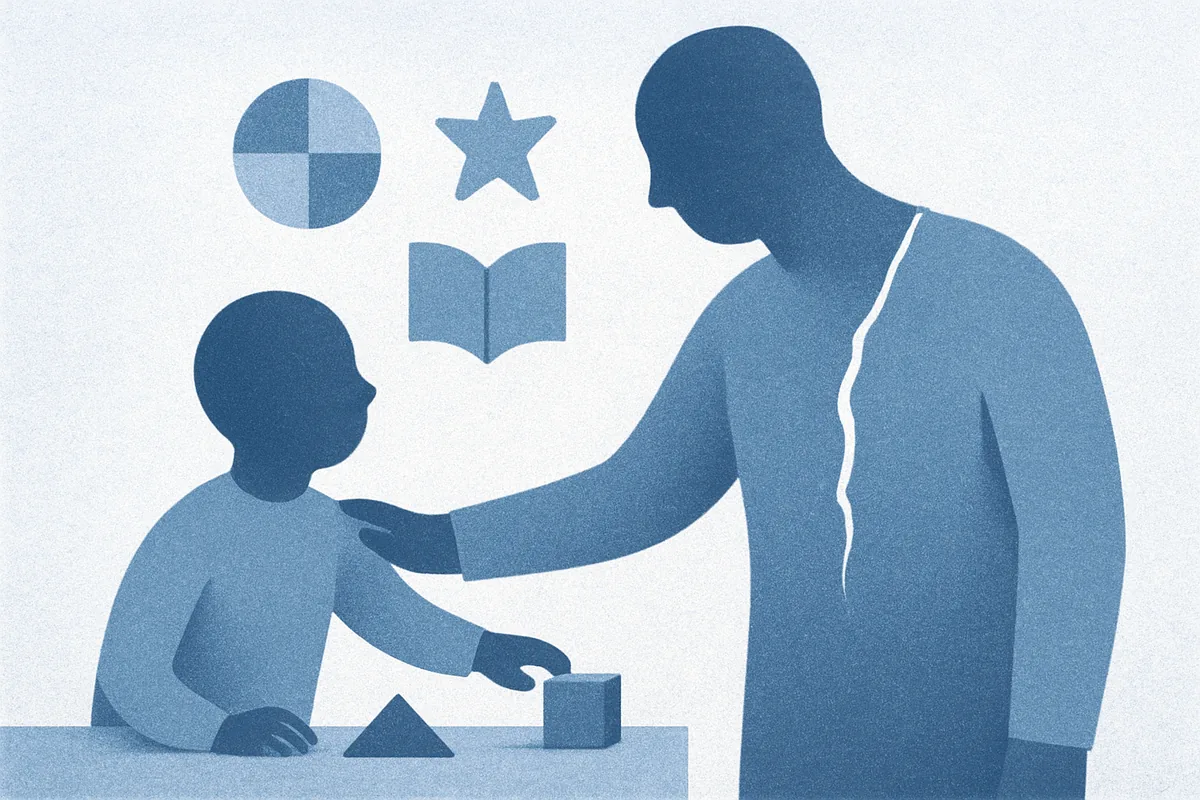
- Generational trauma describes identifiable patterns of emotional dysregulation, avoidance, and relational difficulty that pass through families via behavioral modeling, disrupted attachment, and potentially epigenetic mechanisms, rather than a single diagnosable event.
- A global synthesis of over 1,000 studies across 102 countries found that approximately 60% of adults report at least one adverse childhood experience, confirming that family adversity is clinically common, not rare (Madigan et al., University of Calgary, 2023).
- Epigenetics research on Holocaust survivor offspring found altered FKBP5 gene methylation linked to stress hormone sensitivity, a suggestive but not yet conclusive indicator of biological intergenerational transmission (Yehuda et al., Biological Psychiatry, 2016).
- Reported rates of intergenerational continuity of child maltreatment range from 7% to 88% across studies, with higher continuity linked to four or more ACEs and an absence of supportive adult relationships (Sage Publications scoping review, 2021).
- CBT-based family therapy, parenting therapy, and individual therapy targeting attachment and schema patterns are the primary evidence-based approaches used to interrupt generational transmission cycles.
A global synthesis of over 1,000 studies across 102 countries found that approximately 60% of adults report at least one adverse childhood experience, and roughly one in six report four or more (Madigan et al., University of Calgary, 2023). What that statistic does not capture is the quiet arithmetic of family inheritance: the ways those experiences, left unprocessed, do not simply end with the person who lived them. Generational trauma describes the process by which the emotional and behavioral consequences of unresolved adversity pass from parent to child, shaping how the next generation attaches, regulates emotion, and relates to others, often without either generation understanding why.
This article is specifically about transmission, not treatment of a single trauma episode. It is distinct from individual PTSD recovery or the diagnostic differences between PTSD and complex PTSD. The focus here is the family system: how patterns form, how they propagate, what the science actually says, and what it takes to interrupt the cycle. At CAYA World, we see this dynamic regularly in our clinical work in Dubai, particularly among the city's diverse, mobile, and high-pressure families.
What is generational trauma and how does it differ from ordinary family difficulty?
Every family carries difficulty. Financial pressures, illness, conflict, and disappointment are part of ordinary life. Generational trauma is something more specific: it is the patterned transmission of unresolved trauma responses that persistently alter how a family system functions across time.
The distinction matters clinically. Ordinary family hardship tends to be situational and recoverable. Generational trauma, by contrast, leaves structural marks: a persistent emotional unavailability in parents, a family culture of silence around pain, hypervigilant or controlling parenting born from unspoken fear, or attachment styles that consistently reproduce insecurity in children who go on to reproduce it in their own children.
Clinically, the term draws on research into several overlapping phenomena:
- Adverse childhood experiences (ACEs), including abuse, neglect, witnessing domestic violence, and household dysfunction, which reliably predict adult mental and physical health outcomes
- Attachment theory, which shows that a parent's own attachment classification strongly predicts their child's attachment security, independent of parenting behavior they consciously intend
- Schema transmission, where core beliefs formed in childhood ("I am not safe," "people leave," "needs are burdensome") are modeled, reinforced, and internalised by the next generation
- Epigenetic mechanisms, still a developing area of research, suggesting that severe stress may leave biological markers that influence stress sensitivity in offspring
The critical phrase is unresolved. Parents who have processed their own trauma, who have developed insight into their history and built their own regulatory capacity, transmit far less. The cycle is not inevitable. But it is remarkably consistent when that processing never happens.
At CAYA World, we often see adults who seek therapy for anxiety, relationship difficulties, or parenting struggles, and who discover mid-way through that the patterns they are describing are not simply their own. They are their parents'. And often their grandparents' before that.
What does the science say? Understanding how generational trauma is transmitted
The science of intergenerational trauma spans at least three distinct transmission routes. Understanding them separately matters because each requires a different clinical response, and because popular accounts frequently conflate them in ways that overstate what has been proved.
Psychological and behavioral transmission
This is the best-evidenced route and the most clinically actionable one. Children learn by observation. A parent who is emotionally shut down teaches their child that emotions are dangerous. A parent who responds to stress with rage or withdrawal models those as the available options. A parent whose own nervous system is chronically activated keeps the household in a state of ambient vigilance that shapes how a child's threat-detection system calibrates.
Attachment research is particularly rigorous here. Mary Main's Adult Attachment Interview, developed in the 1980s and replicated extensively since, shows that a parent's narrative coherence about their own childhood, specifically their capacity to reflect on their history with clarity and without being overwhelmed, is one of the strongest predictors of their infant's attachment security. The transmission is not about what the parent experienced. It is about how much they have made sense of it.
Epigenetic transmission
The most discussed and most misunderstood route. Epigenetics refers to chemical modifications to DNA that affect how genes are expressed without changing the underlying genetic code. The question for researchers is whether extreme stress can produce such modifications, and whether those modifications pass to offspring.
The most cited study examined Holocaust survivor offspring. Yehuda et al. (2016), published in Biological Psychiatry, found that adult children of Holocaust survivors showed altered methylation of the FKBP5 gene compared to Jewish controls whose parents had not been exposed. FKBP5 is involved in regulating the stress hormone cortisol. The offspring also showed lower baseline cortisol levels, a pattern associated with heightened glucocorticoid sensitivity.
The finding is scientifically important but appropriately qualified. The researchers themselves describe it as suggestive of biological intergenerational transmission, not conclusive. Sample sizes in this area are small, replication is inconsistent across different trauma populations, and the precise mechanism by which parental methylation changes would transfer to offspring remains unclear. It is honest to say that the biology is intriguing and warrants continued research, without asserting that trauma is simply inherited like eye colour.
Social and systemic transmission
Families do not exist in isolation. Communities that have experienced collective trauma, displacement, persecution, or sustained poverty create environments in which trauma responses become adaptive norms. Children in these environments absorb not just parental behavior but the shared beliefs, coping strategies, and emotional vocabularies of an entire social group.
For Dubai's multicultural population, this route is clinically relevant. Families who have relocated from conflict-affected regions, or whose extended family networks carry unresolved histories of displacement, may transmit those histories through story, silence, or structurally through the expectations and fears they project onto the next generation.
How to recognise generational trauma patterns in your own family
Generational trauma rarely announces itself with a clear label. It tends to surface as patterns that feel inexplicable, persistent, or disproportionate to present circumstances. The following are the clinical markers we look for at CAYA World when a client's history suggests an intergenerational dimension.
Emotional unavailability across generations
If a client describes a parent who was physically present but emotionally unreachable, and that client recognises the same quality emerging in their own parenting, this is a signal worth following. Emotional unavailability is frequently a protective mechanism that the original parent developed in response to their own childhood. It was adaptive for them. It is transmitted because it was never named or examined.
Unspoken family rules
Many families organise around powerful implicit rules: "We do not talk about grandfather." "Strong people do not need help." "Keeping the peace matters more than honesty." These rules often trace directly to a past trauma or period of family crisis. They persist because no one revisited them. Clients who grew up in these environments often carry the anxiety those rules were designed to suppress, without knowing why the anxiety exists.
Repeating relational patterns
Adults who consistently recreate the same relational dynamics across different partners, friendships, or workplaces are often running scripts that were written in childhood. The person who always ends up caring for emotionally unavailable partners, the person who cannot sustain closeness without sabotaging it, the person who is preternaturally alert to criticism. These patterns are not character flaws. They are learned responses to a family environment that made them necessary.
Disproportionate reactions to ordinary stress
When a present-day event consistently produces an emotional response that feels outsized, it is often because the event has activated an older, unprocessed experience. The parent who cannot manage mild academic disappointment in their child without becoming distressed may be responding not to the child's grade but to their own childhood fear of failure and its consequences.
At CAYA World, we use structured intake assessments to map these patterns across two to three generations, tracking emotional themes, coping styles, and significant losses or ruptures. This family-system lens often surfaces the clinical picture faster than a purely individual account.
If you recognise several of these patterns in your family and are wondering whether a conversation with a psychologist would help you understand them, our team can offer a confidential initial consultation. A CAYA specialist can help you determine whether individual therapy, couples or family therapy, or parenting support would be the most useful starting point.
Why Dubai's expat families face a particular generational trauma risk
The demographic profile of Dubai creates specific conditions in which generational trauma can be transmitted with less friction than in more stable or homogeneous communities. This is not a critique of expatriate life, but an honest account of the structural stressors that our clinical team observes directly.
Repeated relocation and disrupted attachment
Children raised in internationally mobile families change schools, lose friendships, and lose the stabilising familiarity of extended family networks, sometimes every two to three years. For children whose parents are themselves carrying unprocessed relocation grief or identity disruption, the cumulative effect compounds. The parent who never had the space to grieve their own uprooting may inadvertently communicate that loss and anxiety are unspeakable, transmitting that frame to their children.
Visa instability and financial hypervigilance
Many families in Dubai live with a background awareness that their residency is contingent on employment. This creates a particular form of ambient stress that shapes parenting: the pressure to perform financially bleeds into the pressure parents place on children to perform academically. When that pressure comes with high emotional stakes rather than relaxed encouragement, children absorb a belief that failure is existentially threatening. That belief does not evaporate in adulthood.
Distance from extended family support systems
In many cultures, the grandparent and extended-family layer provides a natural buffering system against parental stress and a secondary attachment network for children. Expat families in Dubai often lack this layer entirely. Parents managing young children, demanding careers, and the adjustment demands of a new country may be doing so with a significantly depleted support base. Under these conditions, unresolved parental trauma has fewer natural containment mechanisms.
Stigma and the culture of silence
The Dubai Health Authority's 2024 Mental Health Screening Guidelines formally include childhood trauma, domestic adversity, and adverse childhood experiences as risk factors requiring routine clinical screening. The clinical recognition is there. The cultural uptake is slower. Across many of the communities represented in Dubai, disclosing family trauma carries reputational risk. What cannot be spoken cannot be processed. What cannot be processed tends to be transmitted.
At CAYA World, our clinical team includes professionals with training and personal familiarity across multiple cultural contexts. Your sessions are confidential, and our intake process is specifically designed to meet clients from diverse backgrounds without assumptions about what their family history should look like.
Wondering if It's Time to Talk to Someone?
Our specialist team at CAYA World offers comprehensive assessment and evidence-based treatment, conducted from our clinic in Palm Jumeirah, Dubai.
What therapy approaches help break the cycle of generational trauma
The intergenerational transmission of trauma is not a life sentence. The research on transmission risk is clear that protective factors interrupt the cycle, and that therapy is one of the most reliably effective of those factors. The rates of intergenerational continuity of child maltreatment vary enormously across studies, from 7% to 88%, depending on methodology and sample. A 2021 scoping review published in Sage Publications found that the highest transmission rates occurred when parents carried four or more ACEs and lacked supportive relationships. The lowest rates were found when parents had access to reflective, supportive relationships, including therapeutic ones. The protective variable is not the absence of history. It is the presence of support that makes that history speakable and processable.
Individual therapy for adults
For adults who recognise generational patterns in themselves, the most effective individual therapeutic work tends to address the underlying schemas formed in childhood. Cognitive behavioural therapy helps identify and reshape the core beliefs driving repeating patterns. When the patterns are more deeply attached, schema-focused approaches or attachment-informed CBT extend that work into the relational domain.
The goal is not to relitigate the past but to build what researchers call narrative coherence: a clear, integrated account of your own history that you can hold without being flooded by it. That coherence is itself what breaks the transmission cycle, because a parent who understands their own history does not unconsciously reenact it with their children.
For a full account of what individual trauma recovery involves, our article on healing from trauma and what recovery actually looks like covers the clinical stages and timelines in detail.
Family therapy
When the patterns are actively playing out across a current family system, individual therapy alone may be insufficient. Family therapy works with the relational system directly, naming the implicit rules and dynamics, mapping their origins, and creating new ways of relating that interrupt the cycle in real time. This is particularly valuable when parents recognise that their parenting style is repeating something from their own childhood that they consciously want to change.
Parenting therapy and parental reflective functioning
For parents of young children, parenting-focused therapy specifically targeting parental reflective functioning (the capacity to understand your child's inner world as separate from your own) has strong evidence for interrupting intergenerational transmission. The work does not involve being told how to parent. It involves developing the internal space to respond to your child from curiosity rather than from your own unprocessed history.
Our trauma therapy service in Dubai includes individual and family-system approaches specifically designed to address generational patterns, including structured work on attachment, schema, and parental reflective capacity. If you recognise the patterns described in this article and want to understand whether therapy would help, reaching out is a reasonable next step.
Steps you can take now, and when to seek support in Dubai
Not every recognition of a generational pattern requires immediate clinical intervention. There are concrete actions that begin the interruption process independently. And there are signs that professional support would meaningfully accelerate the work.
Starting points you can take now
- Map the pattern across generations. Write down the dominant emotional themes, coping styles, and significant losses in your parents' and grandparents' histories. Look for recurrences. This is not about assigning blame. It is about making visible what has been invisible.
- Name the unspoken rules. Identify the implicit rules in your family of origin. For each one, ask: Where did this rule come from? What was it protecting against? Is it still serving that purpose?
- Build narrative coherence. Practice telling your own story in a way that is honest without being catastrophic. This means being able to acknowledge difficulty in your history without minimising it or being overwhelmed by it. Journaling, trusted conversations, and therapy all support this.
- Prioritise your own regulatory capacity. You cannot model emotional regulation for children or partners if your own nervous system is chronically activated. Sleep, structure, and reduced chronic stressors are prerequisites for the relational work, not luxuries alongside it.
When professional support is the right step
Seek clinical support when the patterns are actively harming your relationships or your children's wellbeing; when you recognise a cycle clearly but cannot interrupt it despite genuinely trying; when your own history of trauma, abuse, or severe neglect remains unprocessed and you notice its weight in your parenting or partnerships; or when you are experiencing clinical levels of anxiety, depression, or relational distress that are not resolving with self-directed efforts.
At CAYA World, our intake process identifies the right entry point, whether that is individual therapy to process your own history, family therapy to address the current system, or parenting-focused support to interrupt the cycle in your children's generation. The DHA's 2024 Mental Health Screening Guidelines specifically recognise childhood adversity and traumatic life events as routine clinical concerns. Getting support for these patterns is not a dramatic step. It is ordinary, well-evidenced healthcare.
If you have concerns about your own family patterns and whether generational trauma may be affecting your mental health or your parenting, our team at CAYA World is here to help. We offer evidence-based trauma therapy in Dubai from our clinic in Palm Jumeirah, and our clinical team can help you identify the most effective path forward.
Frequently Asked Questions About Generational Trauma in Dubai
Generational trauma is clinically and scientifically grounded, though the term is sometimes used loosely in popular culture. The psychological transmission route, through attachment, behavioral modeling, and schema formation, is well-evidenced across decades of research. The epigenetic route, as studied in Holocaust survivor offspring by Yehuda et al. (2016), is scientifically interesting but classified as suggestive rather than conclusive. The clinical reality, that unresolved parental trauma shapes children's emotional development, is not controversial. The specific biological mechanism remains a research question.
Yes. This is precisely what distinguishes generational trauma from individual trauma. A child does not need to experience the original traumatic event. They absorb its consequences through their parent's emotional unavailability, the family's unspoken rules, the relational patterns they are raised within, and the scripts they internalise about safety, trust, and self-worth. Many adults who present with anxiety, attachment difficulties, or persistent relational patterns have no single traumatic event in their own history. The history belongs to the generation above them.
Several signs point toward a generational pattern rather than purely situational difficulty: the problem is consistent across different relationships, settings, and periods of your life; your emotional responses feel disproportionate to current triggers; you recognise the same patterns in a parent or sibling; or the difficulty maps onto a family theme that stretches back across generations. A structured clinical intake at a psychology clinic can help distinguish individual situational factors from deep-rooted intergenerational dynamics, usually within the first two to three sessions.
No. For many adults, particularly those whose parents are unavailable, deceased, or unlikely to engage therapeutically, individual therapy is the primary and sufficient route. The work of building narrative coherence about your own history, reshaping the schemas formed in childhood, and developing new relational patterns does not require the participation of the generation that transmitted the patterns. Family therapy is a valuable option when the current family system is actively involved, particularly for parents of young children, but it is not a prerequisite for meaningful change.
Look for a licensed clinical psychologist registered with a recognised regulator such as the DHA (Dubai Health Authority). Specific training in attachment-informed therapy, schema therapy, or family systems approaches is relevant to generational trauma work. CBT is effective for the anxiety and depressive symptoms that often accompany these patterns, though deeper relational work typically benefits from an attachment-aware clinical frame. At CAYA World, our clinical psychologists are US-trained and licensed, and our intake process matches you to the clinician whose training and approach fit your specific clinical picture.
Sources and Further Reading
- Prevalence of Adverse Childhood Experiences across 102 CountriesMadigan et al., University of Calgary (2023)
- Holocaust Exposure Induced Intergenerational Effects on FKBP5 MethylationYehuda et al., Biological Psychiatry (2016)
- Intergenerational Continuity of Child Maltreatment: A Scoping ReviewSage Publications (2021)
- DHA Mental Health Screening Guidelines. Dubai Health Authority (2024)
- Main M & Hesse E. Parents' Unresolved Traumatic Experiences Are Related to Infant Disorganised Attachment Status, in Greenberg, Cicchetti & Cummings (eds), Attachment in the Preschool Years, University of Chicago Press (1990)
- van der Kolk B, The Body Keeps the Score, Penguin Books (2014)