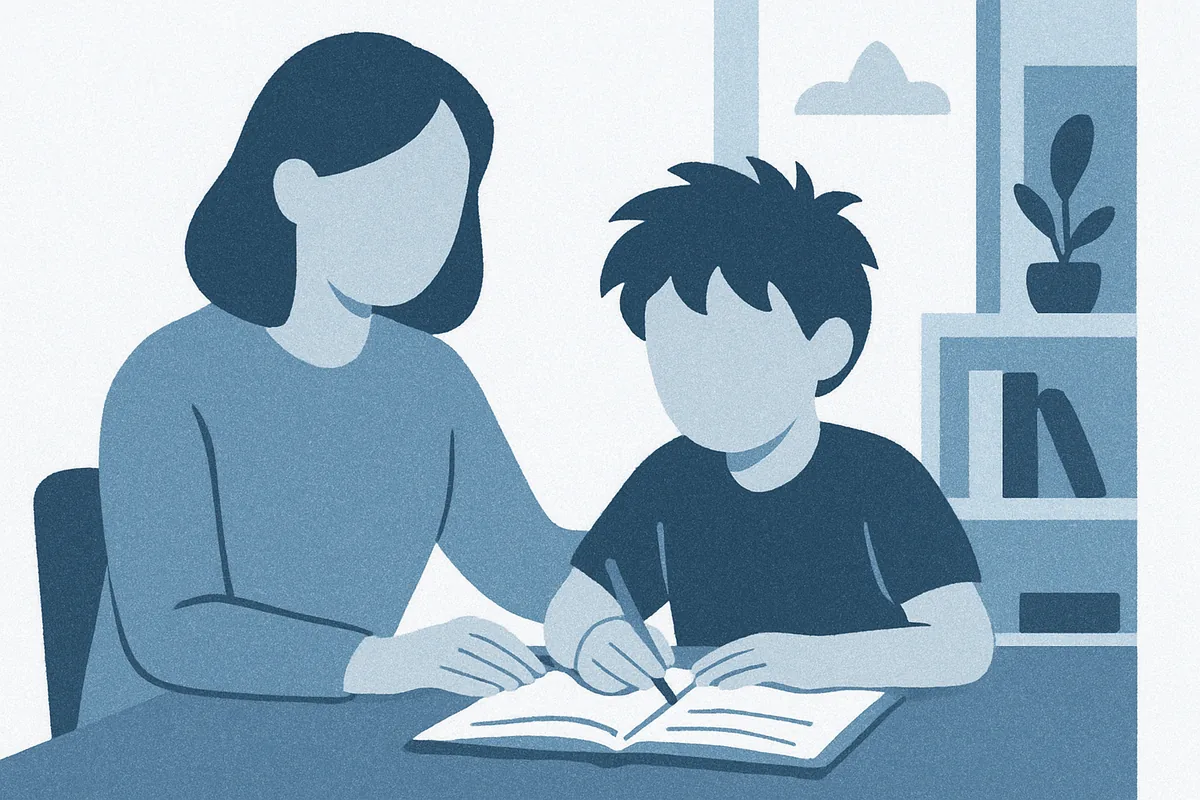
- A 2021 meta-analysis of 29 behavioural parent training studies found small-to-medium improvements in child behaviour and parenting practices, with the greatest gains linked to antecedent strategies such as consistent routines and advance prompts rather than reactive consequences.
- Emotion dysregulation affects approximately 25 to 45 percent of children with ADHD, making co-regulation scripts and calm-down toolkits a core home strategy, not an optional add-on.
- Sleep problems occur in 25 to 55 percent of children with ADHD compared with 20 to 40 percent of typically developing children, so a consistent, stimulus-free wind-down routine directly supports daytime attention and behaviour.
- For Dubai expat families, where school transitions and teacher changes are frequent, a parent-held strategy set is especially valuable because it travels with the child regardless of school or year group.
- When a child's home strategies have been applied consistently for six to eight weeks without meaningful improvement, a clinical assessment or structured behavioural parent training programme is the appropriate next step, not continued unsupported trial and error.
ADHD affects approximately 8 percent of children and adolescents worldwide, according to an umbrella review of 13 meta-analyses covering more than 3.27 million participants (Salari et al., PubMed, 2023). Across the MENA region, that figure rises to around 10.1 percent (BMJ Open MENA meta-analysis, 2024). If your child has recently been diagnosed in Dubai, or if assessment is still in progress, you are almost certainly looking for something concrete to do right now, before the next school week begins.
This guide is not about finding a coach or waiting for the next clinic appointment. It is about the specific, evidence-based techniques you can start using at home today: how to build your environment, structure your child's day, handle homework without a nightly argument, support their emotions in the moment, and protect their sleep. Think of it as a self-directed toolkit grounded in behavioural science, designed for the specific pressures Dubai families face.
At CAYA World, we work with many families who feel overwhelmed in the weeks after an ADHD diagnosis. The strategies below are the same ones our clinical team discusses with parents during sessions. They work best when applied consistently, not perfectly.
Why home support matters so much for children with ADHD
ADHD is a neurodevelopmental condition, not a discipline problem. The brain of a child with ADHD manages attention, impulse control, and working memory differently, and those differences do not disappear when the school bell rings. The home environment is where your child spends the most unstructured time, and where regulation demands are often highest: transitions between activities, homework, mealtimes, and the run-up to bed all require executive function skills that ADHD makes genuinely harder.
The evidence for parent-led home strategies is strong. A 2021 meta-analysis of 29 behavioural parent training studies involving 2,345 participants found small-to-medium improvements in parenting practices, child behaviour, and parent mental health (PubMed, 2021). Crucially, the greatest gains were linked to antecedent strategies, meaning changes made before challenging behaviour occurs, such as building routines and providing advance prompts, rather than to reactive consequences. A separate 2023 systematic review of 20 randomised controlled trials confirmed generally positive effects on parent-rated ADHD symptoms, child externalising problems, and parenting efficacy (PubMed, 2023).
For Dubai families, there is an additional layer. Dubai's school system is predominantly expat, multilingual, and transient. Teacher changes, school moves, and curriculum shifts are common. That instability means you cannot always rely on consistent school-side support following your child across year groups. A strong, portable set of home strategies belongs to the family, and travels with the child regardless of which school they are attending or which class teacher they have this term.
Cultural beliefs framing ADHD as poor discipline or inadequate parenting are still encountered by families in the UAE, and this can compound parental guilt significantly. It is worth naming directly: ADHD is a well-evidenced, neurobiologically grounded condition. The strategies in this guide are not about trying harder. They are about working differently, in ways that match your child's neurology rather than fight it.
How to structure your home environment for an ADHD child
Before any strategy can work consistently, the physical environment needs to support it. A chaotic environment taxes the executive function of any child. For a child with ADHD, it makes self-regulation close to impossible. Structure in the environment reduces the cognitive load your child has to carry before they even sit down to work.
Designate a low-stimulation workspace
Homework and focused tasks need a consistent, designated spot that is quiet, visually uncluttered, and separated from screens. This does not require a separate room. A corner of a dining table with a visual boundary, a facing wall rather than a window, and headphones available for background white noise if your child responds to it, can be enough. The key is that the workspace is the same every day. Predictability reduces transition friction.
Use visual anchors throughout the home
Children with ADHD respond well to visual information rather than verbal reminders. A whiteboard checklist on the kitchen wall for the morning routine, a visual timer on the desk during homework, and a picture-based bedtime sequence on the bedroom door reduce the number of times you need to prompt your child verbally, and therefore the number of potential conflict moments. Visual schedules work at every age, including teenagers, though the format shifts from pictures to written lists.
Create physical zones for transitions
Transitions between activities, school to home, play to homework, dinner to wind-down, are some of the hardest moments of the day for children with ADHD. Create physical signals for each zone change. A specific chair that signals "decompression time" after school. A shelf where devices go at a fixed time each evening. A consistent snack that signals the shift from school mode to home mode. These physical anchors do the signalling work your child's brain finds effortful.
| Home Zone | ADHD-Friendly Feature | What It Supports |
|---|---|---|
| Workspace (desk or table corner) | Low visual clutter, no nearby screens, visual timer | Focus and task initiation |
| Kitchen or hallway wall | Daily schedule chart or whiteboard checklist | Routine predictability, reduces verbal prompting |
| Bedroom door or wall | Visual bedtime sequence (pictures or numbered steps) | Wind-down compliance, sleep onset |
| Living area or designated corner | Movement-friendly seating (cushion, wobble stool), fidget tools nearby | Sensory regulation, reduces escape-motivated behaviour |
| Device storage spot | Fixed location, visible and consistent, used at same time daily | Screen transition management |
At CAYA World, we often hear from parents that they have tried strategies without success, and when we explore what happened, the environment has not been set up to support the strategy. Getting the environment right is not background detail. It is the foundation everything else builds on. The home environment also plays a significant role in how children with ADHD develop their sense of self. Our article on building self-esteem in children with ADHD explores that connection in more depth.
ADHD home support starts with routines: morning, homework, and bedtime
Routines are not about rigidity. They are about reducing the number of decisions your child's brain has to make in real time. For a child with ADHD, an unpredictable day is an exhausting day. Three routines matter most: morning, homework, and bedtime.
Morning routine
The morning routine is where most families report the highest conflict. The sequence matters more than the timing. Choose a fixed order of steps: wake up, bathroom, get dressed, breakfast, pack bag, shoes on, leave. Put that sequence on the wall as a numbered list or picture chart. Use a visual timer (a Time Timer or any countdown clock) rather than verbal counting. Give a five-minute warning before each transition rather than a sudden instruction. The phrase "five minutes until breakfast, you are on step two" carries far more traction than "hurry up." Lay out clothes and pack the bag the night before to remove two decision points from the morning entirely.
After-school routine
Children with ADHD arrive home from school in a state of regulation debt. They have spent the day masking, complying, and suppressing impulses in a structured environment. They need decompression before they can engage in anything demanding. Build in 30 to 45 minutes of low-demand, child-chosen activity immediately after school: physical movement, free play, or a snack in front of a short video. Do not start homework in this window. The decompression period is not a reward. It is physiologically necessary.
Bedtime routine
A consistent bedtime sequence, run in the same order every night, supports sleep onset and reduces the hyperarousal that makes settling so hard for children with ADHD. More detail on the sleep-specific elements of this routine appears in the section below.
If you have concerns about your child's day-to-day ADHD support needs and would like to talk through their profile with a specialist, our team at CAYA World offers ADHD therapy for children and teens in Dubai with psychologists experienced in both assessment and practical behavioural support.
Positive reinforcement over punishment: what the evidence says
The behavioural science on this point is consistent: positive reinforcement, giving specific attention to the behaviours you want to see more of, is more effective for children with ADHD than punishment-based systems. This is not a parenting philosophy statement. It reflects how ADHD brains process reward and feedback.
Children with ADHD have reduced sensitivity to delayed rewards. A consequence that will arrive at the end of the week has almost no motivational pull in the moment. Praise and rewards need to be immediate, specific, and frequent to register. "Good job" said an hour later does far less than "I noticed you sat down and started your maths without being asked, that was great" said within thirty seconds of the behaviour.
Point systems and token economies
A simple token or point system gives your child immediate, visible feedback on their behaviour. Each completed step of the morning routine earns a sticker or a tally mark. Accumulated points trade in for a small, predictable reward. The reward does not need to be expensive: ten minutes of extra screen time, choosing the evening activity, or a specific snack. Consistency matters far more than the value of the reward. The system only works if it runs every day and the rules do not shift.
Natural consequences rather than punishments
When rules are broken, natural and logical consequences work better than punitive ones for most children with ADHD. If your child does not pack their bag, they experience the consequence at school rather than receiving an additional punishment at home. If they break something through carelessness, they help clean it up. This approach teaches cause and effect, which is an executive function skill, rather than teaching avoidance of parental anger. Reserve firm, consistent consequences for genuine safety issues. For everything else, redirection, brief re-engagement, and immediate positive attention when the behaviour corrects itself will build more traction over time.
Managing homework without battles: ADHD-friendly strategies for Dubai parents
Homework is the flashpoint for most ADHD families. A child who has spent seven hours in a structured school environment often has nothing left by the time they sit down with a worksheet. The strategies below do not make homework effortless, but they do make it survivable.
Time-box, do not time-extend
Set a fixed amount of time for homework, not a fixed amount of homework. For primary school children, 20 to 30 minutes of focused work is a reasonable session. Use a visible countdown timer. When the timer ends, the session ends, whether or not the homework is complete. Write a note in the school diary explaining that your child worked for the full period. Most Dubai schools with SEND provisions will accept this, especially where a SENCO (Special Educational Needs Coordinator) is involved in your child's support plan. If your school does not have this flexibility, that is a school-home coordination conversation worth having early in the year.
Break tasks into micro-steps
A child with ADHD looking at a page of ten maths questions does not see ten questions. They see an overwhelming, undifferentiated block. Cover all but the first question with a piece of paper. Complete it. Reveal the next. This simple technique removes the visual overwhelm and gives their brain a series of small completions, each of which provides a micro-reward signal that sustains engagement.
Work with movement, not against it
Allow your child to stand at the table, use a wobble cushion, hold a fidget tool, or chew gum during homework. These are not distractions for a child with ADHD. They are regulatory tools that free up the attentional resources needed for the academic task. The brain needs the body to be partly occupied before it can settle into cognitive work.
Do not be the homework enforcer and the warm parent simultaneously
If homework is creating significant daily conflict between you and your child, it is worth separating the roles. Some families in Dubai use a homework tutor or study group specifically to preserve the parent-child relationship. This is not giving up. It is a practical recognition that your relationship with your child is more important than any individual worksheet.
Wondering if It's Time to Talk to Someone?
Our specialist team at CAYA World offers comprehensive assessment and evidence-based treatment, conducted from our clinic in Palm Jumeirah, Dubai.
Emotion regulation at home: how to co-regulate with your ADHD child
Clinically significant emotion dysregulation occurs in approximately 25 to 45 percent of children with ADHD (Barkley and Fischer, replication studies, 2014). This means meltdowns, explosive anger, rapid mood shifts, and intense frustration are not behaviour problems in the conventional sense. They are neurological. The child is not choosing to have a meltdown. Their regulatory capacity is genuinely lower than that of a typically developing peer of the same age.
Co-regulation before self-regulation
Children learn to regulate their emotions through repeated experiences of being regulated by a calm adult. This is co-regulation. When your child is dysregulated, your nervous system is the tool. Staying calm is not passive. It is active, skilled work. Lower your voice rather than raise it. Get physically close rather than issuing instructions from across the room. Match your body language to the calm you are trying to convey.
Build a calm-down toolkit before the storm
The time to plan a calm-down strategy is not mid-meltdown. Work with your child during a calm moment to identify two or three things that help them when they feel overwhelmed. Common options include deep pressure (a tight hug or weighted blanket), a specific room or corner that is low-stimulus, a five-minute physical activity like jumping or running, or a sensory object they can hold. Write the options on a card and keep it visible. During a meltdown, point to the card rather than instructing verbally.
Name the emotion, not the behaviour
In the aftermath of an intense episode, once your child is calm, name the emotion that drove the behaviour rather than the behaviour itself. "You were really frustrated when I said no to the game" opens a conversation. "You always do this" closes it. Over time, helping your child identify and label their emotional states builds the interoceptive awareness that eventually supports self-regulation.
The home environment is one of the most powerful settings for building emotional vocabulary and regulation skills. It also shapes how children with ADHD see themselves over time, an aspect explored in our article on self-esteem in children with ADHD.
ADHD and sleep at home: practical strategies for Dubai families
Sleep problems affect 25 to 55 percent of children with ADHD, compared with roughly 20 to 40 percent of children in the general population (Cortese et al., systematic review, 2023). This is not coincidence. The same neurological features that make daytime regulation harder, including an active default-mode network and difficulties with alertness modulation, also interfere with sleep onset and sleep maintenance. Poor sleep, in turn, worsens daytime ADHD symptoms, creating a cycle that many Dubai families describe as their biggest daily challenge.
Protect the wind-down window
The 60 to 90 minutes before bed need to be genuinely low-stimulus. Screens off. No new tasks or demands. No emotionally intense conversations. The brain needs this window to shift from the activated state that ADHD maintains throughout the day into a state ready for sleep. In Dubai's household culture, where extended family gatherings and late evenings are common, protecting this window often requires deliberate boundary-setting. It is worth the effort. A child who falls asleep more easily and sleeps longer will have meaningfully better attention, impulse control, and emotional regulation the following day.
Keep sleep and wake times consistent, including weekends
Inconsistent sleep timing is one of the most common sleep mistakes for ADHD families, and one of the most disruptive. A child who sleeps at 9pm on weekdays and midnight on weekends is effectively in weekly social jet lag. The circadian system does not adapt quickly enough to the disruption. Maintain sleep and wake times within 30 minutes across all seven days. This is harder during Dubai's long school holiday periods, but the payoff in weekday functioning is significant.
Watch for stimulant timing if your child is medicated
If your child takes stimulant medication for ADHD, the timing of the last dose interacts directly with sleep onset. This is a conversation to have with the prescribing psychiatrist, not something to adjust independently. The relationship between ADHD medication and sleep is explored in more detail in our article on why sleep is so hard for children with ADHD, which covers both the neuroscience and the practical bedtime strategies in depth.
When home strategies are not enough: next steps for Dubai parents
The strategies in this guide are drawn from the same evidence base that informs structured behavioural parent training programmes. Applied consistently, they make a real difference for most families. But consistent is the operative word. They need to run for six to eight weeks before you can make a fair assessment of whether they are working. If you are one week in and things are hard, that is expected. ADHD-related behaviour patterns took years to form and take weeks to shift.
There are situations, however, where home strategies alone are not sufficient. If any of the following apply, it is time to seek professional input rather than continuing to adjust home approaches independently:
- Your child's behaviour at home is posing a safety risk to themselves or others
- Your child's emotional dysregulation is escalating in intensity or frequency despite consistent co-regulation efforts
- Your child's school performance is deteriorating significantly and school accommodations are not in place
- Your child is showing signs of low mood, anxiety, or school refusal alongside ADHD symptoms
- You have applied the strategies consistently for six to eight weeks without any observable improvement
- You are burning out, and the strategies feel impossible to sustain without support
In these situations, structured behavioural parent training delivered by a clinical psychologist gives you a more tailored, guided version of the strategies in this article, adjusted to your child's specific profile and your family's particular pressure points. When home strategies are not gaining traction, working with a specialist is not an admission that the strategies have failed. It is a recognition that your child's needs require a more individualised approach. Our article on parent coaching for ADHD in Dubai explains what structured professional support looks like and when it is the right next step.
Frequently Asked Questions About ADHD Home Support in Dubai
Build one predictable daily routine and hold it consistently. The research on behavioural parent training shows that antecedent strategies, meaning changes made before difficult behaviour occurs rather than responses to it, produce the largest gains. A fixed morning sequence, an after-school decompression window, and a consistent bedtime routine give your child's brain the predictability it needs to regulate. Start with morning. Run it for two weeks before adding anything else. Consistency over six to eight weeks produces measurable change. Trying to change everything at once generally produces nothing.
Three adjustments make the biggest difference. First, time the session, not the output: set 20 to 30 minutes on a visible timer and end when it goes off, regardless of completion. Second, break tasks into single micro-steps and cover everything else on the page. Third, build in the after-school decompression window before you ask your child to sit down. Homework attempted 30 minutes after school, when regulation is at its lowest, is almost always a fight. Homework attempted after 45 minutes of free movement and a snack stands a significantly better chance.
During the meltdown itself, your job is regulation rather than correction. Lower your voice, reduce verbal output, and stay physically present but not overwhelming. Use a calm-down toolkit you have built with your child during a quiet moment: this might be a specific room, a weighted blanket, a physical activity like jumping, or a sensory object. Point to options rather than instructing. After the episode passes and your child is calm, name the emotion that drove it. Consequences and conversations about behaviour belong to the calm period, not the peak. Over time, co-regulating consistently teaches your child's nervous system what settling down feels like.
Punishment as the primary response is generally less effective for children with ADHD than for typically developing children. ADHD brains have reduced sensitivity to delayed consequences, so punishments that arrive hours after the behaviour carry little behavioural weight. Natural and logical consequences, applied calmly and immediately, work better. More effective still is catching your child doing the right thing and naming it specifically within thirty seconds. "You started your homework without me asking" lands more powerfully than any punishment for the times they did not. Reserve firm consequences for genuine safety issues, and keep them brief and predictable.
If you have applied strategies consistently for six to eight weeks without observable improvement, professional input is the appropriate next step. This is also true if your child's emotional dysregulation is intensifying, if school performance is declining significantly, or if you are burning out trying to sustain strategies alone. A clinical psychologist can provide a more tailored behavioural programme matched to your child's specific ADHD profile, and can identify whether additional factors, such as anxiety, sleep disorder, or a learning difficulty alongside ADHD, are contributing to the lack of progress. Our team at CAYA World offers both ADHD assessment and therapy from our clinic in Palm Jumeirah.
Sources and Further Reading
- Global prevalence of ADHD in children and adolescents: an umbrella reviewSalari et al., PubMed (2023)
- Prevalence of ADHD among children and adolescents in MENA: a systematic review and meta-analysisBMJ Open (2024)
- Behavioural parent training for children with ADHD: meta-analysis of 29 studiesPubMed (2021)
- Systematic review of 20 RCTs on behavioural parent training for ADHDPubMed (2023)
- Emotion dysregulation in ADHD: replication studiesBarkley and Fischer, PMC (2014)
- Sleep problems in children with ADHD: systematic reviewCortese et al., PMC (2023)
- Diagnostic and Statistical Manual of Mental Disorders, Fifth Edition (DSM-5). American Psychiatric Association (2013)