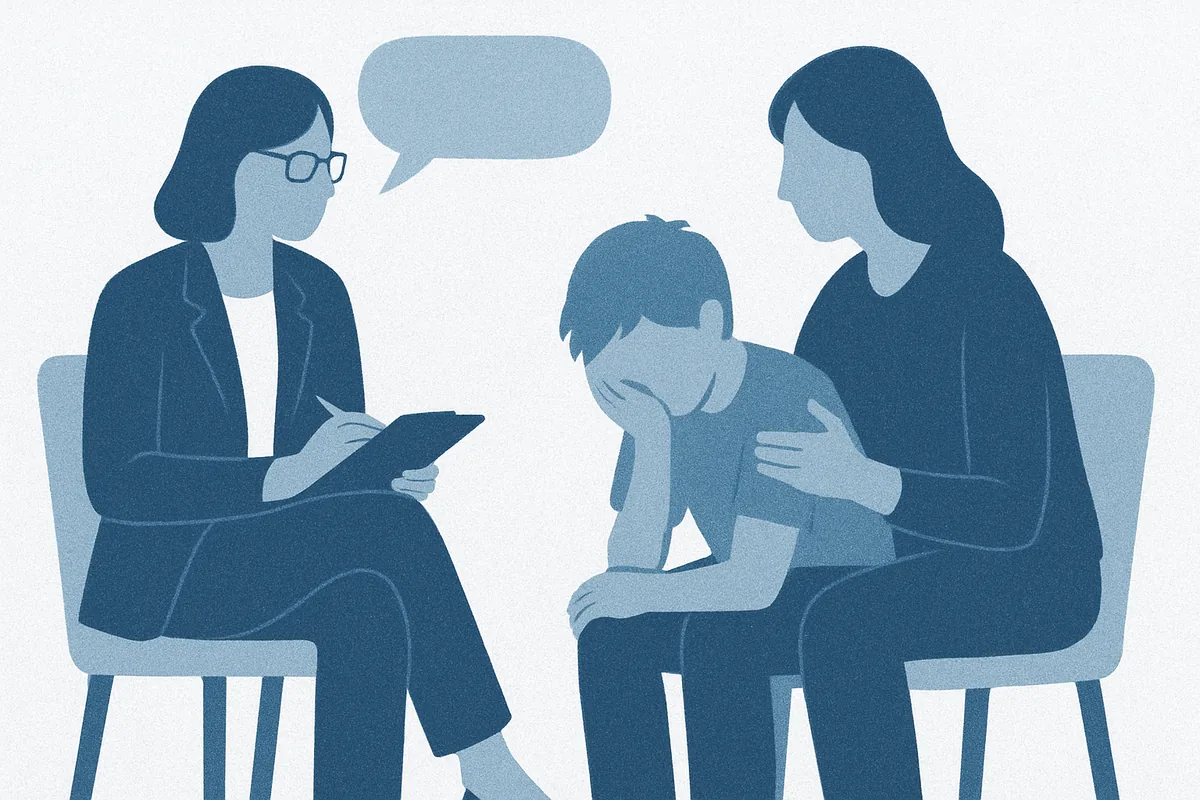
- Approximately two-thirds of children with ADHD show measurably low self-esteem at initial clinical assessment, and self-esteem improves after targeted ADHD treatment (Frontiers in Psychiatry, 2024).
- A 2024 systematic review and meta-analysis in Clinical Psychology Review found youth with ADHD had moderate reductions in global, academic, and social self-esteem compared with typically developing peers.
- Rejection sensitive dysphoria (RSD) is a neurobiologically driven pattern in which children with ADHD experience intense emotional pain in response to perceived criticism or failure, and it is a primary driver of ADHD-linked shame.
- The ADHD diagnosis, when explained correctly to a child, can function as a narrative reset that separates the child's character from their brain's wiring, reducing shame and opening the door to skill-building.
- Children with ADHD and comorbid learning difficulties show significantly lower self-esteem than children with ADHD alone, making early, combined support for both conditions clinically important (PMC, 2024).
Approximately two-thirds of children with ADHD have measurably low self-esteem at the point of clinical assessment, according to a 2024 study published via PubMed (Frontiers in Psychiatry). That figure is striking on its own. What it does not show is how long the erosion has been happening before a child ever reaches a psychologist's room. By the time many families arrive at CAYA World Clinic in Palm Jumeirah, their child has often spent years being told in subtle and not-so-subtle ways that they are failing at something every other child seems to find effortless. Sitting still. Listening the first time. Handing in work. Keeping friends.
ADHD self-esteem damage in children is not a side effect to manage after treatment starts. It is frequently the presenting concern that drives families to seek help in the first place. If your child has recently received a diagnosis and you are wondering how to talk to them about it, our related articles on how to tell your child about an ADHD diagnosis and what the ADHD assessment process involves in Dubai cover those earlier steps in detail. This article focuses on what comes next: why self-esteem takes the hit it does, what is happening neurologically when it happens, and how parents can begin to reverse the damage in a clinically meaningful way.
Why do children with ADHD so often grow up feeling "not good enough"?
The short answer is repetition. A child with ADHD does not have a single bad day that wounds their sense of self. They have thousands of small moments across years of schooling in which the gap between what they intended and what they produced is visible to everyone around them. They meant to sit quietly and could not. They meant to remember the homework and forgot. They meant to not interrupt and did anyway. Each incident carries a corrective response from an adult, a sigh, a name called out in class, a note sent home. Over time the child begins to write a story about themselves: I am the problem.
A 2024 systematic review and meta-analysis published in Clinical Psychology Review found that youth with ADHD showed moderate reductions in global, academic, and social self-esteem compared with typically developing peers. Critically, the review found no significant difference in behavioural self-esteem, which tells us something important: children with ADHD do not generally see themselves as bad people. What they see themselves as is academically incapable, socially awkward, and fundamentally less competent than those around them. That is the specific wound that needs to be addressed.
In Dubai schools, the problem is compounded by the label applied before the diagnosis arrives. Reporting by The National UAE has documented specialists warning that children with ADHD are routinely labelled "unruly" and "naughty" in UAE classrooms, with clinicians emphasising that these labels cause lasting self-esteem damage. The UAE National School Health Screening Guideline (2024) now mandates SNAP-IV screening by school nurses for students displaying ADHD symptoms, with results shared between teachers and parents. This is a meaningful step, but it also means many children are being watched and flagged for years before a formal clinical picture is confirmed, often accumulating corrective feedback throughout.
At CAYA World, we see this regularly in assessments. A child who is finally diagnosed at age nine or ten often has two to four years of accumulated shame sitting underneath their ADHD presentation. The ADHD symptoms did not start at the point of diagnosis. The self-worth damage did not start there either.
An earlier systematic review published via PubMed (2013) reported that 57% of self-esteem studies reviewed found significantly worse self-esteem in untreated ADHD groups compared with non-ADHD controls. The word "untreated" carries real weight here. Self-esteem does not simply decline because a child has ADHD. It declines when the ADHD goes unrecognised, unlabelled, and without support for long enough that the child has no way to explain their own experience except as personal failure.
The neurobiology behind ADHD self-esteem damage: it is not a character flaw
One of the most important reframes a parent can offer a child with ADHD is this: what looks like carelessness, laziness, or defiance is almost always the visible surface of a brain that is wired differently in its regulation of attention, impulse, and emotion. Understanding the specific mechanisms helps parents explain the diagnosis in a way that is accurate and genuinely freeing, rather than a label that simply replaces one category with another.
There are three neurological pathways through which ADHD erodes self-esteem in children. The table below summarises them:
| Mechanism | What the brain is doing | What the child experiences | What it looks like to others |
|---|---|---|---|
| Impulsivity | Reduced inhibitory control in the prefrontal cortex; the brain acts before it can pause | "I didn't mean to say that / do that / knock that over" | Rudeness, disruptiveness, immaturity |
| Variable performance | Dopamine-dependent engagement; the brain is inconsistently fuelled for effortful tasks | "I could do it yesterday, why can't I do it today?" | Laziness, lack of effort, not trying |
| Rejection sensitive dysphoria | Heightened emotional reactivity in the limbic system; perceived criticism triggers intense distress | Overwhelming shame or rage at mild corrections | Overreaction, drama, manipulation |
Variable performance is one of the most misunderstood features of ADHD, and it is central to why children lose confidence. A child who produces excellent work on Tuesday and cannot complete the same task on Thursday is not being inconsistent because they are lazy. Their brain requires sufficient dopaminergic engagement to sustain effortful activity. When the interest, novelty, urgency, or reward signal is present, performance is strong. When it is not, it collapses. Adults interpret this variability as evidence that the child could do it if they tried harder. The child internalises the same conclusion: if I can do it sometimes, my failure at other times must be a choice, which means it must be a flaw.
A review published in PMC (2011) found a large negative effect size of negative 0.90 on self-esteem measures comparing children with ADHD to typically developing peers. This is a clinically significant gap. The neurobiological framing matters in clinical practice because it gives parents a truthful, non-shaming explanation for their child's experience and gives children a way to understand themselves that does not require them to conclude they are broken.
At CAYA World, Dr. Nour Al Ghriwati and our clinical team spend considerable time in parent-guidance sessions unpacking these mechanisms, because a parent who understands the neurobiology is far better equipped to respond in the moment without reinforcing the shame cycle. Knowing that your child's outburst after a mild correction is likely driven by rejection sensitive dysphoria changes what you say next.
What is rejection sensitive dysphoria and how does it affect your child's self-worth?
Rejection sensitive dysphoria (RSD) is not yet an official DSM-5 diagnostic category, but it is a well-documented and clinically significant feature of ADHD that parents in Dubai often have not heard of by the time they reach us. It describes an intense, neurologically driven emotional response to the perception of criticism, failure, or rejection. The word "perception" is important: the triggering event does not need to be real or severe. A teacher's neutral correction, a friend who does not wave back in the corridor, a grade lower than expected can each produce a wave of shame or anger that is disproportionate to any external measure.
A 2014 study published via PubMed found that youth with ADHD symptoms reported significantly higher anxious and angry rejection sensitivity and more perceptions of injustice than controls, and that rejection sensitivity partially mediated links with comorbid emotional and behavioural problems. This finding is clinically important: RSD is not just an emotional inconvenience. It is a mechanism through which ADHD produces secondary anxiety, secondary conduct difficulties, and social withdrawal.
For the child, RSD creates a devastating cycle. They try. Something goes slightly wrong, or they anticipate that it might. They experience an emotional flood that feels completely genuine to them, even if those around them see a minor event. They react with tears, rage, or shutdown. They are then corrected for the reaction, which triggers a further shame response. Over enough iterations of this cycle, the child learns that trying at all carries the risk of unbearable pain. Avoidance starts to look rational. Giving up before starting means you cannot fail publicly.
For parents, the practical implication is that correction needs to be delivered in a way that accounts for RSD. Brief, private, specific, and warm corrections tend to be more effective than public, comparative, or repeated ones. It also means that praise needs to be timely and specific. Vague praise ("good job today") lands differently in a child with RSD than precise acknowledgement of a specific effort ("I noticed you went back and checked your spelling before handing that in").
At CAYA World, we frequently work with parents on developing RSD-aware communication habits in parent guidance sessions that run alongside a child's own therapy. The goal is not to make the household walk on eggshells around the child. It is to reduce the daily emotional load that accumulates before the child even reaches their first therapy session.
How to use the ADHD diagnosis to rebuild your child's story about themselves
A diagnosis is a clinical tool. In the hands of a skilled clinician or a well-prepared parent, it can also be a narrative turning point for the child. The question is not whether to tell your child about the diagnosis, but how to tell them in a way that reframes years of accumulated shame rather than adding a new label to an existing pile.
The framing that tends to land most helpfully with children is one that separates the child's character from their brain's wiring. A child who has spent three years being told they are careless needs to hear something that specifically addresses that attribution. Not "you have a condition" but "your brain works differently in a specific way, and here is what that means for the things that have been hard." The diagnosis becomes an explanation, not an excuse, and not a verdict.
Several principles matter in this conversation:
- Name specific past experiences and reframe them through the ADHD lens. "Do you remember in Year 3 when you kept getting in trouble for talking? Your brain was looking for stimulation because it was under-engaged, not because you were being rude."
- Separate intent from outcome consistently. Children with ADHD have usually been told their outcomes were choices. Restoring the distinction between what they intended and what happened neurologically is a key piece of the work.
- Introduce the idea that the brain is trainable. CBT-based approaches used in ADHD therapy teach children to identify their triggers, practise pausing before acting, and build self-monitoring habits over time. The diagnosis is not a ceiling; it is a starting point for understanding what kind of support actually works.
- Name the strengths that are genuinely connected to ADHD. Many children with ADHD show heightened creativity, unusual persistence in areas of deep interest, strong empathy, and lateral thinking. Name these specifically and accurately, not as consolation prizes but as genuine features of how their brain works.
- Involve the child in the plan. Children who understand their diagnosis and participate in choosing strategies tend to engage with therapy more effectively. At CAYA World, we include age-appropriate psychoeducation for children from the early stages of the therapy process.
It is worth noting that the research supports the value of early reframing. The 2024 Frontiers in Psychiatry study cited above found that self-esteem improved measurably following targeted ADHD treatment. "Measurably" in this context means the improvement was captured on validated self-esteem scales at follow-up, not just reported anecdotally by parents. Treatment that combines skill-building with self-understanding produces better self-esteem outcomes than treatment focused solely on symptom management.
A note for parents at the earlier stages of this process: if your child has not yet received a formal assessment, or if you are still making sense of a recent diagnosis report, our article on the ADHD assessment process in Dubai explains what the evaluation involves and what to expect from the clinical report.
If you are ready to start the therapeutic part of this process, our team at CAYA World is here. Our ADHD therapy for children and teens combines CBT-based skill-building with parent guidance and age-appropriate psychoeducation, designed specifically for the Dubai school context and the expat family experience.
Wondering if It's Time to Talk to Someone?
Our specialist team at CAYA World offers comprehensive assessment and evidence-based treatment, conducted from our clinic in Palm Jumeirah, Dubai.
Practical strategies parents can use right now to restore confidence in children with ADHD
Therapy is the clinical intervention. But parents are present in ways that no clinician can replicate: at the breakfast table, in the car after school, at the homework desk, in the moment after something has gone wrong. The daily language and relational patterns a parent builds are the scaffolding that supports or undermines everything that happens in a therapy room. These strategies are drawn from the approaches our clinical team at CAYA World uses in parent guidance, grounded in CBT principles and the research literature on ADHD and self-esteem.
Praise effort and strategy, not outcome or trait
A child with ADHD whose outcomes are genuinely variable needs praise that does not depend on the outcome. "You are so smart" is the most fragile form of praise for an ADHD child because the next day's failure completely contradicts it. Praising the specific effort or strategy used is far more durable: "You set an alarm to remind yourself about the deadline, and it worked." This kind of specific, process-focused acknowledgement builds what researchers call incremental self-theory: the belief that effort and strategy, not fixed ability, produce results.
Create regular one-on-one time that is not contingent on performance
Many children with ADHD experience the majority of their adult interactions as corrective. School is structured around managing their behaviour. Homework time is structured around their academic deficits. Parental one-on-one time that is genuinely interest-led and free of performance demands sends a different signal: you are worth being with, not just worth managing. Even fifteen minutes of unstructured, child-directed time several times per week produces measurable improvements in attachment security and self-worth over a consistent period.
Reframe failure explicitly and in the moment
When something goes wrong, the reframe needs to happen close in time to the event, not as a post-mortem the following day. A brief, calm acknowledgement of what happened, paired with a neurobiological explanation at an age-appropriate level, is more effective than extended discussion. "Your brain was moving faster than the plan. Let's figure out one thing that might help next time." Brief, factual, forward-facing.
Identify and protect areas of genuine competence
Many children with ADHD have at least one domain in which their neurological profile works in their favour: intense focus on an area of deep interest, physical skill, creative problem-solving, performance, music, sport. Protecting and investing in that domain is not a distraction from academic remediation. It is a clinical priority, because a child who has evidence of their own competence somewhere is far more resilient in areas where they struggle. At CAYA World, we actively explore these strength domains with children and parents as part of building a balanced self-narrative.
Watch the comparison language
Expat families in Dubai often navigate multilingual, high-achieving school environments where academic pressure is considerable. Comparison to siblings, classmates, or "where you should be at your age" is especially damaging for a child with ADHD because it anchors their sense of self entirely in their areas of relative deficit. Replace comparison with personal progress: "You found that section hard last month. This month you got through it."
A 2024 study published in PMC found that children with ADHD and comorbid learning disabilities showed significantly lower self-esteem than children with ADHD alone. This matters practically: if your child has been assessed and a learning difficulty is identified alongside ADHD, both areas need targeted support for self-esteem to improve. Addressing only one while the child continues to struggle in the other maintains the daily failure experience that drives the low self-worth.
When to seek professional support for ADHD and low self-esteem in Dubai
Parent-led strategies are powerful and necessary. They are not always sufficient on their own, particularly when the self-esteem damage has been accumulating for several years, when the child is showing secondary anxiety or depressive features, or when the shame is so entrenched that the child resists any attempt at reframing at home.
The following signs suggest that professional psychological support is warranted rather than optional:
- The child consistently refuses to try tasks in which they have previously failed, even when the difficulty level has been reduced.
- The child makes frequent global self-critical statements: "I am stupid," "I am the worst," "Nobody likes me."
- Emotional reactions to perceived failure or criticism are lasting more than thirty to forty minutes and are difficult to interrupt with co-regulation.
- The child is withdrawing from social situations they previously enjoyed in order to avoid the risk of embarrassment or rejection.
- Sleep is disrupted by worry-based rumination about school performance or friendships.
- Parents have been trying for several months to shift the child's self-narrative without consistent progress.
In Dubai, the DHA has established specialised ADHD clinics for children with referral pathways from primary care, incorporating behavioural intervention, parental management training, and social-skills support. The DHA framework confirms that self-esteem and behaviour are both clinical targets in the public system. For families seeking private care with deeper psychological depth and specialist expat-family experience, CAYA World Clinic in Palm Jumeirah offers a structured pathway from assessment through to therapy.
UAE Federal Law No. 10 of 2023 on Mental Health explicitly guarantees minors the right to appropriate mental health education and age-appropriate care, reinforcing the legal and ethical framework within which early psychological intervention for ADHD-related self-esteem sits.
At CAYA World, our ADHD therapy for children integrates CBT-based skills training, parent guidance, and age-appropriate psychoeducation across a structured course of sessions. The ADHD testing and assessment service is available for families who have not yet completed a formal evaluation. Where a diagnosis is already in hand and therapy is the next step, we can usually schedule an initial consultation within one to two weeks.
If you have noticed several of the signs above in your child, reaching out early rather than waiting to see whether the self-esteem recovers on its own is the clinically supported choice. The 2024 research is clear: self-esteem does improve with targeted treatment, but it does not typically self-correct without it.
Frequently Asked Questions About ADHD and Self-Esteem in Children in Dubai
It is not too late, and "fix" is the wrong frame. Self-esteem in children with ADHD is not permanently set at any point. The 2024 Frontiers in Psychiatry research found measurable self-esteem improvement after targeted ADHD treatment, including in children who had experienced years of difficulty before diagnosis. The earlier support begins, the less the damage compounds, but families who come to us with teenagers who have been struggling for a decade still see meaningful progress. The diagnosis itself is the first intervention: it provides the child with a neurobiological explanation that replaces the self-blaming story they have been carrying.
Lead with the explanation for the past, not just the name for the present. Connect the diagnosis to specific experiences your child has already had. "Remember when you kept getting in trouble for interrupting? Your brain was looking for input it was not getting, not trying to be rude." Use age-appropriate language, avoid clinical jargon, and be direct about the fact that their brain is wired differently rather than broken. Frame the diagnosis as something that explains what has been hard and as a starting point for understanding what kind of support will actually work for the way their brain functions.
Rejection sensitive dysphoria (RSD) is a pattern in which children with ADHD experience an intense, neurologically driven emotional response to the perception of criticism, failure, or social rejection. The triggering event does not need to be severe. A 2014 study in PubMed found youth with ADHD symptoms showed significantly higher anxious and angry rejection sensitivity than controls, with RSD partially mediating links with secondary anxiety and behavioural problems. If your child reacts to mild corrections with what appears to be disproportionate distress or rage, withdraws after social setbacks, or avoids trying at all to prevent the pain of possible failure, RSD is likely part of the picture. A clinical psychologist can assess for this specifically.
Therapy for ADHD-related self-esteem issues is structured and skills-based, not open-ended conversation. At CAYA World, our approach combines CBT-based techniques that teach children to identify their own thought patterns, distinguish intent from outcome, and build practical self-monitoring habits. Children learn to recognise the specific thought distortions that fuel low self-worth, such as over-generalising from one failure or filtering out evidence of competence. Sessions often include parent-guidance components, because the child's home environment either reinforces or counteracts what is built in the clinical hour. Progress is tracked across sessions using validated measures.
Start with the neurobiology rather than a confrontation. Request a meeting with the teacher and come prepared with a brief written summary of your child's diagnosis and the specific features that explain the behaviours being labelled. For example: "Variable performance in ADHD is driven by dopamine regulation, not effort or motivation. A task that engaged him last week may not engage him today for neurological reasons, not because he has decided not to try." Dubai schools are required under the UAE National School Health Screening Guideline (2024) to recognise and accommodate ADHD. If school language continues to undermine your child's self-esteem despite documented communication, a clinical report from your psychologist can formally request classroom accommodations and language adjustments.
Sources and Further Reading
- Self-esteem in children with ADHD at clinical assessment and following targeted treatmentFrontiers in Psychiatry (2024)
- Self-esteem in youth with ADHD: systematic review and meta-analysisClinical Psychology Review (2024)
- Self-esteem in children with ADHD and comorbid learning disabilitiesPMC / PubMed Central (2024)
- Rejection sensitivity and ADHD symptoms in youth: emotional and behavioural correlatesPubMed (2014)
- Self-concept in children and adolescents with ADHD: effect size and clinical implicationsPMC / PubMed Central (2011)
- Self-esteem in untreated ADHD versus controls: systematic reviewPubMed (2013)
- ADHD children are being labelled unruly but they need special careThe National UAE (2023)
- UAE National School Health Screening Guideline (2024). UAE Ministry of Health and Prevention
- UAE Federal Law No. 10 of 2023 on Mental Health. UAE Ministry of Health and Prevention
- ADHD data and statisticsCenters for Disease Control and Prevention (2023)