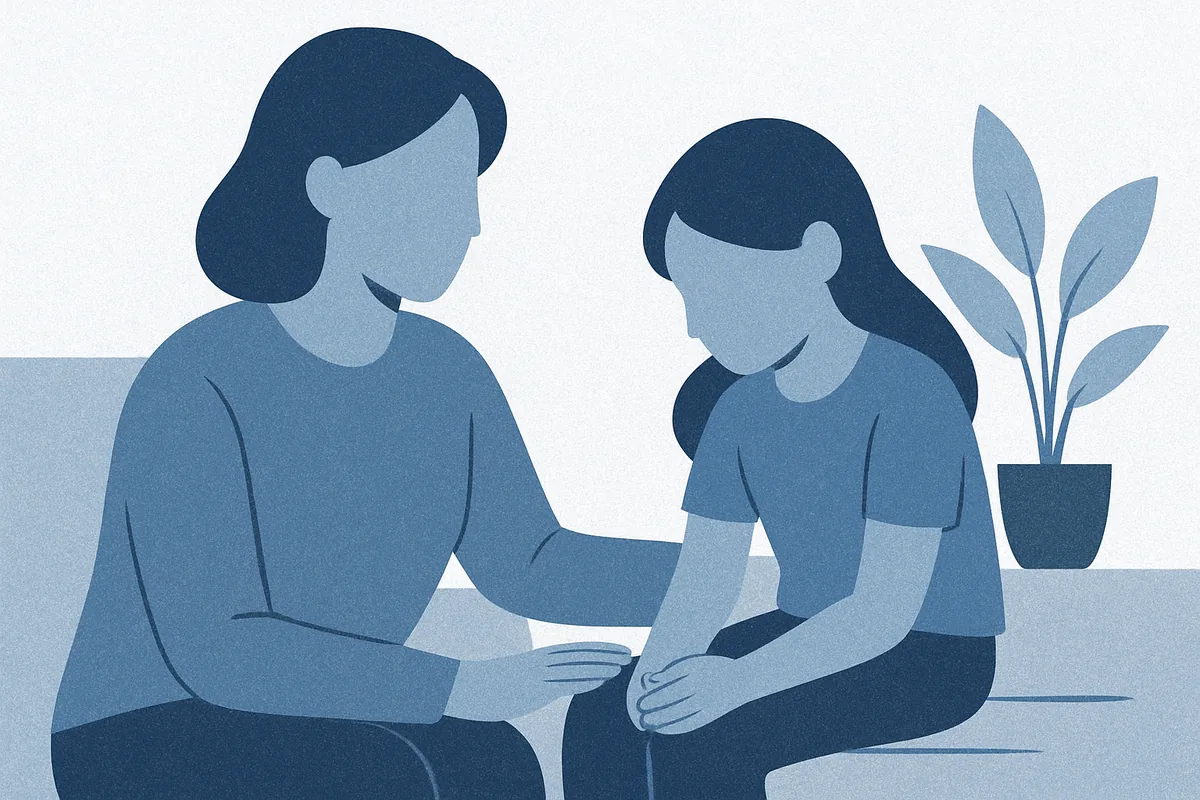
- Resilience in children is not a fixed personality trait but a set of adaptive systems -- primarily safe relationships, self-regulation, and a sense of belonging -- that parents and communities actively build and can also disrupt.
- Ann Masten's foundational research published in American Psychologist identifies caring relationships with competent adults, executive function, and problem-solving as the core protective systems underlying resilience; these are teachable and environmental, not innate (Masten, 2001).
- Dubai's high school-transition frequency, third culture kid identity strain, and elevated parental stress place specific pressure on the very attachment and belonging systems that resilience depends on -- making intentional effort from parents more important, not less.
- A UAE school-based study of 3,745 students found 40.6% PTSD risk, 23.3% anxiety symptoms, and 17.1% depression symptoms following COVID-19 lockdowns, underscoring how quickly adversity erodes child wellbeing when protective systems are disrupted (PLOS ONE, 2024).
- When a child's emotional difficulties persist for four or more weeks, affect friendships or academic functioning, or represent a significant change from their baseline, a clinical psychology assessment is the appropriate next step -- not more coaching at home.
Approximately 23.9% of children in the UAE are reported to have mental health problems, according to a 2024 Springer review of UAE mental health data -- a figure that sits well above many global benchmarks and signals something important: adversity alone does not determine outcomes. What protects children is not the absence of difficulty, but the presence of the systems that help them adapt. That is the clinical definition of resilience in children, and it applies with particular force in Dubai, where school transitions, cultural identity pressures, and high parental stress routinely test those protective systems from an early age.
The good news, grounded in decades of developmental research, is that resilience is not a rare inner quality that some children are born with and others are not. As psychologist Ann Masten has described it, resilience is "ordinary magic" -- the result of ordinary human systems, functioning well. Those systems can be understood, supported, and strengthened. At CAYA World Clinic in Palm Jumeirah, our clinical team works with children and families across Dubai to do exactly that, drawing on evidence-based frameworks tailored to the specific pressures of expat life in the UAE.
What does resilience actually mean in children? (beyond "bouncing back")
The popular definition of resilience -- bouncing back from adversity -- is not wrong, but it is incomplete in ways that matter clinically. Resilience is not a spring-loaded internal mechanism that resets a child to their previous state after stress. It is, more accurately, the capacity to adapt successfully in the face of significant challenges, and that capacity is distributed across relationships, environments, and the child's own developing skills. It is not located exclusively inside the child.
This distinction matters because it changes what parents and professionals look for and where they intervene. If resilience were purely a personality trait, parents could do little beyond hoping their child was born with enough of it. Because resilience is a product of systems, it can be deliberately built -- and it can also be depleted by circumstances outside the child's control.
Masten's foundational 2001 paper in American Psychologist identified a consistent set of adaptive systems that distinguish children who do well under adversity from those who do not: close relationships with at least one competent, caring adult; effective self-regulation; cognitive skills including executive function and problem-solving; and a sense of meaning and agency. These are not exotic resources. They are the ordinary machinery of healthy child development -- which is precisely why their disruption, in circumstances like frequent international relocation or parental burnout, carries such significant risk.
At CAYA World, when parents ask us whether their child is resilient, we reframe the question. Instead of asking "how resilient is this child?", we ask: "which of this child's protective systems are strong, and which have come under pressure?" That reframe opens up a much more useful conversation about what can change.
The five protective systems that build resilience in children
Research in developmental psychopathology has converged on a set of core systems that consistently predict which children adapt well to adversity. Understanding these systems gives parents a practical map for where to focus their energy.
Attachment and close relationships
The single most robust predictor of resilience across cultures and adversity types is access to at least one stable, warm, and responsive relationship with an adult. This does not need to be a parent -- a grandparent, teacher, or coach can serve this function -- but the relationship must be consistent. Frequent school changes in Dubai, which sever peer bonds and rotate teacher relationships, make this the most frequently disrupted protective system we see at CAYA World.
Self-regulation
The ability to manage emotional and behavioural responses to stress -- to tolerate frustration, calm down after upset, and delay a reaction -- is foundational to resilience. Self-regulation develops slowly across childhood and is strongly shaped by early co-regulation with caregivers: when a parent helps a young child name and settle an emotion, they are literally building the neural architecture for self-regulation. Chronic parental stress, a common feature of expat life, can interrupt this process.
Executive function and problem-solving
Children who adapt well under adversity can generate options, plan steps, and evaluate consequences. These cognitive skills are trainable and are closely linked to academic success. Importantly, they are also disrupted by chronic anxiety -- which helps explain why a previously capable child may appear to "fall apart" when family or school stress reaches a threshold.
Identity and sense of meaning
Children who have a coherent sense of who they are -- culturally, socially, and in terms of their own values -- are better equipped to manage the uncertainty that adversity brings. For third culture kids (TCKs) growing up in Dubai, this is a particular pressure point. When a child cannot answer the question "where are you from?" with any confidence, that identity uncertainty can erode the sense of stability that resilience depends on. Our article on third culture kid identity in Dubai explores this dimension in detail.
Community and institutional support
Schools, faith communities, sports teams, and healthcare services form the outer ring of a child's protective system. In Dubai, the quality of this outer ring varies substantially by school system, neighbourhood, and family network. Families who arrive without an established community -- which describes most new expat arrivals -- must actively build this layer rather than inherit it.
Why building resilience in children is harder in Dubai's expat environment
Dubai's school system serves one of the world's most transient student populations. Many children experience three or more school transitions during a single childhood, each one requiring the rebuilding of friendship networks, adjustment to new teacher expectations, and recalibration of their sense of belonging. Developmental research is clear that these transitions carry cumulative cost: each move does not simply reset to zero. The protective systems Masten describes -- relationships, identity, community -- take time to rebuild, and for families with a two or three-year expat posting cycle, that time may never fully materialise before the next move.
A 2024 PLOS ONE study of 3,745 UAE school students found 40.6% PTSD risk, 23.3% anxiety symptoms, and 17.1% depression symptoms following COVID-19 lockdowns. These figures are striking not only for their magnitude but for what they reveal about the fragility of child wellbeing when belonging and routine are disrupted at scale. COVID lockdowns in the UAE compressed years of social disruption into months; the data shows that when the outer protective ring collapses, child mental health deteriorates rapidly.
The third culture kid dimension adds a further layer. Children growing up between cultures in Dubai may not identify fully with their passport country or with Emirati culture, and their peer group may be equally fragmented across nationalities. A 2022 analysis in the International Journal of Environmental Research and Public Health found adolescent wellbeing declined across the UAE between 2015 and 2018 in a nationally representative PISA-linked dataset, with Dubai showing no statistically significant difference from Abu Dhabi -- suggesting the pressures are system-wide rather than specific to one emirate.
Parental stress is the third variable. Expat life in Dubai carries its own stressors: career pressure in a competitive city, the absence of extended family support networks, frequent housing moves, and the constant low-level anxiety of visa and employment dependency. A burned-out or anxious parent is less available for the attuned co-regulation that young children need to build self-regulation skills. This is not a failure of parenting -- it is a predictable consequence of structural pressures. If you recognise yourself in this description, our piece on parental burnout in Dubai outlines what to watch for and when to seek support.
A 2026 UAE resilience validation study published in Adolescence found that UAE adolescents showed moderate total resilience scores but relatively lower personal and caregiver resilience subscores -- suggesting that while social resources exist, the individual and family-level protective systems may be the specific points of vulnerability in this context.
If your child has concerns about screen use adding to their stress or social withdrawal, our article on screen time and children's mental health in Dubai covers how digital habits intersect with emotional wellbeing in the UAE context.
If you are concerned about how Dubai's environment is affecting your child's emotional development, our parenting support service at CAYA World offers structured sessions to help parents build the specific tools that protect children through transitions. A conversation with our team is a practical starting point -- reach out via WhatsApp at +971 4 572 3755 to ask whether a consultation would be useful for your family's situation.
Age-appropriate strategies for building resilience in children, from toddlers to teens
Because resilience is a product of developmental systems that change significantly across childhood, what works for a five-year-old differs substantially from what helps a fifteen-year-old. The following framework is grounded in developmental psychology and adapted for the practical realities of families living in Dubai.
Ages 2 to 5: co-regulation before self-regulation
Toddlers and pre-schoolers cannot self-regulate independently -- the neural circuits are not yet in place. The most important resilience-building work at this age is co-regulation: a calm, attuned parent helping a child name, tolerate, and move through difficult emotions. Concrete strategies include naming emotions aloud ("you're frustrated because the block fell down"), maintaining predictable daily routines, and allowing age-appropriate struggle rather than rescuing immediately. In Dubai's fast-paced lifestyle, protecting routine is particularly difficult -- but it is also particularly valuable for this age group.
Ages 6 to 10: teaching problem-solving skills explicitly
Primary school children are developmentally ready to learn explicit problem-solving steps. Research supports approaches that break problems into stages: identify the problem, generate three possible responses, predict the consequence of each, choose one, and review how it went. This is not a natural process -- it needs to be taught and practised, ideally when the child is calm rather than mid-crisis. For children at this age navigating a new school in Dubai, helping them script a simple social initiation ("I can ask someone their favourite subject in class") reduces the helplessness that school transitions often produce.
Ages 11 to 15: identity work and peer group quality
Early adolescence is when the identity dimension of resilience becomes most visible. For third culture kids in Dubai, this is often the most challenging developmental period: the question of where they belong -- which peer group, which cultural identity, which values -- becomes urgent at exactly the age when peer relationships are most influential. Parents can support this by being genuinely curious about their child's cultural experience without prescribing an answer, and by helping their child identify one or two consistent peer relationships they can sustain through school transitions (via maintained contact, shared activities, or structured visits).
Ages 15 and above: autonomy within structure
Older teens build resilience by taking on age-appropriate responsibility and experiencing the consequences of their choices within a safety net. This means allowing failure when the stakes are manageable, supporting post-failure reflection rather than rescue, and maintaining a relationship in which the young person can acknowledge difficulty without fear of judgment. Teens in Dubai who are facing GCC university or international higher education applications often experience acute performance pressure that can shut down exactly this learning process -- everything becomes too high-stakes to risk. Our teen behaviour support service addresses the specific pressures that older adolescents in Dubai face.
Wondering if It's Time to Talk to Someone?
Our specialist team at CAYA World offers comprehensive assessment and evidence-based treatment, conducted from our clinic in Palm Jumeirah, Dubai.
What parents can do at home: the relationship comes first
Every piece of clinical advice about building resilience in children rests on one foundation: the quality of the parent-child relationship. Not because parents need to be perfect, but because a relationship in which the child experiences genuine interest, repair after conflict, and reliable emotional availability is itself the primary resilience resource. A child who knows their parent will stay curious and calm when things go wrong has a fundamentally different orientation toward adversity than a child who has learned to manage difficulties alone or to hide them from adults.
At CAYA World, we often see parents who have tried every practical technique -- growth mindset scripts, emotion-coaching language, labelled praise -- and still feel stuck. In most of these cases, the barrier is not technique. It is that the relationship itself has come under strain: from parental stress, from a child who has learned to shut down rather than share, or from a long period of misattunement that has left parent and child feeling disconnected. Rebuilding that connection is the work that makes the techniques meaningful.
Specific home practices that developmental research supports include the following:
- Fifteen to twenty minutes of daily one-on-one time with each child, where the child leads the activity and the parent follows without directing or teaching.
- Consistent repair after conflict: apologising when a parent has reacted harshly, and naming what they would do differently. This models accountability and shows the relationship can withstand rupture.
- Narrating your own emotional experience aloud in age-appropriate language: "I was frustrated in that meeting today, so I went for a walk before I called you." Children learn emotional regulation primarily by watching adults regulate.
- Explicitly discussing the family's cultural identity in a way that normalises complexity: "We are [nationality], we live in Dubai, and that gives us a pretty unusual way of seeing the world. What do you think is the strangest thing about how we live?"
- For neurodivergent children -- for whom standard resilience strategies may need significant adaptation -- our dedicated resource on parenting neurodivergent children in Dubai covers evidence-based approaches tailored to ADHD, autism, and related profiles.
None of these strategies requires extraordinary time or resources. They require consistency and a willingness to stay in relationship with a child who is struggling, which is harder than it sounds when the parent is also under pressure.
When low resilience is a clinical concern -- signs worth taking seriously
There is an important distinction between a child going through a hard patch and a child whose adaptive systems have been genuinely overwhelmed. Most children will have periods of difficulty -- after a school move, a bereavement, a friendship breakdown -- that look like low resilience but resolve with time and parental support. The question is how long, how pervasive, and how different from the child's baseline.
A Dubai clinic report published in The National News (2023) found that anxiety was the largest presenting concern for 10 to 19-year-olds seeking treatment, with 25% experiencing anxiety and 16% depression; among children under ten, 23% received treatment for emotional or behavioural problems. These figures reflect what our clinical team at CAYA World sees in practice: children in Dubai are under real and significant stress, and a meaningful proportion need more than parental coaching to recover their equilibrium.
The following signs suggest a clinical assessment is the appropriate next step rather than continued management at home:
- Emotional or behavioural difficulties that have persisted for four or more weeks without meaningful improvement.
- A significant change from the child's baseline personality or functioning: a previously sociable child who has withdrawn, or a previously calm child who has become persistently reactive.
- Difficulties that span more than one setting: home, school, and friendships are all affected, not just one.
- Physical complaints -- recurring stomach aches, headaches, or sleep difficulties -- that do not have a medical explanation.
- A child who avoids situations that other children their age manage: school, social events, or being separated from the parent.
- Any expression of hopelessness, worthlessness, or statements that life is not worth living.
A clinical assessment at CAYA World does not mean a child is seriously unwell. It means a trained psychologist will form a clear picture of where the child's adaptive systems are under strain, what is driving the difficulty, and what targeted support -- whether for the child, the parents, or both -- would be most effective. Early assessment consistently produces better outcomes than waiting until difficulties become entrenched.
Frequently Asked Questions About Resilience in Children in Dubai
Duration, pervasiveness, and change from baseline are the three clinical markers. A hard patch typically affects one area of life (school, for example), lasts a few weeks, and the child largely resembles themselves outside the difficult moments. Low resilience that warrants attention tends to affect multiple areas simultaneously, persists beyond four weeks without meaningful improvement, and represents a noticeable departure from who the child usually is. If you are genuinely unsure, a one-off consultation with a clinical psychologist can give you a clearer read without committing to a full assessment process.
Not necessarily. Disproportionate emotional reactions to small stressors are often a sign that a child's nervous system is already running at capacity from a larger background stress they may not be able to articulate. School pressure, friendship anxiety, family tension, or identity uncertainty can all fill up a child's regulatory bandwidth, leaving very little left for everyday frustrations. Before assuming a resilience deficit, it is worth asking what the child's overall stress load looks like and whether there is an unidentified stressor that is doing most of the work. A clinical assessment can help identify the underlying driver.
The most protective factor during school transitions is relationship continuity. Before the move, help your child identify one or two friendships they will actively maintain through the transition -- specific plans, not vague intentions. After the move, prioritise the relationship with you above academic performance for the first six to eight weeks: a child who feels emotionally safe at home will find their footing at school faster. Give the child language for navigating a new social environment rather than expecting it to happen automatically, and watch for signs of withdrawal or physical complaints in the first term, which often signal adjustment difficulty before it becomes explicit.
Resilience is primarily environmental and relational, not innate. While temperament plays some role in how easily a child regulates emotions, Ann Masten's foundational research makes clear that the core protective systems -- relationships, self-regulation, problem-solving, identity -- are built through experience and can be deliberately cultivated. This means parents, schools, and clinicians can make a measurable difference. It also means that circumstances can erode resilience even in a child with a naturally easy temperament, which is why the environment matters at least as much as the individual child.
From birth. The earliest resilience work is not explicit teaching but responsive caregiving: meeting a baby's needs consistently builds the secure attachment that becomes the foundation for every other protective system. By ages two to three, parents can begin to name emotions, tolerate appropriate distress without immediately rescuing, and maintain predictable routines -- all of which train self-regulation. Explicit problem-solving strategies become teachable around age six to seven. The work is different at every age, but there is no age at which it is too early or too late to invest in the protective systems that resilience depends on.
Sources and Further Reading
- Ordinary Magic: Resilience Processes in Development -- Masten, A.S., American Psychologist (2001)
- Mental Health of Children and Adolescents in the UAE -- Springer (2024)
- Post-COVID-19 mental health symptoms among UAE school students -- PLOS ONE (2024)
- UAE clinic warns of increased anxiety levels among young people -- The National News (2023)
- Adolescent wellbeing in the UAE: a PISA-linked analysis -- International Journal of Environmental Research and Public Health, PMC (2022)
- Resilience validation study in UAE adolescents -- Adolescence, Tandfonline (2026)
- Dubai to teach key life skills under Education Action Plan -- The National (2026)