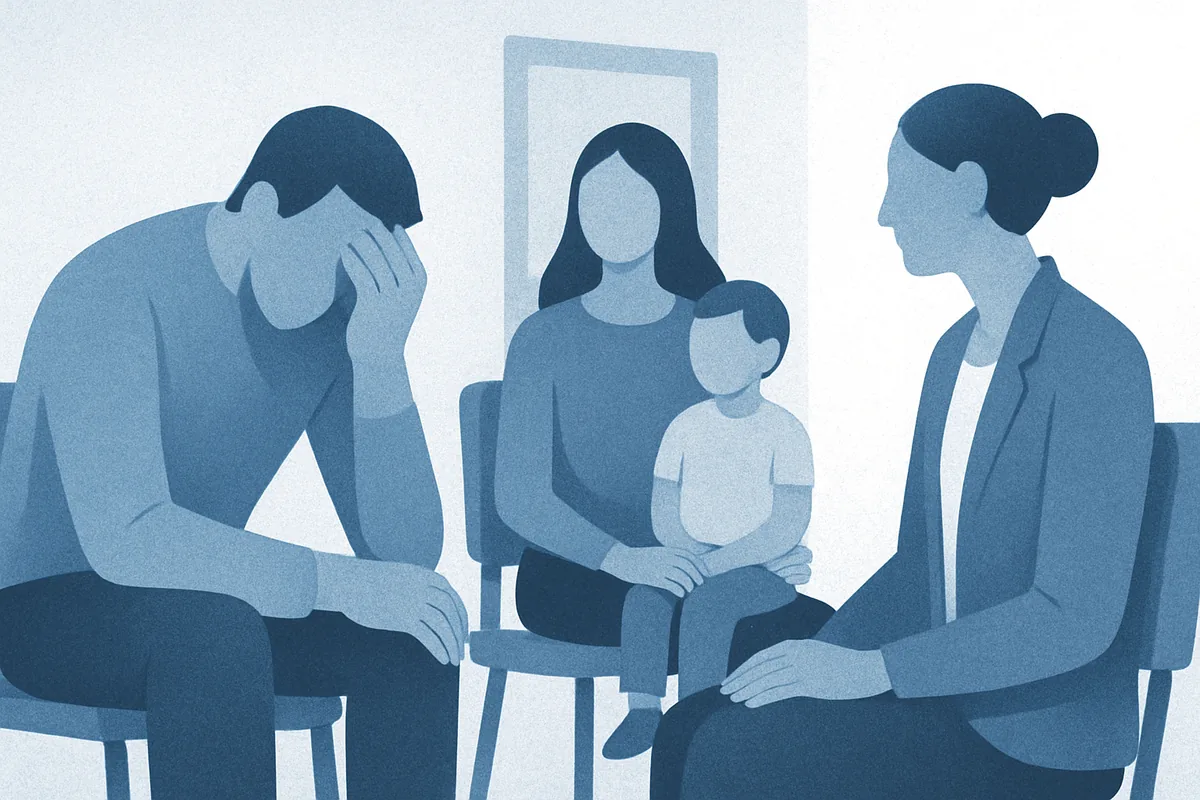
- A 2022 YouGov UAE survey found that 44% of UAE residents would not feel comfortable discussing their mental health and 36% would feel uncomfortable going to a professional for help, confirming that stigma is a measurable, widespread barrier rather than an individual sensitivity.
- UAE law (DHA Health Data Protection and Confidentiality Policy) legally prohibits clinics from disclosing patient information without consent and classifies unauthorised disclosure as gross misconduct, giving every therapy client in Dubai an enforceable legal protection.
- Stigma operates differently across Dubai's main expat communities: South Asian community members face family honour concerns and language barriers, Arab expats often experience conflation of distress with spiritual weakness, and Western expats commonly face a performance-culture pressure that equates help-seeking with professional failure.
- Employer access to therapy records in Dubai is not possible through legitimate channels: a psychologist or counsellor cannot share information with an employer without the client's explicit written consent, and workplace employee assistance programmes operate under the same confidentiality obligations.
- The Dubai Health Authority launched its Mental Wealth Strategy as a multi-year, multi-initiative framework tied to Dubai's Social Agenda 33, signalling an explicit government commitment to reducing stigma and expanding mental health access across the emirate.
A 2022 YouGov survey found that 44% of UAE residents would not feel comfortable talking about their mental health and 36% said they would feel uncomfortable going to a professional for help. Those are not small numbers in a city of nearly four million people. Mental health stigma in Dubai is not a background concern or a cultural curiosity; it is the single most consistent reason people delay or avoid care that would genuinely help them. At CAYA World, we hear this every week: clients who waited months, sometimes years, before booking a first appointment, not because they doubted that therapy works, but because something else got in the way.
This article maps what that something else actually is. It breaks down how stigma shows up in different communities living in Dubai, explains what UAE law actually says about confidentiality (because most people do not know it), and gives you a practical set of steps to find support without anyone in your life needing to know unless you choose to tell them. If you are already wondering whether therapy is the right step, our guide on mental health resources for Dubai expats covers the broader landscape of what is available here.
What does mental health stigma actually look like in Dubai?
Stigma is not a single thing. Clinicians typically distinguish between two main forms: public stigma (the negative attitudes held by a community toward people with mental health problems) and self-stigma (the internalisation of those attitudes, where a person applies the same negative judgement to themselves). In practice, both operate simultaneously, and together they create a powerful brake on help-seeking behaviour.
A 2025 cross-sectional study published in the Cambridge University Press journal found that 69% of UAE medical students agreed that most people would think less of someone who had received mental health treatment, and 52.9% said treatment is perceived as a sign of personal failure. The study sample was medically educated people, which makes those figures striking. It suggests that stigmatising beliefs exist even among those most likely to understand the clinical reality of mental illness.
A separate UAE population study published in the Asian Journal of Pharmaceutical and Clinical Research (2021) found that 62% of respondents held negative attitudes toward people with schizophrenia or depression, and 67% believed people with mental illness are dangerous. These beliefs do not accurately reflect clinical reality; the evidence base on dangerousness consistently runs in the opposite direction. But perception shapes behaviour. When a person grows up in an environment where these beliefs are common, seeking help carries a social risk that is entirely real, even if the beliefs driving it are not.
At CAYA World, we often see this play out at the point of referral. Adults arrive not because something acute has happened, but because they have finally reached the point where the cost of not coming outweighs the cost of being seen walking through a clinic door. That delay has a clinical price: research consistently shows that later presentation in anxiety and depression is associated with longer recovery. The stigma is not abstract; it shapes outcomes.
Self-stigma versus public stigma: why the distinction matters
Public stigma is external pressure. Self-stigma is what happens when that pressure is absorbed and directed inward. The 2021 Economist Impact UAE Mental Health Report found that 58.9% of UAE respondents reported shame associated with seeking mental health support. Shame is a self-directed emotion. It tells a person that seeking help reflects something wrong with them, not just something challenging about their situation. Addressing shame in a clinical setting often takes as much work as addressing the presenting problem itself, which is precisely why naming it clearly, as this article attempts to do, is a necessary first step.
Why mental health stigma in Dubai affects different communities differently
Dubai's population is roughly 90% expatriate, drawn from over 200 nationalities. Mental health stigma is not uniformly distributed across those communities. It takes different shapes depending on cultural frameworks, family structures, religious context, and the specific pressures each group faces in the UAE. Treating stigma as a single monolithic problem misses most of what actually needs to be addressed.
South Asian expats
South Asian communities in Dubai face some of the most documented and acute stigma barriers. A 2025 cross-sectional study found that among South Asian help-seekers, 32.6% reported that a mental health condition would be considered shameful by their family, and 56% cited cultural or language barriers as obstacles to accessing care. The family-honour dimension is particularly significant here: in collectivist cultural frameworks, an individual's mental health disclosure can be perceived as reflecting on the entire family unit, not just the person seeking help. The fear is not only "what will people think of me" but "what will people think of us." Additionally, several South Asian languages do not have direct translations for clinical terms like "anxiety disorder" or "depression," which makes discussing these experiences harder both within families and with clinicians who do not share the same linguistic background.
Arab expats and nationals
For Arab residents, stigma is often shaped by the intersection of cultural expectations around strength and resilience with religious frameworks that can conflate psychological distress with inadequate faith. A 2023 MENA systematic review published in PubMed found that stigma tied to cultural and religious misconceptions was the dominant barrier to care across the region. That pattern shows up in Dubai's Arab expat and Emirati communities as a tendency to seek religious counsel rather than clinical support for what are, in fact, treatable psychological conditions. This is not to say that spiritual support has no value; for many people it does. The problem arises when it substitutes entirely for evidence-based care in situations where clinical intervention is necessary.
Western expats
Western expat communities in Dubai face a different version of stigma, one shaped less by family-honour concerns and more by a high-performance culture that frames help-seeking as weakness. Dubai attracts ambitious, career-focused people from the UK, US, Europe, Australia, and South Africa, among other places. Many are here precisely because they are high achievers. The unspoken narrative in those social circles often runs: "everyone here is managing just fine; struggling is a personal failure." We see this in clients who are reluctant to attend sessions during working hours, who pay out of pocket when their insurance would cover treatment rather than risk a paper trail, and who describe extensive planning around how to get to a clinic without being recognised. The stigma is real, even when the cultural expression of it looks different.
If you are an expat working through a transition that is affecting your wellbeing, our article on navigating culture shock and mental health as a Dubai expat goes into more detail on the adjustment pressures that commonly bring people to therapy for the first time here.
The workplace fear: will my employer find out I'm in therapy?
This is the question we hear most often from working adults in Dubai, and it deserves a direct answer: no, your employer cannot find out you are seeing a therapist through any legitimate channel, and here is why.
A private psychology or counselling clinic operates under confidentiality obligations. A psychologist in a DHA-regulated clinic is bound by professional ethics and UAE health data law to keep your health information private. Your employer has no legal mechanism to request information about your mental health treatment from a private clinic without your explicit written consent. That consent is yours to give or withhold; no one can extract it from you as a condition of employment without violating UAE labour law.
Employee assistance programmes and insurance
Two points of concern come up regularly. First, employee assistance programmes (EAPs): if your company offers an EAP that includes therapy sessions, those sessions are administered by a third-party provider, not by your employer directly, and are subject to the same confidentiality protections. EAP providers are contractually and legally prohibited from sharing individual session information with your employer; aggregate anonymised usage data is the limit of what they report. Second, insurance: if you use your health insurance to cover therapy, your insurer may report aggregate claims data to your employer as part of the group plan, but this data is anonymised at the individual level. If individual-level disclosure is a concern, you can choose to attend a clinic directly and pay privately, which severs any insurance paper trail entirely.
The reality of how workplace mental health disclosure works
In our clinical experience at CAYA World, the fear of employer discovery is almost always more powerful than the actual risk. We have never had a client's employer contact us requesting therapy information. That is not reassuring anecdote; it reflects how the system is structured. The clinic is legally prohibited from confirming even whether a person is a client without their authorisation. What we can confirm is this: if you have concerns about anxiety, burnout, or depression that are affecting your work, addressing them in therapy tends to improve work performance, not undermine it, which means the fear that disclosure would damage your professional standing often runs in the opposite direction of what the data shows.
For evidence-based support specifically tailored to anxiety, our anxiety therapy service in Dubai offers structured CBT-based care for adults experiencing workplace stress, generalised anxiety, and burnout. If you are unsure whether what you are experiencing warrants professional support, a brief intake conversation is all it takes to get clarity.
What UAE law says about therapy confidentiality
One of the most concrete reassurances available to anyone considering therapy in Dubai is UAE law itself. The DHA Health Data Protection and Confidentiality Policy legally prohibits the disclosure of patient health information without the patient's consent. Unauthorised disclosure by a healthcare professional or clinic is classified as gross misconduct under this policy, with professional and legal consequences. This is not a guideline or an ethical suggestion; it is an enforceable legal standard.
What this means in practical terms is that a therapist in a DHA-regulated clinic in Dubai cannot legally share the following with any third party without your explicit written consent:
- The fact that you are attending therapy
- Any information discussed during sessions
- Your diagnosis, if one is given
- Any reports, assessments, or clinical notes
There are narrow exceptions that apply in almost all jurisdictions internationally: imminent risk of serious harm to the client or to another person, court-ordered disclosure in specific legal proceedings, and mandatory reporting for certain safeguarding situations involving children. Outside of these narrow exceptions, everything stays within the clinic.
Does therapy affect your UAE visa or residency?
This concern surfaces especially among newer Dubai residents. The direct answer is no: attending therapy at a private DHA-regulated clinic has no bearing on your UAE residency or visa status. There is no mechanism by which a clinic's treatment records connect to immigration databases for standard outpatient psychological treatment. People on all types of UAE visas, employment, dependent, investor, and freelancer, attend therapy at CAYA World without any immigration implications.
Confidentiality for couples and families
Confidentiality becomes more nuanced in couples or family therapy, where more than one person is the client. At CAYA World, we address this directly in the initial session: each person in a couples or family therapy context is informed about what information is kept strictly individual (for example, a session held with one person separately) versus what is shared within the therapeutic process. Clarity about this at the outset prevents the common fear that what you say will be reported back to a spouse or family member outside the room.
Wondering if It's Time to Talk to Someone?
Our specialist team at CAYA World offers comprehensive assessment and evidence-based treatment, conducted from our clinic in Palm Jumeirah, Dubai.
How to find therapy discreetly in Dubai, practical steps
Understanding that confidentiality is legally protected is one thing. Feeling practically comfortable taking the step is another. These are the steps that make the process easier for people who are worried about being seen or identified.
Choose a clinic in a low-footfall location
Palm Jumeirah, where CAYA World is located, offers a degree of natural privacy compared to high-traffic central Dubai clinics. The building does not carry clinical signage visible from the street in the way a hospital or large medical centre does. For people concerned about being recognised, this kind of location matters more than it might seem.
Book under your own name, digitally
You do not need a GP referral or a formal written request to book a psychology appointment in Dubai. At CAYA World, you can initiate contact by WhatsApp or email, which leaves no voicemail or paper trace in shared spaces. The initial intake is brief and handled by our clinical coordination team, not a receptionist who might be known to you socially.
Consider session timing
Many of our clients prefer early morning or early evening slots, which sit outside standard office hours and reduce the chance of colleagues or community members seeing them at the clinic. We offer appointment flexibility precisely because we understand that this matters to people.
Think about who does and does not need to know
You are under no obligation to tell your family, partner, or friends that you are attending therapy. Some clients find that telling a trusted person helps; others prefer to keep it entirely private. Both choices are clinically and practically valid. Therapy works regardless of whether anyone else knows you are doing it. If social pressure from family is itself part of what brings you to therapy, it is often better to start attending before attempting to have that conversation at home.
Start with a single orientation call
For people who feel uncertain whether therapy is the right step, or whether their concerns are "serious enough," a brief orientation call with a member of our clinical team at CAYA World can answer those questions without any commitment to ongoing sessions. Many people find that the conversation itself reduces the anxiety around the process considerably. Getting started with therapy as a Dubai resident does not have to be a formal, high-stakes commitment at first contact.
Why seeking help in Dubai is becoming more normal
The stigma landscape in Dubai is not static. There are measurable shifts under way, driven by both official policy and changing cultural norms, particularly among younger residents.
The Dubai Health Authority launched its Mental Wealth Strategy, a multi-year, multi-initiative framework tied to Dubai's Social Agenda 33, with an explicit government mandate to make mental health dialogue normalised and stigma-free. The strategy spans ten programmatic areas and represents a sustained, top-level commitment to mental health as a public priority, not a peripheral healthcare concern. In October 2024, Emirates Health Services ran its "Our Mental Health, Our Responsibility" awareness campaign, while the Ministry of Health and Prevention ran a simultaneous "Mental Health 360" campaign. The fact that multiple government bodies coordinated public destigmatisation campaigns in the same month signals that 2024 to 2025 is a peak period of official momentum on this issue in the UAE.
Beyond government programmes, the social conversation around mental health in Dubai has shifted noticeably. Community events, workplace wellbeing initiatives, and school-based mental health programmes (several of which serve populations whose children come through CAYA World for assessments and therapy) have created more public familiarity with therapy as a practical tool rather than a last resort. Younger residents, particularly those in their 20s and early 30s, are arriving for therapy earlier and with less ambivalence than was typical five years ago.
The role of the expat experience itself
There is something particular about the expat experience that makes Dubai residents, in some ways, more therapy-ready than they might be in their home countries. Being physically separated from extended family networks, navigating a new culture, managing career pressures in a high-cost city, and often doing all of this while building a life far from the community that formed you: these are circumstances that commonly produce the kind of distress that therapy addresses well. Life transitions therapy addresses precisely this intersection of practical and emotional challenges. Many people arrive in Dubai already carrying things they have not processed; the removal of their usual social containment makes those things harder to ignore.
At CAYA World, a significant proportion of first-time therapy clients are people who had never considered therapy at home but found that something shifted after arriving in Dubai. The context matters. And the availability of a skilled, multilingual clinical team who understand both the cultural context of where clients come from and the specific stressors of life here makes a difference to how quickly people can move from uncertainty to genuine progress in their sessions.
Frequently Asked Questions About Mental Health Stigma in Dubai
No, not through any legitimate channel. DHA-regulated clinics are legally prohibited from disclosing patient information to third parties, including employers, without explicit written consent from the client. If you use private health insurance, individual-level claims data is not shared with employers under UAE data protection obligations. If you pay out of pocket, there is no insurance trail at all. Your employer has no mechanism to request therapy records from a private clinic, and providing such information without your consent would constitute gross misconduct under UAE health data law.
It is changing, measurably so, though it has not changed uniformly. The UAE government's Mental Wealth Strategy, multiple public awareness campaigns in 2024 and 2025, and shifting norms among younger residents have all moved the needle. A 2022 YouGov survey found that 62% of UAE residents said they would seek professional help if they needed it, which is a majority. At the same time, a 2021 Economist Impact report found 58.9% reported shame around doing so. Both can be true simultaneously: people recognise they should seek help while still feeling shame about it. The practical answer is that therapy in Dubai is far more visible, accessible, and socially accepted than it was a decade ago, and that trajectory is continuing.
Choose a clinic in a lower-footfall area rather than a large hospital or medical mall. Initiate contact by WhatsApp or email rather than a phone call that others might overhear. Book appointment times outside standard working hours, typically early morning or early evening, which reduces the chance of being seen by colleagues or community members. At CAYA World on Palm Jumeirah, these practical privacy features are part of how the clinic is set up. You can reach out directly, ask questions before committing to an appointment, and attend sessions without any visible clinical signage or shared waiting areas with other medical services.
No. Attending therapy at a private DHA-regulated clinic has no connection to UAE immigration databases for standard outpatient psychological treatment. Your residency status is managed through immigration channels that operate entirely separately from private healthcare records. People on employment, dependent, investor, and freelancer visas all attend therapy at clinics like CAYA World without any immigration implications. This question comes up most often among newer Dubai residents and those from countries where mental health treatment can carry legal or administrative consequences, which is not the case in the UAE for private outpatient care.
Start attending before trying to change their view. Your family's opinion of therapy does not need to change for therapy to help you, and you are not obligated to disclose that you are attending. If and when you do decide to talk to family about it, having a few sessions under your belt often makes those conversations easier, partly because you have more clarity yourself about what you are working on. If your family's attitudes toward your mental health are themselves part of what brings you to therapy, that is a legitimate focus of the work. A clinician can help you think through how to handle those relationships without that conversation needing to happen before your first session.
Sources and Further Reading
- Stigma toward mental health treatment among UAE medical studentsCambridge University Press (2025)
- UAE residents' attitudes toward professional mental health supportYouGov UAE Survey (2022)
- UAE Mental Health ReportEconomist Impact (2021)
- Stigma and barriers to mental health help-seeking in the MENA region: systematic reviewPMC/PubMed (2023)
- Negative attitudes toward mental illness in UAE population samples. Asian Journal of Pharmaceutical and Clinical Research (2021)
- Cultural and language barriers to help-seeking among South Asian communities. East Asian-South Asian Psychology Journal (2025)
- DHA Health Data Protection and Confidentiality Policy. Dubai Health Authority
- DHA Mental Wealth Strategy. Dubai Health Authority