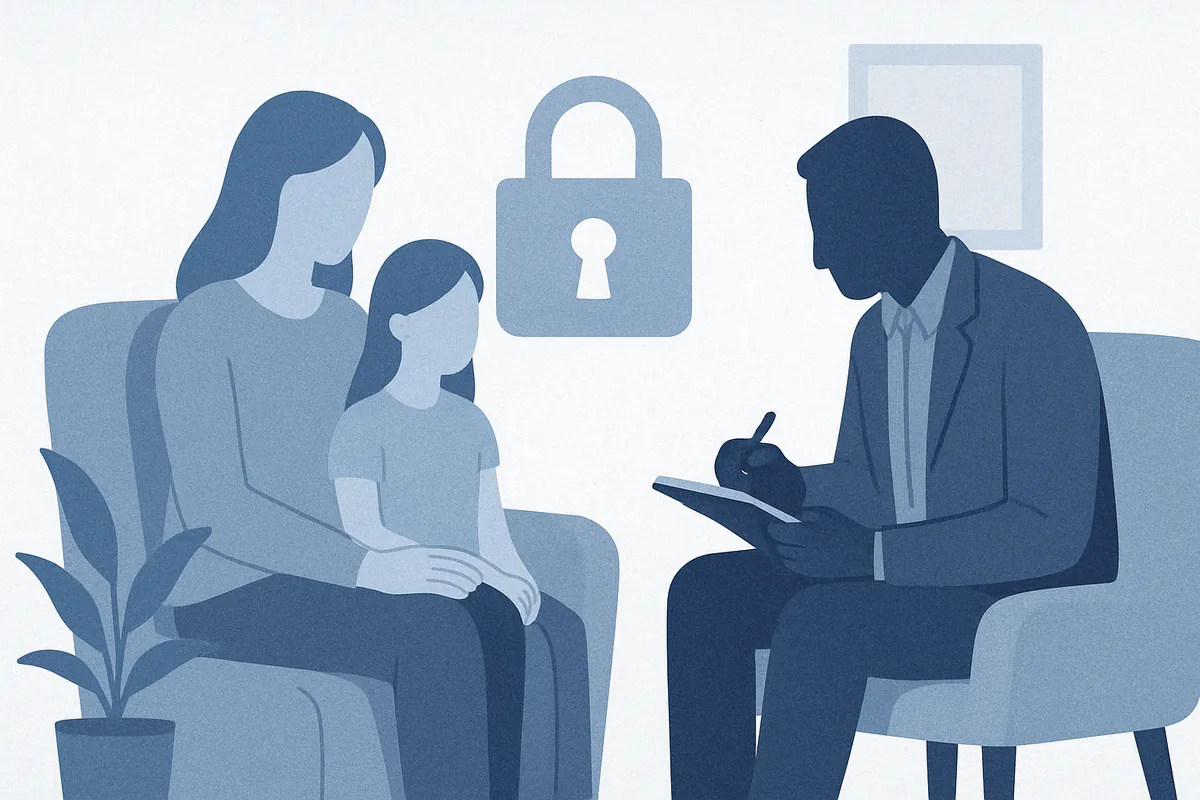
- Under UAE Federal Law No. 2 of 2019 and DHA Standards for Mental Health (2025), your therapist cannot share your health records with your employer or anyone else for non-health purposes without your written consent.
- Using company health insurance to pay for therapy in Dubai does not automatically give your employer access to your session content; insurers receive only the diagnostic and billing codes required for reimbursement processing.
- Therapists in Dubai are legally required to break confidentiality in three defined situations: credible risk of serious harm to self or others, a formal court or judicial order, and specific public-health reporting obligations.
- UAE Federal Decree-Law No. 28 of 2021 requires clinicians to inform patients of the limits of confidentiality at the very start of treatment, making the consent conversation a legal obligation rather than optional practice.
- A 2022 YouGov survey found 36% of UAE residents felt uncomfortable seeking professional mental health help, a figure that confidentiality fears almost certainly contribute to, despite robust legal protections already being in place.
A 2022 YouGov and Zurich Insurance survey found that 36% of UAE residents would feel uncomfortable going to a professional for mental health help, and 44% would not feel comfortable discussing their mental health at all (YouGov / Zurich UAE Mental Health Survey, 2022). Across our work at CAYA World, one question comes up more than almost any other before a first appointment is confirmed: "Will anyone find out?" The concern is not abstract. In Dubai's large expat workforce, where visas are often employer-sponsored and health insurance comes through company group plans, the fear of workplace exposure stops real people from booking sessions they genuinely need.
Therapy confidentiality in Dubai is not simply a professional norm. It is grounded in UAE federal legislation and DHA regulatory standards that carry legal weight. This article sets out exactly what those laws say, addresses the most persistent myths about employer and insurance disclosure, explains when a therapist is legally required to share information, and gives you a concrete set of questions to ask before your first session.
Why do so many Dubai expats worry about therapy confidentiality?
The anxieties are understandable when you look at the structure of working life in Dubai. A significant proportion of residents are here on employer-sponsored visas, which creates a psychological tethering between job security and personal life that does not exist in the same way back in the UK, the US, India, or wherever home might be. Add company-provided group health insurance into the picture, and the logic runs something like this: "My employer pays for my insurance, my insurance pays for my therapist, therefore my employer can see what I tell my therapist." That chain of reasoning is wrong at the final link, but it is not an irrational place to end up.
There is also a broader cultural backdrop. The MOHAP UAE Mental Health Study 2022 recorded 377,838 patient visits for mental health disorders across the UAE that year, indicating substantial and growing utilisation (MOHAP UAE, 2022). Yet stigma persists. In communities where mental health challenges have historically been framed as personal or family failures, the prospect of a professional record existing feels risky even when the legal protection is solid.
For expats who are new to navigating the UAE health system, the uncertainty compounds this. Systems feel unfamiliar. Consent forms are signed quickly at intake. The scope of what insurers receive is not always explained clearly. At CAYA World, we often see clients who have spent months researching whether it was "safe" to book an appointment before finally reaching out. That delay has real consequences. If you recognise yourself in this, the article below is written specifically for you.
Three specific fears come up most often in our initial conversations:
- That a manager or HR department will be notified of a therapy booking through insurance claims
- That a spouse or family member will be contacted if distressing material comes up in a session
- That a therapist's notes could be accessed by an employer, the government, or immigration authorities
Each of these deserves a direct, legally grounded answer, which the following sections provide.
What does therapy confidentiality in Dubai actually mean, and what does the law say?
Therapy confidentiality in Dubai is governed by two principal legal instruments, supplemented by DHA facility standards. Understanding which law covers which situation removes a lot of the uncertainty.
UAE Federal Law No. 2 of 2019
UAE Federal Law No. 2 of 2019 prohibits the sharing of patient health data for non-health purposes without the written approval of the patient, except in three legally defined categories: insurance verification, judicial requests, and public health protection. This is the baseline data-protection standard that applies across all healthcare settings in the UAE, including outpatient mental health clinics. It is not aspirational guidance. It is federal law, and violation carries regulatory and legal consequences for the clinician and facility involved.
UAE Federal Decree-Law No. 28 of 2021
UAE Federal Decree-Law No. 28 of 2021 on mental health goes a step further in the psychological care context. It requires clinicians to inform patients of the limits of confidentiality at the start of treatment. This means the consent conversation you have at the beginning of therapy is not a box-ticking exercise. It is a legal obligation on the clinician's side, designed to ensure that you understand precisely what is protected and what is not before you say a word.
DHA Standards for Mental Health (2025)
At the facility level in Dubai, the DHA Standards for Mental Health (2025) require all licensed mental health facilities to keep patient health records confidential and to disclose only as permitted by applicable policy and law. These standards apply to every DHA-regulated clinic, which is why working with a properly licensed provider matters. Our guide to DHA-licensed psychologists in Dubai explains what licensing means in practice and how to verify that a provider is genuinely regulated.
Taken together, these three instruments create a layered legal framework. Federal law protects your data at the country level. The mental health decree protects informed consent at the clinical level. DHA standards govern facility-level practice. At CAYA World, our clinical team operates within all three frameworks, and clients receive a clear written confidentiality statement during the intake process so that nothing about the limits of protection is left ambiguous.
Will your therapist tell your employer, insurer, or family?
This is the section most people arrive here looking for. The short answers are: no to your employer, limited information only to your insurer, and no to your family without your consent. Here is what each of those means in practice.
Your employer
Your employer has no right of access to your therapy records, your session content, your diagnosis, or the fact that you are attending sessions at all. This holds whether or not your employer is sponsoring your visa, and whether or not you are using company health insurance to pay for sessions. The insurance pathway is the key area of confusion, addressed directly below.
Under UAE Federal Law No. 2 of 2019, health data cannot be shared with your employer for non-health purposes without your written approval. A general HR function at a company does not constitute a health purpose. Routine insurance reimbursement is processed between your insurer and the clinic; your employer, as the group plan holder, typically receives aggregate claims data for cost-management purposes rather than individual employee records. Whether an individual employer's plan provides access to itemised claims at the individual level depends on the specific group policy terms. If this is a concern, the most reliable step is to ask your HR department or insurance provider in writing what data flows from individual employee health claims to company administrators before you book.
If you would prefer complete separation from your company insurance entirely, sessions can be paid out of pocket. That removes the insurance pathway from the picture altogether.
Your insurer
When you use health insurance for therapy, your clinic submits a claim that typically includes a diagnostic code (the category of condition being treated) and a procedure or session code. Insurers receive this information for the purpose of verifying and processing the claim. That is the "insurance verification" exception under UAE federal law. Your insurer does not receive session transcripts, your therapist's clinical notes, or the specific content of what you discussed.
The insurance and mental health coverage guide on our site covers what insurance typically pays for in Dubai and how to check your benefits, without walking into what your insurer might disclose. That article covers coverage; this one covers privacy. A 2024 UAE regulation prohibited blanket psychiatric exclusions from health insurance plans, improving access to coverage (Morgan Lewis, 2024). Critically, this change concerns what is covered, not what employers can see. Greater coverage access and employer privacy are independent questions.
Your family members or partner
Your family members, spouse, or partner have no automatic right to information about your therapy. Without your explicit consent, your therapist will not contact them, tell them the content of your sessions, or confirm that you are attending. This applies equally in couples or family therapy to information disclosed by one partner in an individual session with the same therapist. At CAYA World, we are careful to establish what is shared across relational therapy contexts at the outset, and clients set those boundaries in writing.
If you are thinking about starting therapy for anxiety, depression, or a life transition and the privacy of that process has been holding you back, our anxiety therapy service in Dubai is delivered within a fully confidential clinical setting. A brief WhatsApp message to our team is enough to start a conversation about whether structured support fits your situation, no commitment required.
Wondering if It's Time to Talk to Someone?
Our specialist team at CAYA World offers comprehensive assessment and evidence-based treatment, conducted from our clinic in Palm Jumeirah, Dubai.
When is a therapist in Dubai legally required to break confidentiality?
Confidentiality has limits. Every regulated clinical system in the world defines circumstances in which a clinician's duty to protect a person overrides their duty to keep information private. Dubai and the UAE are no different. Knowing what those limits are is not a reason to avoid therapy. It is information that allows you to enter therapy with clear expectations.
Under DHA patient rights guidelines and UAE federal legislation, therapists in Dubai are generally required or permitted to break confidentiality in the following situations.
Risk of serious harm to self or others
If you disclose a credible, imminent intention to seriously harm yourself or another person, your therapist has both an ethical and a legal obligation to take protective action. What that action looks like depends on the clinical assessment of the risk. It might involve contacting an emergency service, recommending an immediate psychiatric review, or, in some situations, notifying a person who is at risk of harm. Therapists do not make these decisions lightly. Disclosing distress, suicidal thoughts, or difficult feelings is not the same as presenting an imminent, credible risk. The clinical threshold for action is specific and involves a genuine assessment of imminence, seriousness, and intent. If you are experiencing suicidal thoughts and are worried about what happens if you mention them in therapy, the most useful thing you can do is raise that concern directly with your therapist at the start. They will explain exactly how they approach this.
A formal court or judicial order
If a court in the UAE issues a formal order requiring a clinician to produce records or testimony, compliance is typically required under law. This is a narrow exception. Casual inquiries from police, immigration, or employers do not constitute a court order and do not trigger this exception. A formal judicial process with a written order is what the law contemplates. This situation is uncommon in the context of standard outpatient therapy.
Specific public health reporting obligations
Certain communicable diseases carry mandatory reporting requirements to public health authorities. These obligations exist across all healthcare sectors, including mental health, and are not specific to psychological care. They are narrow and specific, not a general channel through which session content flows.
At CAYA World, our team explains all confidentiality limits during the consent and intake process, as required under UAE Federal Decree-Law No. 28 of 2021. If anything in that explanation raises a question for you, the intake conversation is the right moment to ask it.
How to discuss confidentiality with your therapist before you book
The intake conversation, or even a pre-booking phone call, is the right time to ask about confidentiality. A competent clinician will welcome these questions. They are not intrusive. They are exactly the kind of questions a psychologically aware client should be asking before sharing personal material.
Below is a practical set of questions to have ready. You do not need to ask all of them. Identify the two or three that matter most to your situation and raise them directly.
- What information will you share with my insurer, and in what format?
- Under what circumstances would you contact a family member or my employer?
- If I disclose thoughts of harming myself, what happens next, and who decides?
- How are my session notes stored, and who within the clinic can access them?
- If I pay out of pocket rather than through insurance, does anything change about what you record or share?
- Is there a written confidentiality policy I can read before we start?
The answers you receive should be clear, specific, and consistent with what this article describes. Vague answers are a signal worth paying attention to. A clinician who operates within DHA regulatory standards will be able to explain each of these points without hesitation, because they will have addressed them many times before.
If you are new to Dubai and still finding your feet with the health system more broadly, our mental health resources for Dubai expats covers how the system is structured, what to look for in a provider, and how to use insurance for the first time. It is a useful companion to the specific privacy questions this article addresses.
At CAYA World, our team provides a written confidentiality statement during intake that covers all the points above. Clients are encouraged to ask questions before signing it. The consent conversation is not a formality we rush through. It is, as UAE law requires, the foundation of the therapeutic relationship.
If you have been putting off booking a session because you were not sure who might find out, now you have the legal framework to assess the actual risk. For most people reading this, that risk is far smaller than the private theory in your head suggested. Raising concerns directly with a clinician, without committing to anything, is a low-friction way to get personalised answers for your specific situation. Send a WhatsApp message to our team at CAYA World and ask us directly. We respond quickly, and the conversation is confidential from the first message.
Frequently Asked Questions About Therapy Confidentiality in Dubai
Your employer does not receive the content of your therapy sessions through insurance claims. When you use group health insurance, your clinic submits a diagnostic code and a session code for reimbursement. Group plan administrators may receive aggregate cost data, but individual session records and clinical notes are protected under UAE Federal Law No. 2 of 2019, which prohibits sharing health data for non-health purposes without your written consent. If you want certainty, ask your HR department in writing what individual employee data flows to company administrators under your specific policy, or pay privately to remove the insurance channel entirely.
No. Your family members and partner have no automatic right to information about your therapy, and your therapist will not contact them or confirm you are attending without your explicit consent. This applies to content discussed in individual sessions even when the same therapist is also seeing you for couples or family work. At CAYA World, the boundaries around information sharing in relational therapy contexts are set explicitly at the start, in writing, so all parties understand what stays separate and what can be discussed across sessions.
Disclosing distress, suicidal thoughts, or dark feelings is not automatically a trigger for breaking confidentiality. The clinical threshold requires a credible, imminent risk of serious harm, not the presence of difficult thoughts. Therapists assess imminence, seriousness, and intent before taking any action. If this concern is stopping you from being honest in therapy, raise it directly at the start of a session. A competent clinician will explain their specific approach to risk assessment clearly and without judgment, and will not penalise you for asking. Honesty about where you are is the foundation of useful clinical work.
A formal written judicial order from a UAE court can, under applicable law, require a clinician to produce records. This exception is narrow and specific. It requires a formal legal process, not an informal inquiry. Requests from police, employers, immigration authorities, or other parties that do not arrive in the form of a formal court order do not compel disclosure. Standard outpatient therapy for anxiety, depression, or relationship concerns does not typically generate the kind of legal proceedings that would produce a court order. This is a theoretical exception that very rarely applies in practice.
The clearest indicator is whether the clinician provides a written confidentiality statement before your first session and invites you to ask questions about it. UAE Federal Decree-Law No. 28 of 2021 makes this a legal obligation, not optional. Beyond that, check that the clinic is licensed by the Dubai Health Authority (DHA) or another UAE regulatory body. DHA-regulated facilities are required to maintain patient record confidentiality under the DHA Standards for Mental Health (2025). Our guide to DHA-licensed psychologists in Dubai explains how to verify a provider's licensing status before you book.
Sources and Further Reading
- Most UAE Residents Would Seek Professional Help for Mental HealthYouGov / Zurich UAE Mental Health Survey (2022)
- UAE Federal Law No. 2 of 2019 on the Use and Protection of Information and Communication Technology in Health FieldsUAE Federal Legislation / MOHAP (2019)
- UAE Federal Decree-Law No. 28 of 2021 on Mental HealthUAE Federal Legislation (2021)
- Standards for Mental HealthDubai Health Authority (2025)
- Mental Health Study 2022UAE Ministry of Health and Prevention (2022)
- New UAE Law Aims to Protect Employee Mental Health RightsMorgan Lewis Legal Analysis (2024)
Editorial note: UAE health law and DHA regulatory standards are subject to change. This article reflects legislation and guidance current as of the publication date. Where legal specifics are material to a decision you are making, verify current requirements with a qualified legal or clinical professional. This article does not constitute legal advice.