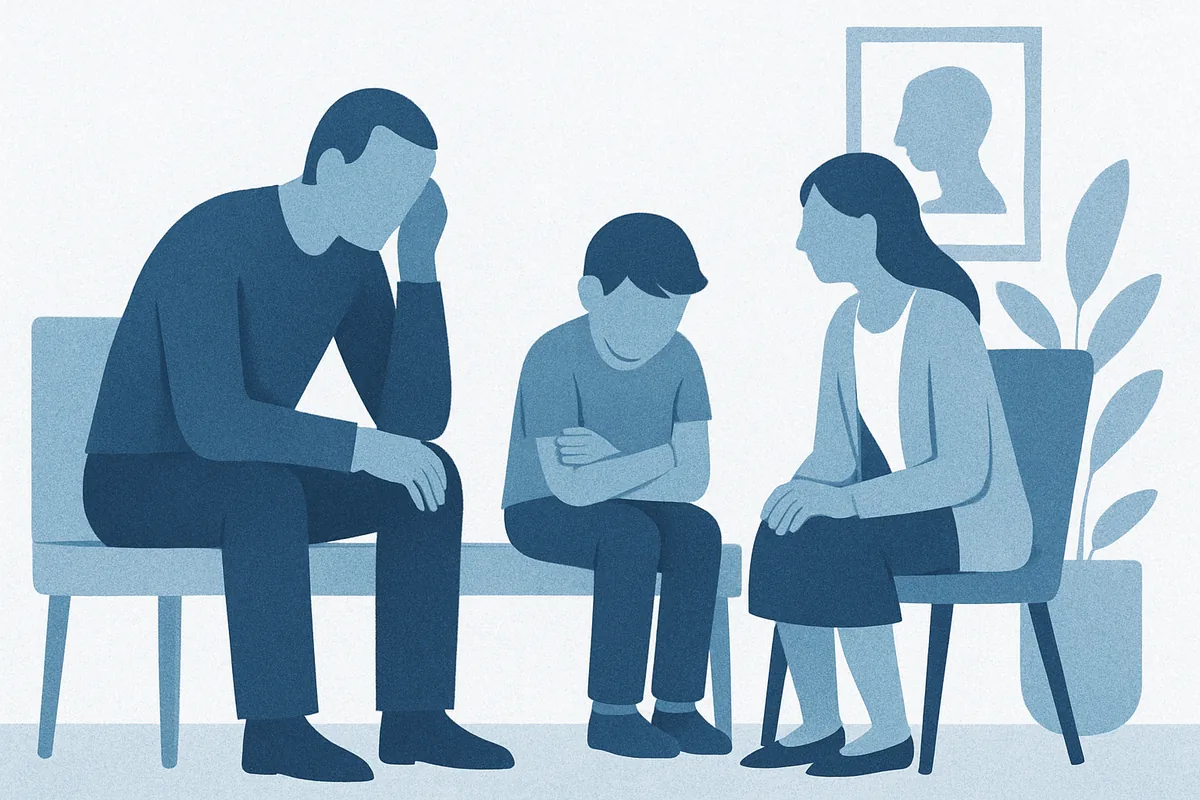
- It is not divorce itself but the level of ongoing parental conflict and disrupted co-parenting that most strongly predicts poor mental health outcomes in children, with a 2011 longitudinal study finding internalising problems increased in 24% of children post-divorce while cooperative co-parenting was the strongest protective factor.
- A 2019 meta-analysis of over 200 studies found children from divorced families have meaningfully elevated odds of depression (OR 1.29), anxiety (OR 1.12), and suicidal ideation (OR 1.48) compared to children from intact families, underscoring the need for active monitoring rather than a wait-and-see approach.
- A UAE survey of more than 1,700 divorced Emirati mothers found 44.3% reported their children were torn between parents, with observable effects including sleep disturbance, sadness, truancy, appetite changes, headaches, and stomach pains.
- Warning signs that a child needs professional support include persistent regression in skills, sustained mood change lasting more than four to six weeks, school refusal, self-harm, or a child directly disclosing emotional distress they feel unable to manage.
- In Dubai, expat children face a layered set of stressors beyond the separation itself, including potential school changes, visa uncertainty, and the possibility of one parent relocating permanently to another country, each of which warrants early clinical attention.
Dubai's divorce rate stood at 6.0 per 1,000 residents in the 2022 to 2024 period, according to the Dubai Statistics Center. Behind each of those numbers is a family, and in most of those families, children. As a child psychologist working with families in the UAE, one of the questions I hear most often from separating parents is: "Will my child be okay?" The honest clinical answer is that most children do adjust over time. But whether they adjust well, and how long that adjustment takes, depends heavily on what happens around them during and after the separation.
This guide focuses on the child's experience: what the research shows, what to watch for at each developmental stage, and what parents can do to actively protect their child's mental health through one of the most disorienting transitions a family can face. Divorce and children's mental health in Dubai is a topic that deserves more than reassurance. It deserves clear, actionable clinical information.
How does divorce affect children's mental health? What the evidence actually shows
The clinical literature on divorce and child outcomes is large, nuanced, and often misrepresented. The headline finding from Amato and Keith's landmark meta-analysis of 92 studies is that children of divorce do show lower wellbeing across academic, psychological, behavioural, self-concept, and social domains compared to children from intact families. The median effect size is approximately 0.14 standard deviations. That is real, but it is also modest, and it is not destiny.
What matters more than the divorce event itself is what surrounds it. A longitudinal study by Vélez and colleagues (2011) found that after parental divorce, internalising problems (depression, anxiety, withdrawal) increased in 24% of children but actually decreased in 10%. The heterogeneity of outcomes is striking: some children struggle significantly; many others do not. The two variables that most reliably explain that difference are the level of ongoing interparental conflict and the quality of co-parenting cooperation between the adults.
A 2019 meta-analysis by Auersperg and colleagues, drawing on more than 200 studies, quantified the risk more precisely. Children from divorced or separated families had meaningfully elevated odds of depression (OR 1.29), anxiety (OR 1.12), suicidal ideation (OR 1.48), general psychological distress (OR 1.48), alcohol use (OR 1.43), and drug use (OR 1.45) compared with children from continuously intact families. These are population-level risk elevations, not individual predictions. But they make a strong clinical case for active monitoring and early support rather than a passive wait-and-see approach.
Closer to home, a survey of more than 1,700 divorced Emirati mothers published by The National found that 44.3% reported their children were torn between their parents, with observable effects including sleep disturbance, sadness, truancy, changes in appetite, headaches, and stomach pains. These are not abstract statistics. They are the symptoms families present with at CAYA World, often months or years after the separation, when patterns that started early have become entrenched.
The core clinical message is this: divorce creates risk, but that risk is substantially shaped by adult behaviour after the separation. Parents hold more protective influence than they may realise.
What are the warning signs that a child is struggling with divorce in Dubai?
Children rarely announce that they are overwhelmed. More often, distress appears as changes in behaviour, physical complaints, or a quiet withdrawal that adults initially attribute to tiredness or a bad week at school. Knowing which signs warrant attention, and which fall within expected adjustment, helps parents respond at the right time rather than too early in a way that amplifies anxiety or too late when patterns are already fixed.
Signs that are expected and usually transient
In the first weeks to months after a separation is announced or takes effect, most children will show some distress. Tears, clinginess, sleep disruption, questions about what is going to happen, and temporary drops in academic engagement are common and do not on their own indicate a clinical problem. These reactions reflect a child processing a significant change. The presence of these signs is not a crisis; their persistence beyond four to six weeks, or their intensity, is what warrants closer attention.
Signs that suggest a child needs professional support
- Sustained low mood, hopelessness, or loss of pleasure in activities they previously enjoyed, lasting more than four to six weeks
- Regression to earlier developmental stages: bedwetting in a child who was fully toilet-trained, thumb-sucking, baby talk, or extreme separation anxiety in a child who was previously independent
- School refusal, a marked drop in academic performance, or repeated complaints of physical symptoms (headaches, stomach aches) that lead to frequent school absences
- Significant changes in appetite or sleep patterns that persist beyond the initial adjustment period
- Expressions of guilt, self-blame, or feeling responsible for the divorce
- Withdrawal from friends and activities that previously mattered to the child
- Escalating aggression, defiance, or risk-taking behaviour, particularly in older children and teenagers
- Any disclosure of self-harm, suicidal thinking, or statements that they do not want to be here
At CAYA World, we regularly see children whose parents bring them in for what they describe as "behaviour problems" that turn out, on careful assessment, to be grief, anxiety, or an adjustment disorder rooted in unprocessed distress about family changes. The behaviour is the communication. Understanding what it is communicating is the starting point for helping.
If your child has recently changed schools alongside the family separation, the compounding effect of those two stressors is well documented. Our article on how moving schools affects children's mental health in Dubai covers that overlap in detail and may help you identify whether school transition is amplifying what your child is already carrying at home.
How does divorce impact children differently at each developmental stage?
A three-year-old and a fifteen-year-old will experience the same family separation in almost entirely different ways. Developmental stage shapes what a child understands about the divorce, how they express distress, and what they most need from their parents. Treating children as a single category leads to misaligned responses.
Infants and toddlers (0 to 3 years)
Very young children do not understand divorce conceptually, but they are acutely sensitive to disruption in routine and caregiver availability. When a primary attachment figure becomes less available due to a separation arrangement, or when they sense heightened stress in their caregivers, infants and toddlers may show increased irritability, sleep regression, feeding difficulties, and elevated distress on separation. The priority at this stage is consistent, predictable caregiving and minimising transitions between households where possible. The child's security depends entirely on adult regulation.
Preschool and early school age (3 to 7 years)
Children in this age band often believe, at some level, that they caused the divorce. Their cognitive stage (what developmental psychologists call preoperational thinking) makes them egocentric in the clinical sense: the world revolves around their actions and wishes, so when something goes wrong in the family, the conclusion "it must be because of something I did" is developmentally predictable. Explicit, repeated, age-appropriate reassurance that the divorce is not their fault is not optional at this stage; it is essential. These children may also ask the same questions repeatedly, not because they did not hear the answer, but because they are checking that reality is stable.
Middle childhood (8 to 12 years)
Children in this age group understand the permanence of divorce more fully and can feel profound grief, anger, and loyalty conflict. Loyalty conflict (feeling that loving one parent means betraying the other) is a significant driver of anxiety and psychosomatic symptoms in this group. Academic performance often drops, not because cognitive capacity is affected, but because emotional preoccupation consumes the working-memory resources that learning requires. Children at this stage also tend to listen carefully to adult conversations and fill information gaps with worst-case assumptions. Age-appropriate honesty and consistent structure at school and at home both serve as strong buffers.
Adolescents (13 to 18 years)
Teenagers have the cognitive capacity to understand divorce as a complex adult event, but that understanding does not protect them from distress. Adolescents often respond with externalising behaviour (anger, risk-taking, substance use, school disengagement) or with a premature assumption of adult responsibilities to help the more distressed parent. Either pattern carries risk. Adolescents in Dubai also face a specific legal dimension: under UAE Federal Decree-Law No. 41 of 2024 governing Muslim personal status, children at age 15 may express a preference for which parent to live with, subject to the court's welfare assessment. For teenagers, being aware (or anxious) that such a choice is coming can itself become a source of significant psychological pressure. Our team at CAYA World has worked with teenagers who are carrying the weight of that anticipated decision alone, often without telling either parent.
Children in the middle childhood and adolescent range who are experiencing grief responses to family breakdown may also benefit from reading our article on how grief and loss affect children in Dubai, which covers the wider landscape of bereavement-adjacent distress that separation can trigger.
What do Dubai parents need to know about custody and legal context?
Legal frameworks in Dubai matter for children's mental health not because this is a legal guide (it is not), but because the legal process directly shapes the stability of a child's life: where they live, how often they see each parent, whether they stay in their school, and whether there is a risk of one parent relocating. Uncertainty and conflict generated during legal proceedings are among the most acutely stressful experiences children of separating parents describe.
Muslim personal status framework
For Muslim families, including Muslim expatriates residing in the UAE, UAE Federal Decree-Law No. 41 of 2024 governs personal status. Day-to-day custody (hadhanah) is typically granted to the mother, with guardianship (wilayah) remaining with the father. At the age of 15, children may express a preference for their preferred custodial parent, subject to the court's welfare assessment. Clarity about these arrangements, reached as quickly and cooperatively as possible, substantially reduces the period of uncertainty that children find most destabilising.
Non-Muslim expatriate framework
For non-Muslim expatriates, a separate civil personal-status regime applies under UAE law, under which joint custody is the default and either parent may elect the application of their home-country law. This creates a genuinely complex jurisdictional picture for many expat families, particularly where one parent intends to relocate to their country of origin. For children, the possibility of a parent leaving the UAE permanently is one of the most psychologically acute stressors in the expat divorce context.
Expat-specific layered stressors
For expatriate families, the challenges extend well beyond the legal framework. Children in expat families going through separation may face school changes (often triggered by financial changes or relocation), visa status uncertainty, the loss of the social network that is typically built around one family unit, and the real possibility of one parent returning permanently to their home country. Each of these is an independent stressor. Together, they can create a compounding load that exceeds what any child can process without support. The Emirates Child Association (ECA) identifies children of divorce as experiencing sadness, confusion, fear of abandonment, guilt, and anger, with school and social adjustment commonly affected.
At CAYA World, we see both Muslim Emirati families and expatriate families from dozens of countries navigating these processes. The clinical picture is shaped by the legal and practical circumstances, and understanding both helps us work effectively with children and their parents. If you are an expatriate parent concerned about the specific mental health implications of the expat separation context, our team is experienced in this space and can help you identify what your child needs most at this stage.
Parents working through co-parenting challenges after separation may also find our family therapy service useful. It is not couples therapy; it is a structured clinical space to develop co-parenting communication strategies that protect children from conflict spillover.
Wondering if It's Time to Talk to Someone?
Our specialist team at CAYA World offers comprehensive assessment and evidence-based treatment, conducted from our clinic in Palm Jumeirah, Dubai.
What can parents do to protect their child's mental health during and after divorce?
Research is consistent on what protective factors look like. They are not mysterious. They are specific parenting behaviours and household structures that any parent, including one who is themselves in significant distress, can prioritise. The difficulty is not identifying them; it is executing them when your own emotional resources are depleted. That is where professional support for the adults is sometimes the most effective intervention for the children.
Keep adult conflict away from the child
This is the single most important protective factor the evidence identifies. Children who are exposed to high-intensity interparental conflict, whether during the marriage or after the divorce, show significantly worse outcomes than children whose parents, even if deeply unhappy with each other, manage to cooperate on parenting. "Keeping conflict away from the child" means not speaking negatively about the other parent in the child's hearing, not using the child as a messenger or an information source about the other parent's life, and not asking the child to choose sides or validate your account of events. Children who feel caught between parents carry that tension as chronic physiological stress.
Maintain structure and predictability
Routine is a psychological stabiliser for children. When the large structures of family life change, preserving smaller routines (bedtime sequences, weekend rituals, consistent mealtimes) gives children a sense that some things remain reliable. Where possible, keeping the child in the same school, the same extracurricular activities, and the same friendship network during the transition period protects continuity of identity, which is particularly important for school-age children and teenagers.
Communicate in age-appropriate, honest ways
Children fill information gaps with imagination, and imagination in the context of fear produces worst-case scenarios. Age-appropriate honesty, repeated consistently by both parents, is more protective than silence or reassurance that ignores the child's direct experience. Children do not need adult-level detail about the reasons for the divorce. They do need clear, consistent answers to the questions that matter to them: Where will I live? Will I still see both of you? Is this my fault? Will you both still be my parents?
Acknowledge your child's feelings without amplifying them
There is a meaningful difference between validating a child's emotional experience and reinforcing distress. Saying "It makes sense you feel sad. This is a big change, and sad feelings about it are okay" is validating. Responding to every expression of distress with visible parental anxiety, or soliciting accounts of the child's emotional state so frequently that the child learns that distress brings adult attention, can inadvertently shape patterns of over-expression that outlast the crisis. Children take strong cues from how the adults around them respond to their emotions.
Attend to your own mental health
A parent who is acutely depressed, anxious, or in crisis is physiologically less available to their child, regardless of effort and intention. Seeking your own psychological support during a separation is not a selfish act; it is one of the most effective things you can do for your child. We work with parents at CAYA World not just as individuals managing their own distress, but explicitly in the context of their parenting role, helping them stay emotionally regulated and responsive to their children during an objectively difficult period.
If you are concerned about your child's adjustment and want to understand what professional support would look like, a CAYA specialist can walk you through the options in a brief consultation. Reach out via WhatsApp or call us to begin that conversation without any commitment.
When does a child need professional support, and what does that look like at CAYA?
Not every child whose parents divorce needs to see a psychologist. But the threshold for seeking an assessment should be lower than most parents assume. Children are not always able to articulate that they are struggling, and the cost of waiting is that transient adjustment difficulties can consolidate into more entrenched presentations: an anxiety disorder, a depressive episode, a pattern of school avoidance that has become self-reinforcing.
When to seek an assessment
Seek a professional assessment if your child shows any of the following for four weeks or more, or at any intensity if they are severe:
- Sustained low mood, hopelessness, or withdrawal from activities and relationships
- Significant regression in developmental skills (toileting, sleep, independence)
- Persistent school refusal or marked academic decline
- Frequent physical complaints (headaches, stomach pains) without a medical explanation
- Self-harm or any statement suggesting suicidal thinking
- A child directly telling you, or another trusted adult, that they cannot manage their feelings
You do not need a crisis to justify a referral. Many families come to CAYA World simply because they want to understand how their child is processing the divorce, and whether there is anything specific they should be doing differently. A structured assessment can answer those questions clearly, and early support typically requires fewer sessions than support that begins after difficulties are well established.
What assessment and therapy look like at CAYA
At CAYA World, our approach to children going through family separation starts with a thorough clinical assessment. This typically includes a structured clinical interview with the child (age-appropriate), parent report measures, and teacher report where relevant. The assessment maps what the child is experiencing, identifies any clinical presentations (adjustment disorder, anxiety, depression, grief), and guides the treatment plan.
For children, therapy is most commonly delivered using cognitive behavioural approaches adapted to the child's developmental stage. CBT gives children concrete tools to identify and manage difficult thoughts and feelings: to recognise when worry is distorted, to name and regulate emotions, and to practise coping strategies they can use between sessions. For younger children, this work happens largely through play-based methods rather than formal talk therapy. For teenagers, the work looks more like structured conversation with specific skill-building components.
Where co-parenting communication is a central driver of the child's distress, we may recommend that one or both parents join a session or complete a parallel parenting support component. This is not about the adult relationship; it is about the parenting relationship, and it is structured specifically around the child's needs.
You can read more about what working with a child psychologist in Dubai involves, including what to expect in an initial session and how to prepare your child for the process. Many children, once they meet the psychologist and understand that sessions are confidential and not about judging them or their family, engage with treatment readily.
Our team at CAYA World also supports parents through their own parenting challenges during and after separation. The parenting therapy and support service is specifically designed for parents who want to stay attuned and responsive to their children while managing their own significant stress. For teenagers showing behavioural difficulties, our teen behaviour support service offers a structured clinical pathway.
Frequently Asked Questions About Divorce and Children's Mental Health in Dubai
Not necessarily. Some children show what clinicians call a "sleeper effect," where distress is suppressed during the acute phase of separation and surfaces weeks or months later, sometimes at a life transition such as starting a new school year or approaching adolescence. Other children genuinely do adjust well, particularly when conflict is low and co-parenting is cooperative. Rather than concluding that everything is fine, maintain active observation: check in with your child's teacher, watch for subtle behavioural changes, and keep the lines of communication open. A brief check-in session with a child psychologist can provide an objective picture if you are unsure.
Seek a professional assessment if emotional or behavioural changes persist for four to six weeks or more, or sooner if the signs are severe. Key indicators include sustained low mood, school refusal, persistent physical complaints without medical cause, regression in developmental skills, escalating aggression, significant social withdrawal, or any mention of self-harm or suicidal thinking. If your child directly tells you they cannot cope, take that seriously and act on it promptly. At CAYA World, an initial assessment session can help determine whether structured therapy is needed or whether guidance for parents is the more appropriate starting point.
The research is clear on this point. Children raised in high-conflict intact families show worse outcomes than children in low-conflict post-divorce families. It is sustained exposure to interparental conflict, not the marital status of the parents, that most consistently predicts poor child mental health outcomes. A cooperative divorce in which both parents manage conflict well and maintain consistent parenting is significantly less harmful to children than a high-conflict marriage maintained for their sake. If you are in a high-conflict marriage and weighing this question, speaking with a psychologist can help you think through the clinical implications for your specific family situation.
Use age-appropriate, honest language that addresses the questions children care most about: Where will I live? Will I still see both parents? Is this my fault? Deliver this information together where possible, or consistently between both parents if that is not possible. Do not provide adult-level detail about the reasons for the divorce. Repeat the key reassurances more than once; children in distress often need to hear the same answers several times before they feel settled. Avoid placing the child in the middle as a messenger or confidant, and do not invite them to take sides. Emotional language is fine. You can say "this is hard for all of us" without unloading adult grief onto the child.
Expatriate children face a compounded stressor profile that is clinically distinct from the standard divorce picture. Beyond the separation itself, your child may be facing school disruption, loss of the social network built around your family unit, visa status uncertainty, and the possibility of one parent relocating permanently to another country. Each of these is an independent mental health risk. When they co-occur, the cumulative load can exceed a child's capacity to adapt without support. Early professional involvement is particularly important for expat children in this situation. At CAYA World, our team has direct experience with this clinical presentation and can help you map the risks and protective factors specific to your family's circumstances.
Sources and Further Reading
- Divorce and Marriage Rates 2022-2024Dubai Statistics Center (2024)
- Auersperg F et al. Long-term effects of parental divorce on mental health. European PsychiatryPubMed (2019)
- Amato PR, Keith B. Parental divorce and the well-being of children: a meta-analysis. Psychological BulletinPubMed (1991)
- Vélez CE et al. Longitudinal associations among interparental conflict and children's adjustment. Journal of Family PsychologyPMC (2011)
- 44% of divorced Emirati mothers say children are sufferingThe National (UAE survey)
- The impact of divorce on children's emotional well-being and developmentEmirates Child Association (2025)