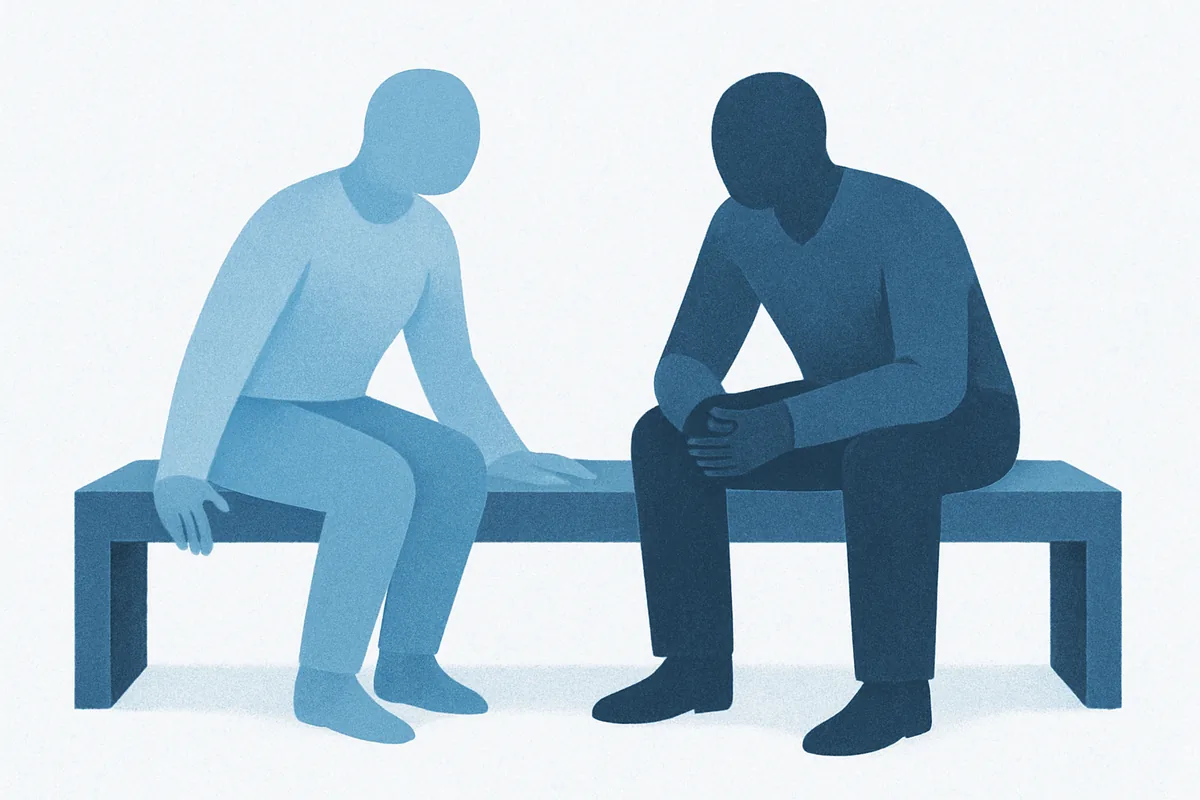
- Relationship therapy in Dubai is a broader umbrella than couples counselling. It includes pre-marital preparation, co-parenting after separation, family-of-origin pattern work, and intercultural couple dynamics.
- Emotionally focused couple therapy (EFCT) produces a Hedges' g of 2.09 for marital satisfaction and leaves 70-75% of couples no longer meeting criteria for relationship distress after treatment (Wiebe and Johnson, 2016 and 2019).
- Couples who completed pre-marital counselling showed a 31% lower divorce rate and 30% higher marital satisfaction than those who did not, making it a clinically meaningful preventive step (APA Monitor, 2017).
- Dubai's expat-majority population, over 88% non-citizens, means most couples manage their relationship without extended family support, across cultural differences, and under the additional pressure of visa dependency.
- At CAYA World Clinic in Palm Jumeirah, relationship therapy is available to individuals, couples, and families at any stage, crisis or not, with sessions delivered by our specialist clinical team.
UAE family courts recorded 596 divorce cases in 2022, with poor communication, incompatibility, and unrealistic expectations cited as the primary drivers (Khaleej Times, UAE family court data, 2022). Those three causes share something important: none of them are solved by a list of conversation prompts. Relationship therapy in Dubai addresses the underlying patterns, family history, cultural identity, co-parenting strain, attachment injuries, that generate communication failures in the first place.
If you've read our article on what couples counselling involves and who seeks it, this piece builds on that foundation. Here, the focus is on relationship therapy as the broader clinical category: who it is for beyond distressed couples, what it actually treats, and why Dubai's particular context makes professional relationship support both harder to access and more necessary than in most cities.
What is relationship therapy, and why is it different from communication coaching?
Communication coaching teaches skills. It gives you frameworks for active listening, scripts for difficult conversations, rules for fair fighting. For some couples, typically those early in a relationship with no significant attachment injuries or entrenched conflict cycles. Those tools are genuinely useful. They provide a shared language and lower the temperature.
Relationship therapy does something different. It asks why the communication kept breaking down before you learned the scripts, and it works on what you find when you look. That might be a pattern one partner learned in childhood, the tendency to withdraw when conflict escalates, the reflexive placation that prevents real disagreement, the hair-trigger defensiveness that has nothing to do with the current argument. It might be an attachment rupture: a betrayal, a loss, a period of emotional disconnection that was never fully repaired and now runs as background static through every interaction.
Clinically, this distinction maps onto what the evidence actually supports. A 2022 analysis published in PMC found that the average person receiving couple therapy is better off than 70-80% of untreated individuals at treatment end, and that systemic couple therapy achieves a 66% success rate versus approximately 34% for control conditions (Heatherington et al. PMC, 2022). Those outcomes come from structured, clinically guided work, not from tip sheets.
At CAYA World, our clinical team is trained to distinguish between couples who would benefit from skill-building and those who need deeper therapeutic work. Most couples who reach us need the latter. The communication difficulties are real, but they are symptoms, and treating only the symptom leaves the source intact.
What relationship therapy is not
Relationship therapy is not arbitration. The therapist is not there to decide who is right or to identify the problem partner. It is not venting to a neutral third party, though some sessions will contain exactly that. It is not a last-ditch attempt that only makes sense when the relationship is at breaking point. And it is not exclusively for couples, the umbrella covers pre-marital preparation, co-parenting structures after separation, family-of-origin pattern work, and individuals processing how their relationship history is shaping their current life.
Who is relationship therapy in Dubai for?
The clinical scope of relationship therapy is wider than most people assume when they first consider it. At CAYA World, we regularly work with people across all of the following categories, and the presenting concern at the first call rarely captures the full picture of what brings them in.
Couples in active conflict or disconnection
This is the most recognised entry point: two people who are arguing too much, or who have stopped arguing and instead live in polite distance. The conflict might be about money, parenting, in-laws, or sex, but those are rarely the root issues. The clinical questions are: what does this conflict mean to each person, what fear or unmet need is underneath it, and what has each person learned, from prior relationships and from their own family of origin, about what is safe to want from a partner?
Pre-marital couples
Pre-marital counselling in Dubai is increasingly sought by couples who are engaged or approaching engagement and want to stress-test their relationship before the formal commitment rather than after. The evidence for this is strong. Couples who completed pre-marital counselling had a 31% lower chance of divorce and reported a 30% increase in marital satisfaction compared with those who did not attend (APA Monitor, Carroll and Doherty, 2017). A research summary from Colorado State University found that couples who attended pre-marital counselling were better off than 80% of couples who did not attend (Colorado State University CHHS, 2021).
In Dubai, where a significant proportion of couples are intercultural, one or both partners navigating a national, religious, or linguistic difference, pre-marital work is especially valuable. Differences that feel manageable during courtship often become friction points once the couple is managing a household, a child, or a visa situation together.
Co-parenting couples and separated partners
Separation does not end a co-parenting relationship. Two people who no longer want to be in a romantic partnership still need to make joint decisions about their children, daily logistics, schooling, discipline approaches, how to present a coherent family structure to a child who is navigating two homes. Co-parenting therapy focuses specifically on this working relationship: de-escalating the residual conflict, establishing shared frameworks, and preventing the children from becoming the medium through which unresolved adult pain gets transmitted.
Individuals processing relationship patterns
Not everyone who seeks relationship therapy comes with a partner. Individual work on relationship patterns, why you keep choosing the same dynamic, why intimacy feels threatening, why you oscillate between closeness and withdrawal, is clinical work that has real therapeutic grounding. At CAYA World, individual therapy that addresses relational patterns is common, particularly among people who are single and want to understand what has shaped their relationship history before entering a new one.
Families managing generational dynamics
Relationship therapy for families often addresses the dynamics between adult children and parents, between siblings, or across generations when a significant life event, illness, inheritance, a parent's remarriage, has destabilised established patterns. This is distinct from family therapy focused on a child's behavioural concerns (which you can read more about in our parenting support service). The focus here is the adult relational system.
Wondering whether relationship therapy is right for your situation? A brief WhatsApp conversation with our clinical team at CAYA World can help you figure out whether individual or joint sessions, or a combination, would be the most useful starting point. Couples and families seeking structured clinical support can also explore our couples counselling and family therapy service directly. There is no commitment required to have that conversation.
What does relationship therapy actually address?
Relationship difficulties are rarely about what they appear to be about on the surface. A recurring argument about housework is rarely about housework. A complaint about emotional distance is rarely solved by scheduling more date nights. Relationship therapy works at the level of the patterns and the meanings beneath the presenting complaints.
Attachment and emotional responsiveness
One of the most robust frameworks in couple therapy research is emotionally focused couple therapy (EFCT), which centres on attachment theory, the idea that adults in intimate relationships need the same secure base that children need from caregivers. When that base feels threatened (by withdrawal, by criticism, by perceived unavailability), partners respond with protest, pursuit, or shutdown. These cycles become self-reinforcing. EFCT works to identify the cycle, reach the attachment fears underneath the surface behaviour, and restructure the emotional bond.
The evidence is compelling. A 2019 meta-analysis found that EFCT produced a very large effect size (Hedges' g = 2.09) for marital satisfaction across nine randomised controlled trials, with gains maintained at follow-up (Wiebe and Johnson, PubMed, 2019). An earlier review found that approximately 70-75% of couples no longer met criteria for relationship distress after EFT, with around 90% showing measurable improvement (Wiebe and Johnson, PubMed, 2016).
Family-of-origin patterns
The relationship dynamics each partner grew up inside become their implicit model for how intimacy works. A person who grew up in a home where conflict was avoided at all costs will experience a partner's direct confrontation as frightening rather than honest. A person who grew up in a home where emotional expression meant loss of control will struggle to remain present when a partner becomes distressed. These are not character flaws; they are learned adaptations that made sense in context and now produce friction in a different context. Relationship therapy creates the conditions in which both partners can understand each other's relational histories, and interrupt the patterns that those histories have produced.
Trust repair after betrayal
Infidelity is the most common presenting reason for couples seeking therapy in crisis, but betrayal takes other forms: financial deception, broken promises, emotional affairs, prolonged stonewalling. Trust repair is not a single conversation. It is a structured process that involves the partner who caused the rupture understanding the full impact, not defensively, and not minimisingly, and the partner who was harmed being able to process the injury without it permanently defining the relationship. This is slow work. At CAYA World, we are direct with couples that this process typically takes months, not weeks.
Sexual and intimacy difficulties
Physical intimacy problems, mismatched desire, avoidance, pain, or the slow erosion of sexual connection that often accompanies early parenthood or prolonged stress, are a legitimate clinical concern that relationship therapy addresses directly. Many couples feel significant shame about raising this in a clinical setting. Our team treats these concerns as standard parts of relationship health, not as taboo disclosures.
Life transition stress
Relationships come under particular pressure at transition points: the arrival of a first child, a major relocation (common in Dubai's mobile expat population), job loss, serious illness, bereavement, or children leaving home. These transitions require the couple to renegotiate roles, needs, and expectations, and they expose whatever fault lines were already present. Relationship therapy at a transition point is often preventive: the couple is not in crisis yet, but they are under load, and structured support at that point can prevent a transition from becoming a rupture.
Wondering if It's Time to Talk to Someone?
Our specialist team at CAYA World offers comprehensive assessment and evidence-based treatment, conducted from our clinic in Palm Jumeirah, Dubai.
How does relationship therapy work in practice?
Most people arrive at a first session without a clear idea of what to expect. The first one or two sessions are primarily assessment: the therapist builds a picture of the relationship's history, the current pattern of difficulty, each partner's individual background, and what each person is hoping for. This is not therapy yet. It is the groundwork that makes therapy useful rather than generic.
Individual and joint sessions
Some therapists work with both partners present in every session. Others build in individual sessions alongside joint ones, particularly where individual history, trauma, prior relationships, mental health concerns, is significantly shaping the relational dynamic. At CAYA World, session structure is determined clinically: our team discusses the options with each couple at the outset, and the structure can evolve as the work develops. There is no single correct format.
Session frequency and duration
Most couples begin with weekly sessions. Fortnightly becomes an option once the initial stabilisation work is done and the couple is practising what they have developed between sessions. The total course of therapy varies considerably by presenting concern: couples working on communication patterns in a fundamentally sound relationship may find meaningful change in 8-12 sessions; couples rebuilding after a significant betrayal or processing long-standing attachment injuries typically work over a longer arc, often six months to a year. Our team gives couples an honest initial estimate after the assessment phase, and reviews it transparently as therapy progresses.
What happens between sessions
Therapy does not live only in the therapy room. Between sessions, couples are often working with something they identified in session, a pattern they agreed to notice, a conversation they committed to having differently, a moment they want to understand rather than react to automatically. This between-session work is not homework in a prescriptive sense; it is the real-world practice that gives in-session insights their traction.
Why Dubai's expat context makes relationship therapy different
More than 88% of the UAE's population are expatriates. That demographic fact reshapes the context of every relationship within it. Most couples in Dubai are managing their partnership far from the extended family networks that would otherwise provide practical support, cultural grounding, and informal mediation when difficulties arise. The couple is frequently the entire support structure, for each other, and often for their children, in a city where social networks are transient and friendships are regularly disrupted by relocation.
Intercultural dynamics
A high proportion of couples in Dubai are intercultural: one partner from the Arab world, one from Europe; one from South Asia, one from East Africa; partners who share a passport but grew up in meaningfully different cultural contexts. Cultural difference is not itself a pathology, intercultural couples can be extraordinarily resilient, but it does introduce specific stressors that relationship therapy needs to address directly: different baseline assumptions about family loyalty, gender roles, financial management, how children should be raised, and what constitutes respectful disagreement. A therapist who treats all couples as culturally interchangeable will miss a significant part of what is driving the difficulty.
At CAYA World, our clinical team brings international training and cross-cultural clinical experience to this work. Our team includes clinicians who understand the specific relational pressures that arise in intercultural couples therapy in Dubai, not as an abstract concept, but as a daily clinical reality in our practice.
Visa dependency and relationship power
The UAE's visa structure means that in many expatriate couples, one partner's legal right to remain in the country depends on the other's employment or sponsorship status. This creates a structural power imbalance that is rarely present in relationships conducted in the partners' home countries. It can inhibit the dependent partner from raising concerns, from contemplating separation, or from being fully honest about how they experience the relationship. Relationship therapy in Dubai needs to hold this structural reality in the room, not as an excuse for behaviour, but as a relevant feature of the couple's context that shapes what is possible and what feels safe to say.
Social isolation and relationship load
Without the informal pressure-release of extended family contact, friendships that endure over years, or cultural community embeddedness, the romantic partnership in Dubai often carries a disproportionate weight. Each partner expects the other to be the primary source of emotional support, social connection, intellectual stimulation, and practical collaboration. That is a load few relationships can sustain indefinitely without deliberate attention. Relationship therapy often addresses this directly, not by reducing expectations, but by helping couples understand what load they are placing on the relationship and build a more diverse support structure alongside it.
Federal Decree Law No. 41 of 2022 introduced a no-fault divorce framework for non-Muslim expatriates in the UAE, reflecting both the scale of non-citizen couples living here and the legal recognition of how common relationship breakdown is in this context. Legal reform addresses separation after the fact. Relationship therapy aims to intervene before that point.
Frequently Asked Questions About Relationship Therapy in Dubai
Couples counselling typically refers to structured sessions focused on improving communication and resolving conflict between two partners. Relationship therapy is a broader clinical term that includes couples work but also covers pre-marital preparation, co-parenting arrangements, family-of-origin pattern work, and individual therapy focused on relational history. At CAYA World, both terms describe clinically structured work rather than generic advice, the distinction matters less than the quality and depth of what actually happens in the room.
You can absolutely begin individually. Many people start relationship therapy alone, whether because their partner is unwilling to attend, because they want to understand their own patterns before bringing a partner in, or because they are single and processing their relationship history. Individual work on relational patterns is clinically valid and often the right starting point. If your goal is to work on a specific relationship together, joint sessions are typically more effective once the assessment has been completed, but the path to that can begin with one person.
No. Some of the most productive relationship therapy happens when the relationship is broadly functional but the couple senses something drifting, less connection, more mild irritability, less physical closeness than there used to be. Pre-marital counselling is by definition preventive rather than crisis-driven. Life transition work, the arrival of a child, a major relocation, a career change, is best done before the transition fully destabilises the relationship rather than after. At CAYA World, we actively encourage couples to seek support before reaching breaking point, because earlier intervention requires less repair work and produces faster results.
It depends on the presenting concern and the couple's goals. Couples working on a specific communication pattern or preparing for a life transition may find meaningful change in 8-12 sessions. Couples rebuilding after a significant betrayal or working on long-standing attachment injuries typically work over six months to a year. Our clinical team at CAYA World provides an honest initial estimate after the assessment phase and reviews progress transparently throughout. There is no standard package, the work is calibrated to what is actually happening, not to a predetermined session count.
Particularly in Dubai, where many couples are intercultural, recently relocated, or marrying without extended family nearby, pre-marital counselling offers significant preventive value. Research shows couples who completed pre-marital counselling had a 31% lower divorce rate and 30% higher marital satisfaction than those who did not attend (APA Monitor, 2017). The sessions are not about finding problems. They are about building shared frameworks for navigating the challenges that every serious relationship encounters: finances, family obligations, parenting philosophy, conflict style, and long-term goals. The couples who benefit most are those who engage before those topics become sources of conflict.
Sources and Further Reading
- Wiebe SA, Johnson SM, A review of the research in emotionally focused therapy for couples, PubMed (2019)
- Wiebe SA, Johnson SM, Creating relationships that foster resilience in emotionally focused therapy, PubMed (2016)
- Heatherington L et al, The effectiveness of couple and family therapies: a review of the evidence, PMC (2022)
- Carroll JS, Doherty WJ, Evaluating the effectiveness of premarital prevention programs, APA Monitor (2017)
- Is premarital counselling worth it?, Colorado State University CHHS (2021)
- UAE family court divorce data 2022, Khaleej Times (2022)
- Federal Decree Law No. 41 of 2022 on the Personal Status of Non-Muslim Foreigners in the UAE, UAE Ministry of Justice