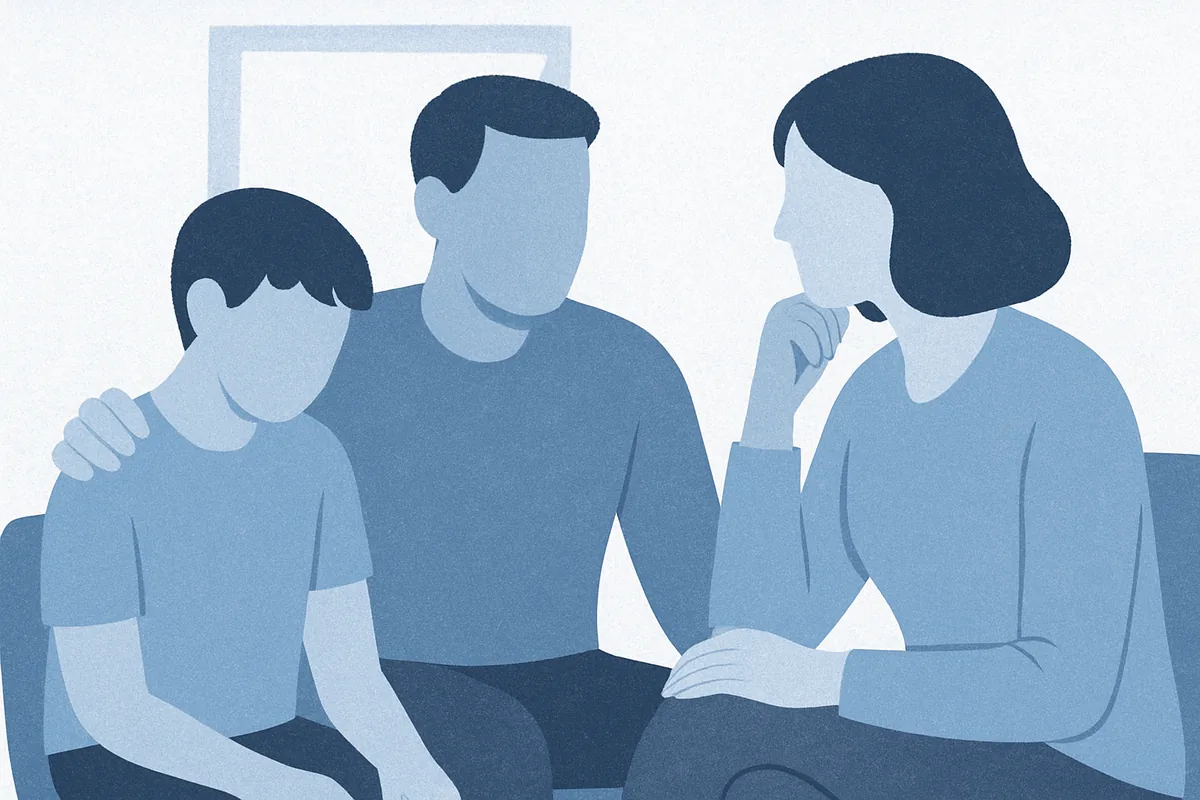
- An estimated 89% of autistic adults aged 40-59 and approximately 97% of those aged 60 and older are undiagnosed, according to a King's College London and UCL review (2023), meaning the majority of autistic adults worldwide never receive a formal diagnosis.
- Autism symptoms in adults present across four core domains: social communication, sensory processing, executive function, and restricted or repetitive patterns of behaviour and interest, often expressed very differently from how they appear in children.
- Women and gender-diverse adults receive autism diagnoses 7-11 years later than men on average and are more likely to carry at least one prior misdiagnosis such as anxiety disorder or borderline personality disorder before reaching the correct diagnosis (Huang et al., PubMed, 2023).
- Autistic masking, the sustained effort to suppress or camouflage autistic traits in social and professional settings, is a primary driver of late diagnosis and contributes directly to autistic burnout, chronic exhaustion, and elevated rates of anxiety and depression in undiagnosed adults.
- A formal adult autism assessment in Dubai, such as that offered at CAYA World Clinic, uses ADOS-2 Module 4 alongside a structured developmental history interview and validated questionnaires across two to three sessions, concluding with a written diagnostic report.
Most autistic adults in midlife have never been told they are autistic. A 2023 review by King's College London and University College London found that an estimated 89% of autistic adults aged 40-59 and approximately 97% of those aged 60 and older are undiagnosed. That is not a small gap in clinical coverage; it describes a generation of people who spent decades developing coping strategies around a neurological difference nobody identified. Many of them are in Dubai right now: in corporate offices on Sheikh Zayed Road, in the expat social circles of Jumeirah, in the consulting rooms at CAYA World describing persistent anxiety, relationship difficulties, or a formless sense that they have always had to work much harder than other people just to get through an ordinary day.
Autism is commonly discovered in adulthood, often after a child's diagnosis triggers a parent's self-recognition, or after reading about autistic burnout and finding the description uncomfortably accurate. This article is a practical guide to what autism symptoms in adults actually look like across work, relationships, and daily life. It also covers masking, the gender-based diagnostic gap, the psychological cost of going undiagnosed, and the clear steps to formal assessment in Dubai.
If you are a parent looking for information about autistic traits in younger people, our articles on autism masking in children and autism signs in teenagers cover those age groups in detail. This article focuses entirely on adults.
Why so many adults only discover they are autistic later in life
Autism has, for much of its clinical history, been understood primarily through the lens of childhood presentation. Early diagnostic criteria were developed from studies of boys with significant support needs, which meant that the subtler, highly variable ways autism presents in adults, particularly in women, gender-diverse people, and intellectually able individuals, were not well captured by the tools clinicians used. A person who maintained passing grades, held employment, and formed relationships was rarely flagged for assessment. The assumption was that if you could manage, you probably did not have autism.
What that framing missed entirely was the cost of managing. Adults who later receive autism diagnoses frequently describe spending enormous energy on things that appear effortless for their neurotypical peers: reading a room correctly, following unwritten social rules at work, understanding why a conversation ended badly, processing sensory environments like busy restaurants or open-plan offices. The effort is invisible from the outside precisely because the person has become skilled at hiding it.
Several specific triggers bring adults to self-identification later in life. A child's autism diagnosis is one of the most common: a parent attending their child's assessment, hearing a clinician describe characteristic features, and recognising an exact reflection of their own childhood experience. Another trigger is encountering community and clinical language around autism for the first time, often through social media, podcasts, or reading, and finding that descriptions of sensory sensitivity, social exhaustion, or intense focused interests resonate deeply. A third, particularly relevant to Dubai's large international population, is relocation and cultural shift: adults who managed reasonably well in familiar social environments sometimes find that moving to a new country strips away the compensatory routines and social scripts they had built over years, making autistic differences more visible.
Dubai's registered autism data, which counts 4,561 cases with 80% identified as male according to publicly available UAE Ministry of Community Development figures cited in Gulf News (2022), almost certainly reflects the well-documented global pattern of missed diagnoses in women and adults rather than a true sex-based prevalence difference. It also counts only registered cases, which means undiagnosed adults are simply not in the data. The actual population of autistic adults living and working in the UAE is substantially larger than official figures suggest.
What autism symptoms in adults actually look like: the four core domains
Autism is defined in the DSM-5 by two broad categories: persistent differences in social communication and interaction, and restricted or repetitive patterns of behaviour, interests, or activities. In adults, these categories play out across four practical domains that matter most in real life: social communication, sensory processing, executive function, and repetitive patterns including focused interests. Understanding them in adult-specific terms matters because adult presentations look quite different from the childhood checklists most online resources describe.
Social communication in adult contexts
In adults, social communication differences rarely look like obvious difficulty forming words or making friends. They more often appear as: consistently misreading subtext in professional conversations, feeling blindsided when colleagues are unhappy despite having received no direct feedback, exhaustion after routine social interactions that others seem to find energising, a tendency to interpret instructions and agreements literally when a more contextual reading was intended, difficulty with the informal social rituals of workplace culture (small talk before a meeting, lunch group dynamics, office humour), and deep, genuine connection with specific individuals alongside confusion about broader social navigation.
Adults often describe coming home after a normal workday and needing several hours alone before they can function again. They may have developed a bank of learned social scripts that work in familiar situations but fail in novel ones, producing a sense of constant performance rather than natural interaction.
Sensory processing
Sensory differences in adults are frequently the most physically uncomfortable aspect of autism, and yet they are among the least discussed. Hypersensitivity to sound, light, texture, smell, or temperature can make certain workplaces, social venues, or public transport genuinely painful rather than merely uncomfortable. Hyposensitivity, by contrast, can mean seeking intense sensory input, missing subtle sensory cues, or having a high pain threshold. Dubai's environment adds specific dimensions: the contrast between extreme outdoor heat and heavily air-conditioned interiors is a significant sensory shift several times daily; the volume and unpredictability of busy malls and souks can be overwhelming in ways that are difficult to explain to others without a framework for sensory processing.
Executive function and daily routines
Executive function differences in autistic adults include difficulty with task initiation (knowing exactly what needs to be done but being unable to start), switching between tasks, managing time without external structure, and prioritising when everything feels equally urgent. These traits are frequently misread as laziness, poor work ethic, or anxiety rather than recognised as characteristic of autism. Autistic adults often rely heavily on rigid routines to manage daily life: the same route to work, the same meal patterns, the same evening structure. When routines are disrupted, the response is not simply irritation but genuine dysregulation.
Restricted interests and repetitive behaviours
In adults, highly focused interests are often channelled into professional expertise or absorbing hobbies, which means they can look like admirable dedication from the outside. The distinction is intensity and the degree to which the interest organises the person's cognitive and emotional life. Repetitive behaviours in adults may include physical actions (rocking, tapping, hair twirling) as well as cognitive patterns such as rumination, replaying conversations repeatedly, or applying a fixed framework to every new situation.
At CAYA World, we regularly see adults who tick every item in these domains but have never put the picture together, because they encountered each trait as a separate problem: anxiety, relationship difficulty, burnout, sensory discomfort, and never as connected features of a single neurological profile.
How autistic masking works and why it delays diagnosis
Masking, sometimes called camouflaging, is the process by which autistic people suppress, imitate, or compensate for their autistic traits in social and professional settings. It is not a conscious decision to be deceptive. It begins early, often in childhood when social feedback teaches a child that certain behaviours attract negative responses, and it becomes increasingly automatic. By adulthood, many autistic people have been masking for two or three decades so effectively that they no longer clearly perceive where their natural responses end and their performed ones begin. Research into how masking develops in childhood shows that the pattern is established well before adulthood and becomes harder to identify with age precisely because it is so practised.
Common adult masking behaviours include: rehearsing conversations before they happen and analysing them in detail afterwards; studying other people's body language and mirroring it deliberately; suppressing stimming behaviours in public and releasing them privately; developing prepared scripts for common social situations; and strategic use of alcohol or other substances to reduce social anxiety and lower the inhibition that makes masking effortful.
Masking has a direct clinical cost. It is metabolically and cognitively expensive. Over years, the sustained effort of performing a neurotypical version of yourself produces accumulating fatigue, elevated anxiety, emotional numbness, and eventually the collapse that clinicians now recognise as autistic burnout: a distinct state of profound exhaustion, withdrawal, and loss of previously held skills, different in quality from occupational burnout or clinical depression, though it can trigger both.
Masking also directly impedes diagnosis because the person presenting to a clinician may look relaxed, socially fluent, and well-organised. Unless the clinician specifically knows to look beneath the surface presentation, ask about the effort behind it, and use adult-validated assessment tools, masking can make autism invisible in a clinical consultation. This is one reason why adult autism assessment requires more than a brief appointment: it takes structured, extended clinical contact to see past a well-developed mask.
If you are in Dubai and recognising this description in yourself, a conversation with our assessment team at CAYA World is a reasonable next step. You can reach us via WhatsApp or phone for a brief orientation call with no commitment, and we can help you understand whether a full adult autism assessment would be appropriate.
Why women and gender-diverse adults are diagnosed later
The gender-based diagnostic gap in autism is one of the most clearly documented patterns in recent clinical research. A 2023 study published in PubMed by Huang and colleagues found that women with autism are diagnosed 7 to 11 years later than men on average and are more likely to carry at least one prior misdiagnosis before reaching the correct one. A 2024 study confirmed a consistent diagnostic age gradient: cisgender females are diagnosed at the oldest age, followed by gender-diverse individuals, then cisgender males.
Several factors drive this gap. First, the original diagnostic criteria were developed largely from studies of male-presenting individuals, so the phenotypic descriptions embedded in clinical training reflect male autism more than female autism. Second, autistic women tend to mask more intensively and at an earlier age, driven by stronger social motivation and the social penalties that typically accompany female gender non-conformity in childhood. Third, the comorbidities that often accompany autism in women, particularly anxiety disorder, depression, and eating disorders, tend to attract clinical attention first, with autism remaining unidentified beneath layers of other diagnoses. Borderline personality disorder is among the most common misdiagnoses autistic women report receiving.
Gender-diverse and non-binary autistic adults face a distinct set of diagnostic challenges. Research consistently shows higher rates of gender diversity among autistic populations, and clinical settings that are not experienced with this intersection may attribute distress to gender identity rather than neurodevelopmental profile, or vice versa, missing the significance of both.
At CAYA World, we are aware that the adults who arrive having already been told their difficulties are anxiety, emotional dysregulation, or personality-based are disproportionately women. The clinical history-taking in our assessments specifically explores prior diagnoses and the evidence base for them, because for many women, the correct picture only becomes visible when previous diagnostic layers are carefully re-examined.
Wondering if It's Time to Talk to Someone?
Our specialist team at CAYA World offers comprehensive assessment and evidence-based treatment, conducted from our clinic in Palm Jumeirah, Dubai.
The psychological cost of undiagnosed autism in adulthood
Going through adulthood without an autism diagnosis does not mean going through adulthood without autism. It means carrying a neurological profile without the framework to understand it, attribute it correctly, or access appropriate support. The cumulative psychological cost is substantial and well-evidenced.
Over half of autistic adults have at least one comorbid psychiatric condition such as anxiety or depression, and this proportion increases with age, according to a 2024 review published in BMC Medicine. Anxiety rates in autistic adults are markedly elevated compared with the general population, and much of this anxiety is driven not by autism itself but by the sustained effort of navigating a world that is not designed for autistic neurology, while simultaneously not knowing why that world feels so much harder than it should.
Undiagnosed autistic adults frequently develop explanatory frameworks for their difficulties that are self-critical rather than neurological. They describe themselves as socially inept, emotionally immature, lazy, oversensitive, or fundamentally broken. These self-attributions are not abstract: they shape career choices (avoiding environments that would have suited them for fear of failure), relationship decisions (staying in relationships that feel manageable rather than seeking ones that feel right), and health-seeking behaviour (not asking for help because the difficulty seems like a character flaw rather than a clinical reality).
Autistic burnout, which We discuss in detail in the CAYA article on autistic burnout in adults, is the most acute expression of this accumulated cost. It typically follows years of high-effort masking and often presents after a significant life change: a new job, a relationship ending, a move, or the arrival of a child. The burnout itself can be severe enough to require clinical support, and it is frequently the event that finally brings an adult into the assessment pathway.
A formal diagnosis does not create the autism; it names something that was already there. What it changes is access to accurate self-understanding, appropriate support, and in many cases the first genuine explanation for experiences that had previously been attributed to personal failure.
Could this be autism? A self-reflection checklist for adults
This is not a diagnostic tool. Formal autism diagnosis requires clinical assessment by a qualified professional. What follows is a set of self-reflection prompts organised by the four domains described earlier, designed to help you recognise whether a pattern worth exploring professionally is present. If several of these descriptions feel consistently true, not occasionally but as ongoing features of how you experience the world, that is worth taking seriously.
Social communication
- You often find that conversations have gone wrong and cannot identify exactly where or why.
- Direct communication is much easier than indirect or implied communication; subtext is frequently opaque.
- You feel genuinely fatigued after social interactions that others seem to find effortless or energising.
- You have developed scripts or routines for common social situations and feel anxious when situations deviate from them.
- Deep one-to-one conversations are far more comfortable than group social dynamics.
Sensory experience
- Specific sounds, textures, smells, or levels of brightness cause distress rather than mere irritation.
- You have strong and persistent preferences about clothing fabric, food texture, or environmental conditions that others find disproportionate.
- Busy, unpredictable environments like crowded malls, loud restaurants, or open-plan offices are significantly draining or uncomfortable.
- You regularly need quiet, low-stimulation time after exposure to busy environments before you can function normally again.
Executive function and routine
- You rely heavily on fixed routines and feel genuinely disrupted when they change unexpectedly.
- Task initiation is consistently effortful even when the task is straightforward and you know exactly what to do.
- Time estimation is unreliable; tasks regularly take much longer than planned or compress into the last possible moment.
- Transitions between activities or mental contexts require deliberate effort that feels disproportionate.
Interests and patterns
- You have one or more areas of deep, absorbing interest that organise a significant portion of your thinking and free time.
- You replay conversations or events repeatedly, analysing them in detail long after others would have moved on.
- Physical habits such as tapping, rocking, or repetitive movement feel regulating rather than voluntary.
- You find change or ambiguity significantly more uncomfortable than most people around you appear to.
If you recognise a sustained pattern across multiple domains here, rather than occasional instances that apply to most people, a formal assessment is worth pursuing. The CAYA World article on what the ADOS-2 autism assessment involves gives a clear picture of what the clinical process looks like so that assessment itself is not another unknown to manage.
What a formal autism assessment looks like in Dubai
Global autism prevalence reached approximately 61.8 million people (1 in 127) in 2021, according to The Lancet Psychiatry's Global Burden of Disease 2021 analysis, confirming that autism is not rare. For adults seeking formal assessment in Dubai, the process is structured, clinically rigorous, and typically completed across two to three appointments.
At CAYA World, adult autism assessments are conducted by our clinical psychologist team using a multi-method protocol. The assessment comprises three core components: a structured clinical interview covering developmental history and current presentation; the Autism Diagnostic Observation Schedule, Second Edition (ADOS-2) Module 4, which is the validated observational measure designed specifically for verbally fluent adults; and standardised self-report questionnaires covering social communication, sensory processing, and executive function. In some cases, input from a close family member or partner who knew the person as a child is incorporated into the developmental history, as retrospective childhood information adds important diagnostic context.
The full assessment typically runs across two to three appointments and concludes with a written diagnostic report. This report documents the clinical findings, the diagnostic formulation, and where relevant, specific recommendations for workplace adjustments, onward therapy, or support services. In Dubai, formal diagnosis from a DHA-licensed clinical psychologist is the recognised basis for requesting workplace accommodations under applicable employment arrangements and for accessing specialist community services.
Adults who grew up outside the UAE and relocated to Dubai face a specific practical consideration: childhood records from schools or healthcare providers in their country of origin can add valuable developmental context and are worth requesting ahead of the assessment if available, though they are not a prerequisite for proceeding.
Our autism assessment service at CAYA World uses adult-validated tools and clinicians who are familiar with the specific patterns of late-identified autism, including masking, gender-based presentation differences, and the comorbidities that frequently accompany undiagnosed autism in adults. Following diagnosis, we also offer autism therapy focused on practical skills, self-understanding, and managing the specific challenges that have accumulated over years without a diagnosis.
Assessments are conducted from our clinic in Palm Jumeirah, Dubai. An initial consultation can be arranged over WhatsApp or phone, where our team can answer questions about the process and confirm whether assessment is the appropriate next step for your situation.
Frequently Asked Questions About Autism Symptoms in Adults in Dubai
Yes. Holding employment and maintaining relationships does not rule out autism; it reflects how wide the spectrum actually is. Many autistic adults function at a high level in structured environments and in relationships with people who value directness and depth. The distinguishing factor is not whether you manage, but the cost at which you manage: chronic exhaustion, sustained anxiety, reliance on scripts and routines, and the sense that ordinary life requires far more effort than it seems to for others around you. These experiences are clinically significant regardless of external presentation.
Social anxiety and autism share surface features, including avoidance of social situations and distress in group settings, but their underlying mechanisms differ. Social anxiety is driven by fear of negative evaluation: the worry about being judged, embarrassed, or rejected. Autism-related social difficulty is driven by a different processing style: genuine difficulty reading social subtext, sensory overload in busy environments, and exhaustion from the effort of social translation. The two frequently co-occur, and anxiety is among the most common comorbidities in autistic adults. A formal assessment can distinguish the primary driver and identify whether both are present.
The clearest route is to book a consultation with a DHA-licensed clinical psychologist who conducts adult autism assessments. At CAYA World, this starts with an initial intake call where a clinician reviews your concerns and confirms whether proceeding to full assessment is appropriate. The assessment itself runs across two to three sessions using the ADOS-2 Module 4, structured developmental history interview, and standardised questionnaires, concluding with a written diagnostic report. Self-referral is straightforward: contact CAYA World directly via WhatsApp, phone, or email.
Autistic burnout shares features with occupational burnout and clinical depression but is distinct in both its cause and presentation. It is specifically the result of sustained masking effort and chronic neurological overload over months or years, and it commonly involves a loss of previously held skills, particularly communication and social functioning, alongside profound exhaustion and withdrawal. Standard depression treatment does not address the underlying autistic experience that drives the burnout. Accurate diagnosis is essential for appropriate support, which is why identifying whether autism is present matters even when the presenting concern is burnout or depression.
Not at all. The majority of autistic adults were not diagnosed as children. Diagnostic criteria were narrower for much of the late twentieth century, awareness among educators and clinicians was far lower, and the presentations common in women and intellectually able individuals were not well recognised. Many adults currently seeking assessment were children in systems that would not have identified them under any circumstances. Absence of a childhood diagnosis is not evidence of absence of autism; it is evidence of the diagnostic limitations of the era and setting in which the person grew up.
Sources and Further Reading
- Global prevalence and burden of autism spectrum disordersThe Lancet Psychiatry / Global Burden of Disease (2024)
- Up to 90% of middle-aged and older autistic adults are undiagnosed in the UKKing's College London / UCL (2023)
- Sex and gender differences in autism diagnosis: a systematic reviewHuang et al., PubMed (2023)
- Diagnostic age gradient across gender groups in autism spectrum disorderPubMed (2024)
- UAE Ministry of Community Development registers 4,561 autism casesGulf News (2022)
- Prevalence of psychiatric comorbidities in autistic adults across the lifespan. BMC Medicine (2024)
- Diagnostic and Statistical Manual of Mental Disorders, Fifth Edition (DSM-5). American Psychiatric Association