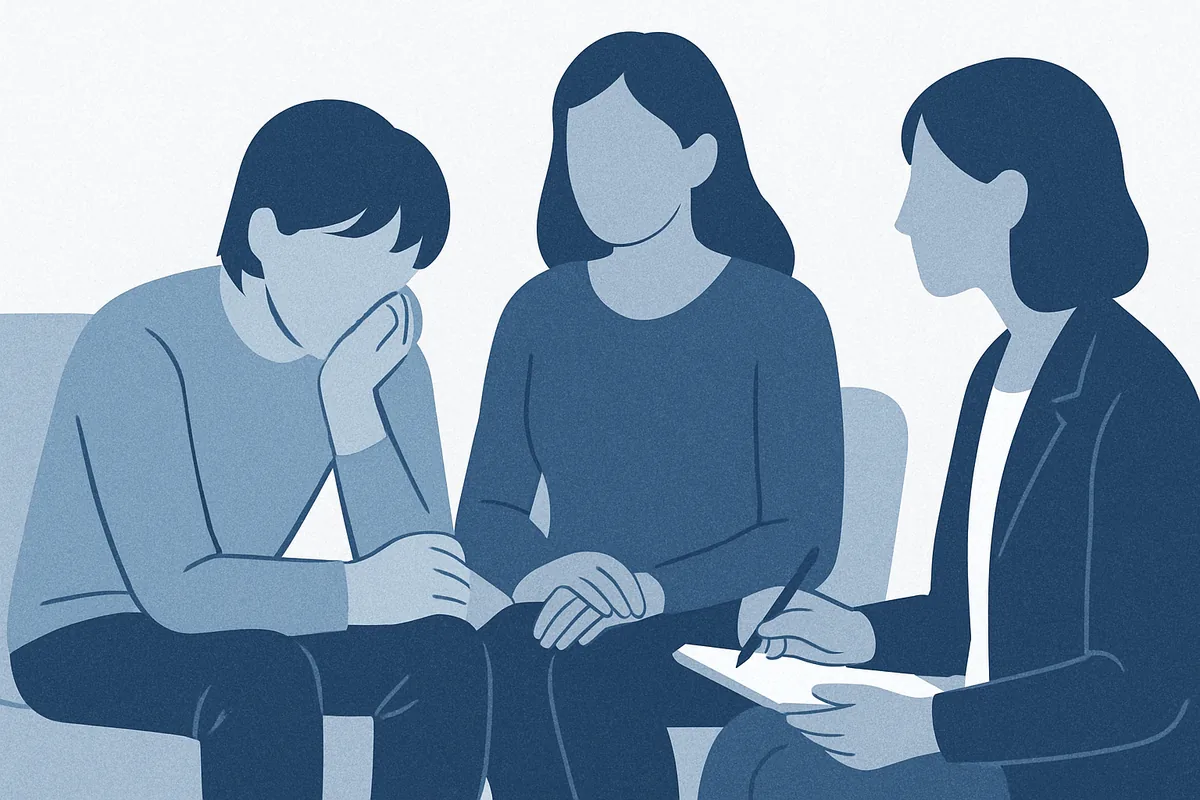
- 67% of autistic young people in a UK birth cohort received their diagnosis between ages 8 and 14, placing adolescence as the primary window for late identification, yet most school-based screening programmes focus on early childhood.
- Autism masking in teenagers is more sophisticated and harder to detect than in younger children: it typically involves deliberate social scripting, suppression of sensory responses, and a stark contrast between composed school behaviour and emotional collapse at home.
- Autism burnout is clinically distinct from ordinary teenage tiredness: it follows sustained social performance rather than physical activity, can last weeks or months, and does not resolve with a single night's rest.
- In Dubai's international school environment, autistic teenagers may layer cultural code-switching onto existing autism masking, amplifying exhaustion and further concealing difficulties from parents and teachers.
- A formal autism assessment at a DHA-regulated clinic produces a diagnostic report recognised by KHDA for school accommodations, individual education plans, and extended exam time, making an early referral strategically important for teenagers in UAE schools.
Your teenager gets home from school, drops their bag, and disappears. Within the hour they are crying over something small, overwhelmed by the sound of dinner being prepared, or simply curled under a blanket refusing to speak. And yet, when you speak to their teachers, the picture is entirely different: attentive, polite, socially engaged. A 2022 study published in the Journal of Child Psychology and Psychiatry found that 67% of autistic young people received their diagnosis between ages 8 and 14, confirming adolescence as a primary window for late identification (PMC, 2022). The gap between how your teenager presents in public and how they feel privately is not defiance, manipulation, or anxiety alone. It may be autism signs teenagers masking at school, spending every unit of social energy they have, and completely depleting themselves by 4pm.
This article is for parents of teenagers in Dubai who sense something is happening beneath the surface but cannot name it. At CAYA World, we regularly see adolescents who have been described as shy, anxious, or perfectionistic for years before anyone considered autism. The teen-specific masking pattern is genuinely different from what you would observe in a younger child, and understanding that distinction is the first step toward getting the right support.
Why autism is often recognised later in teenagers than in young children
Autism assessment in children has moved steadily earlier, with many children now identified before they start school. But the data consistently shows that a significant proportion of autistic people are not identified until adolescence or adulthood, and the reasons are not straightforward.
Young children are in structured observation environments: nurseries, paediatric check-ups, early years assessments. Their communication differences, sensory responses, and play patterns are visible to trained professionals at relatively close range. Teenagers operate in a far more complex social world, and they have had a decade to develop strategies for appearing typical. The masking that begins almost instinctively in childhood, as a response to social feedback, becomes by adolescence an elaborate and largely automatic system of performance.
Cognitive ability plays a role too. Many autistic teenagers are academically capable, which means school systems rarely flag them for additional support. Teachers see focus, effort, and results. What they do not see is the internal cost of maintaining that focus in a noisy, socially demanding environment for six hours a day.
Gender is also a significant factor in delayed identification. Girls and young women are diagnosed with autism at much lower rates than boys, and a substantial body of research suggests this reflects under-identification rather than lower prevalence. The 2022 UAE Ministry of Community Development report recorded 4,561 autism cases nationally, with 80% male among registered cases. This gender imbalance almost certainly reflects the same historic under-identification of girls seen in international data, driven in large part by the fact that girls tend to mask more consistently and more effectively than boys from an early age.
At CAYA World, Dr. Nour Al Ghriwati notes that many of the teenagers referred for assessment have previously received diagnoses of anxiety disorder, depression, or social phobia. These diagnoses are not always wrong, but they are often incomplete. Anxiety and depression are genuinely common in autistic adolescents, but treating them without addressing the underlying autism leaves the root cause of the exhaustion untouched.
What autism masking means for teenagers, and why it is exhausting
Autism masking, also called camouflaging, refers to the practice of suppressing, hiding, or consciously compensating for autistic traits in order to appear neurotypical. In teenagers, this typically involves several simultaneous and effortful processes.
Social scripting is one of the most common. Autistic teenagers often prepare conversations in advance, rehearsing how to respond to greetings, how to ask questions that sound natural, and how to exit conversations without appearing rude. They study social interactions the way other students study for exams, cross-referencing what they have observed with how they believe they should respond. The result can look like excellent social awareness. The process behind it is exhausting in a way that no one around them can see.
Suppressing stimming is another core feature. Stimming refers to repetitive self-regulatory behaviours, such as rocking, finger-tapping, or specific hand movements, that help regulate sensory and emotional input. Most autistic teenagers learn early that visible stimming attracts unwanted attention. So they stop doing it in public, replacing visible stims with subtler ones (pressing fingers together, tensing leg muscles, chewing the inside of a cheek) or suppressing the urge entirely. Suppressing stimming does not remove the regulatory need. It simply delays it, often until the teenager is home.
Eye contact management is another layer. Many autistic people find direct eye contact genuinely uncomfortable or cognitively distracting. Autistic teenagers typically learn to perform eye contact: looking at a specific point on the face, timing glances to feel natural, or forcing sustained eye contact past the point of comfort. This costs cognitive bandwidth that neurotypical peers are not spending.
The cumulative effect is what researchers call autistic camouflaging: a performance maintained across the school day that places enormous demands on executive function, emotional regulation, and social cognition simultaneously. A 2022 thematic analysis found that camouflaging was strongly associated with poor mental health and suicidality in autistic individuals, identifying exhaustion and overload as core themes (PMC, 2022). The teenager who comes home and collapses is not being dramatic. They have genuinely spent everything they had.
It is also worth noting that younger children mask differently: the masking is often less intentional, less systematic, and more likely to be visible to observant adults. By adolescence, the strategies have been practised so many times they have become automatic, making them far harder to detect from the outside.
Teen-specific autism signs parents often miss
The signs that point toward autism masking in a teenager are distinct from the early childhood indicators most parents and teachers have heard about. They are subtler, more behavioural, and often easy to attribute to typical teenage stress or social anxiety.
Here are the patterns at CAYA World we most commonly see in adolescents who are later assessed and identified as autistic.
The school-home contrast. This is the single most consistent pattern. The teenager performs well socially at school and is described by teachers as cooperative and engaged. At home, especially in the hours immediately after school, they become withdrawn, irritable, or emotionally dysregulated. Parents often report that conversations are impossible in the early evening. The contrast is stark enough that parents sometimes wonder if teachers are describing a different child.
Exhaustion disproportionate to activity. Social events, even enjoyable ones, leave the teenager profoundly drained in a way that rest does not quickly repair. They may need days to recover from a single social outing. This is qualitatively different from introversion: the teenager is not choosing quiet over company, they are recovering from the cognitive and sensory work the social situation required.
Intense, specific interests that dominate free time. Most autistic teenagers have one or two areas of deep, consuming interest. When they are home and the mask comes off, they typically retreat to these interests. This can look like typical teenage obsession with gaming, music, or a fandom, and parents may not recognise it as a regulatory strategy rather than a hobby.
Rigid routines and strong reactions to disruption. Autistic teenagers often develop precise routines around the transition from school to home: the same route, the same after-school activity, food at a specific time. When these routines are disrupted, the response can seem out of proportion to the actual change. This rigidity is a regulatory mechanism, not defiance.
Perfectionism and intense anxiety about mistakes. Many autistic teenagers place enormous internal pressure on performance, particularly in academic work or social interactions. A minor error, an ambiguous comment from a teacher, or an unanswered message can trigger hours of rumination. This often looks like generalised anxiety and may have been treated as such.
Difficulty with unstructured social time. Structured interactions, including classroom discussions, organised activities, and structured group projects, are more manageable because the rules are clear. Unstructured social time, such as break, lunch, or free periods, is far harder. Autistic teenagers often spend these periods observing rather than participating, or attaching to one trusted friend to avoid open-ended social navigation.
Identity confusion and difficulty describing their own feelings. Autistic teenagers who have masked for years often struggle to answer questions like "how do you feel?" or "what do you enjoy?" They have spent so long performing expected responses that locating their own authentic preferences and emotional states becomes genuinely difficult. This can present as flat affect or apparent indifference rather than the distress it actually reflects.
If you are recognising several of these patterns in your teenager, the next step is not to diagnose but to pay attention to the pattern over time and consider whether a formal assessment makes sense. Our team at CAYA World can guide you through whether what you are observing warrants a clinical evaluation. Send a WhatsApp message to a CAYA psychologist for a brief orientation conversation, and they will help you understand whether the signs you are seeing point toward assessment.
Autism burnout versus ordinary tiredness: how to tell the difference
Autism burnout is not a term used loosely. It describes a specific state of physical, cognitive, and emotional depletion that results from sustained masking and social performance, and it is distinct from ordinary teenage fatigue in important clinical ways.
A 2023 study published in the Journal of Autism and Developmental Disorders found that the most strongly endorsed features of autistic burnout were exhaustion and social withdrawal, with many participants linking burnout episodes to prior misdiagnoses such as depression or anxiety (SAGE, 2023). This finding matters clinically because burnout that is treated only as depression, without addressing the masking that caused it, tends to recur.
The key differences between autism burnout and ordinary tiredness are worth naming specifically.
Ordinary teenage tiredness follows identifiable physical demands: a late night, an intense sporting event, a run of exam preparation. It responds to sleep. The teenager is tired, rests, and recovers.
Autism burnout follows sustained social performance. The teenager may have had adequate sleep. They may not have done anything that looks physically demanding. But if the preceding period involved consistent masking, navigating complex social dynamics, or managing an unpredictable environment, the depletion is real and deep. It does not resolve after one night's sleep. It can persist for days, weeks, or in severe cases, months.
During burnout, autistic teenagers often lose skills they appeared to have: the capacity for small talk, the ability to manage sensory input in a busy environment, the language to describe what they are experiencing. Parents sometimes describe this as regression, which is alarming. It is not permanent regression, but it is a signal that the teenager's coping capacity has been exceeded.
Autistic anxiety and depression rates are reported as up to ten-fold higher than in adolescents without autism (PMC, 2022). This is not coincidental. Sustained masking is itself a driver of anxiety and depression. When burnout is repeatedly misread as a mental health condition rather than a consequence of unrecognised autism, the appropriate support is delayed and the cycle continues.
Parents should take note when a period of apparent recovery is followed by a return to the same burnout pattern without any obvious new stressor. That cycling pattern, exhaustion that is disproportionate to activity, periods of withdrawal that outlast ordinary tiredness, and the loss of previously held social skills, is a clinical signal that warrants professional attention.
Wondering if It's Time to Talk to Someone?
Our specialist team at CAYA World offers comprehensive assessment and evidence-based treatment, conducted from our clinic in Palm Jumeirah, Dubai.
How masking shows up differently in Dubai's international school setting
Dubai's international school environment creates a specific and underappreciated layer of complexity for autistic teenagers. Most international schools draw students from dozens of nationalities, often with shifting cohorts as families relocate in and out of the UAE. For any teenager, this is socially demanding. For an autistic teenager who is already expending significant effort on social performance, it introduces an additional challenge: cultural code-switching.
Code-switching refers to the process of adjusting communication style, social norms, and behavioural expectations depending on cultural context. A teenager raised in one country, schooled in an international curriculum, and socialising with peers from multiple cultural backgrounds must navigate different social rules simultaneously. For neurotypical teenagers this is demanding but generally manageable. For autistic teenagers who are already consciously computing social rules and suppressing their natural responses, the multiplication of competing social codes can significantly amplify exhaustion.
The DHA Clinical Practice Guideline for Autism Spectrum Disorder explicitly notes that autism prevalence in Dubai's child and adolescent population remains unknown, with no reliable local age-stratified data. Emirates Health Services screened over 20,600 children for autism between 2022 and mid-2023, reflecting genuine progress in UAE-level awareness, but these programmes target early childhood rather than adolescents. The practical consequence is that many autistic teenagers in UAE schools remain unidentified, and parents and teachers are working with limited local reference points.
There are patterns at CAYA World we observe specifically in the Dubai international school context. Teenagers who are highly articulate in two or more languages but struggle with the unwritten social rules that hold peer groups together. Teenagers who perform well academically but experience profound social confusion during cultural events, informal gatherings, or any setting where the rules are implicit rather than stated. Teenagers from expat families who have changed schools two or three times and who have each time successfully rebuilt a surface-level social presentation, at enormous personal cost, while the underlying autism remains unacknowledged.
For girls in particular, and for students from cultural backgrounds where autism remains heavily stigmatised, the masking can be especially thorough. A 2022 UAE report registered 80% of nationally recorded autism cases as male, but international research consistently shows this gap reflects differential identification, not differential prevalence. Autistic girls in Dubai's schools are masking effectively enough that teachers and parents rarely raise concerns, even when those girls are privately exhausted.
If your family is an expat family, it is also worth naming that the expatriate experience itself adds a layer of emotional processing: managing identity, belonging, and cultural adjustment. When this sits on top of unrecognised autism and daily masking, the compounded load can be significant enough to tip a teenager into burnout even in what appears to be a settled, stable period.
When to seek an autism assessment for your teenager in Dubai
Parents often ask at what point the signs described in this article warrant a formal clinical assessment rather than watchful waiting. There is no single threshold, but several indicators at CAYA World we use clinically to advise whether assessment is the appropriate next step.
Consider a formal assessment when you are seeing a consistent and sustained pattern, not a one-off bad week, of the following:
- A marked and persistent contrast between the teenager's social functioning at school and their emotional state at home, occurring most days rather than occasionally.
- Exhaustion after social events that is disproportionate to the activity and takes significantly longer to resolve than ordinary tiredness.
- Repeated episodes of emotional dysregulation or shutdown at home following structured school days, particularly in the absence of an obvious stressor.
- A history of prior assessments or diagnoses (anxiety, depression, ADHD) that have not fully explained the teenager's difficulties or led to lasting improvement with treatment.
- The teenager themselves expressing that they feel fundamentally different from their peers, that social interactions feel like performances, or that they are exhausted in a way they cannot explain.
- Sensory sensitivities that have been present since early childhood and that continue to require significant management in daily life.
- Intense, specific interests that are a primary source of regulation and that occupy most available downtime.
A formal autism assessment at a DHA-regulated clinic is the appropriate pathway. DHA regulations require that autism assessments be conducted by licensed, multidisciplinary clinical teams. At CAYA World, our autism assessment service for teenagers in Dubai involves a comprehensive clinical interview with the young person and parents separately, validated diagnostic instruments calibrated for adolescent presentation, and a review of developmental and school history. The resulting report is recognised by the Knowledge and Human Development Authority (KHDA) for school accommodations, individual education plans, and extended exam time arrangements, which can be practically significant for teenagers approaching UAE university entry.
Early assessment during adolescence also allows for timely access to post-diagnostic support. Autism therapy for teenagers focuses on building self-understanding, reducing the internal cost of social participation, and developing sustainable coping strategies that do not rely on full-time masking. The goal is not to remove the teenager's social skills but to give them tools that allow them to participate socially on their own terms, with a realistic understanding of their energy limits.
For families navigating the steps after a formal diagnosis, our guide on what to do after an autism diagnosis in Dubai covers practical next steps, school communication, and how to access ongoing support through the UAE system.
If you have been reading this article and recognising your teenager in the descriptions, reaching out for a consultation is a reasonable and low-commitment next step. Our clinical team at CAYA World can help you assess whether what you are observing warrants formal evaluation, and what the process would involve for your family specifically.
Frequently Asked Questions About Autism Signs and Masking in Teenagers in Dubai
Yes, this pattern is one of the most consistent presentations of autism masking in adolescents. The school environment requires sustained social performance: managing eye contact, following unwritten peer rules, suppressing sensory responses, and scripting interactions. By the time your teenager gets home, they have depleted their capacity to regulate. The emotional collapse you see in the evenings is the cost of the performance, not evidence that something is wrong at home. If this pattern occurs most days and is disproportionate to ordinary tiredness, it warrants a clinical conversation about whether autism assessment is appropriate.
In younger children, masking tends to be less intentional and less systematic. A child may suppress a stim or mirror a peer's play, but the strategies are relatively transparent to observant adults. By adolescence, masking strategies have been practised over years and are largely automatic. Teenagers typically manage full conversations using rehearsed scripts, time their eye contact deliberately, and maintain composed school presentations across entire days. The sophistication makes teen masking much harder to detect from the outside, which is one reason autism identification in this age group is frequently delayed. For a more detailed comparison, our article on how younger children mask differently covers the early presentations in depth.
Masking affects autistic teenagers of all genders, but research consistently shows that girls and young women mask more completely and more consistently than boys, which contributes significantly to their under-identification. A 2022 UAE report found 80% of registered autism cases were male, a gap that international evidence links to differential diagnosis rates rather than lower female prevalence. Girls tend to develop more elaborate social scripts, mirror peer behaviour more closely, and suppress visible autistic traits more thoroughly, meaning their difficulties often go unnoticed until the cumulative exhaustion becomes unmistakable, frequently in mid-to-late adolescence or early adulthood.
A comprehensive autism assessment for a teenager at a DHA-regulated clinic typically involves a structured clinical interview with the young person, a separate parent interview covering developmental and school history, and validated diagnostic instruments calibrated for adolescent presentation. At CAYA World, the assessment takes place across multiple sessions to allow for adequate clinical depth and to ensure the teenager is not overwhelmed. The resulting report is recognised by KHDA for school accommodations and individual education plans. To begin the process, contact CAYA World via WhatsApp or phone; an intake conversation will help determine whether a full assessment is the right next step for your family.
Yes. Social confidence in an autistic teenager is often the product of years of effortful masking rather than natural ease. A teenager may have developed a convincing social persona, maintain multiple friendships, and appear comfortable in groups, while internally expending enormous cognitive and emotional resources to do so. The key question is not how the teenager appears socially, but what the cost of that social participation is. If they are consistently exhausted after social interactions, struggle to maintain the same presentation outside structured settings, or describe social situations as performances rather than enjoyable experiences, those are clinically meaningful signals regardless of how well-liked they appear to others.
Sources and Further Reading
- Age at autism diagnosis: findings from a UK birth cohort studyJournal of Child Psychology and Psychiatry, PMC (2022)
- Anxiety and depression comorbidities in autistic adolescents: cohort dataPMC (2022)
- Autistic burnout: qualitative analysis of features and contributorsJournal of Autism and Developmental Disorders, SAGE (2023)
- Camouflaging in autism: mental health outcomes and suicidality associationsPMC thematic analysis (2022)
- DHA Clinical Practice Guideline for Autism Spectrum DisorderDubai Health Authority
- Emirates Health Services autism screening programme (2022-2023 data, 20,626 children screened). Gulf News / Emirates Health Services (2023)
- UAE Ministry of Community Development autism case registry. Gulf News (2022)