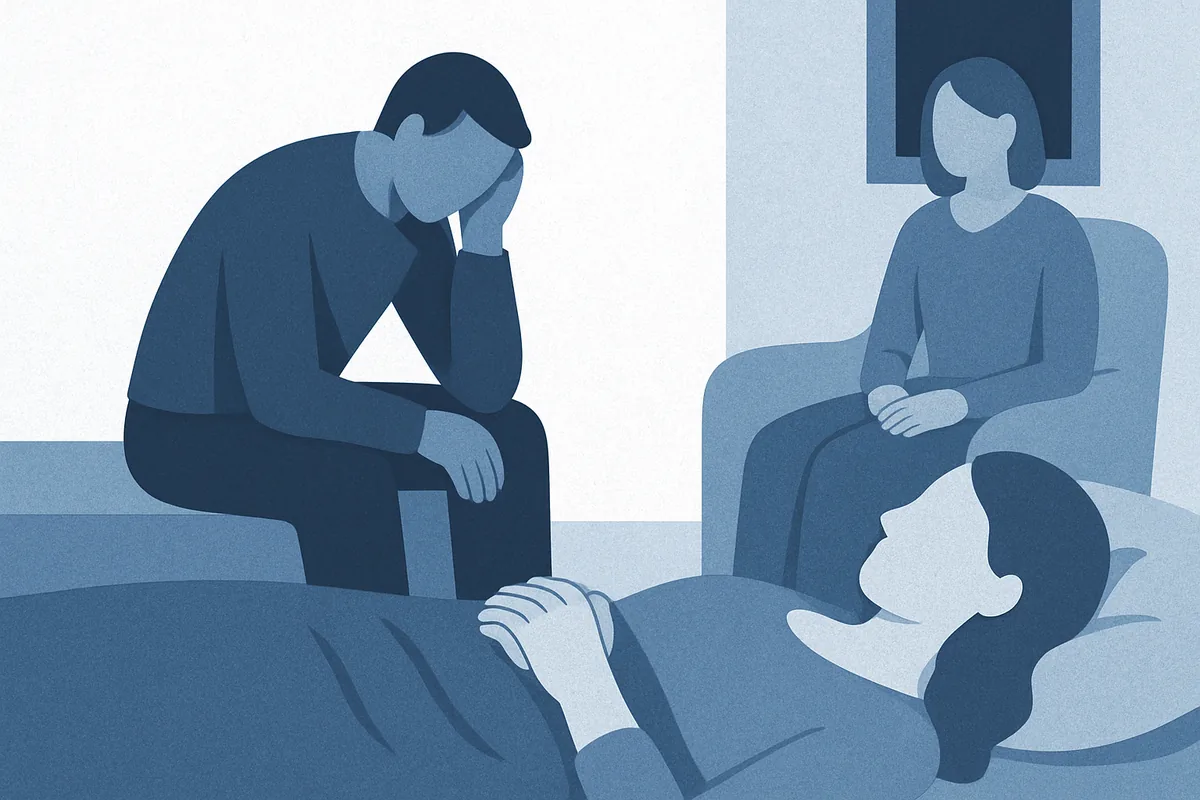
- Anxiety and insomnia share a bidirectional relationship: anxiety activates the nervous system in ways that prevent sleep onset, and lost sleep amplifies threat perception the following day, making anxiety worse.
- Adults with insomnia are 17.35 times more likely to have clinically significant anxiety than those without insomnia, and anxiety disorder prevalence among people with insomnia reaches 24 to 36 percent in population studies.
- Cognitive Behavioural Therapy for Insomnia (CBT-I) produces large effect sizes for insomnia severity and, in an open trial for comorbid generalised anxiety disorder, 60.9 percent of participants were treatment responders at follow-up.
- Dubai-specific factors, including extreme summer heat that delays the core body temperature drop needed for sleep onset, early sunrise, and expat lifestyle pressures, add compounding layers to anxiety-driven insomnia that standard global advice does not address.
- Professional support is warranted when sleep problems have persisted for three or more weeks, when daytime function is significantly impaired, or when anxiety symptoms are expanding beyond sleep into other areas of daily life.
Approximately 16.2 percent of adults worldwide live with insomnia, representing an estimated 852 million people, according to a 2025 PubMed analysis. Among those, anxiety is disproportionately common: a population-level review published in PMC (2011) found anxiety disorder prevalence among people with insomnia reaching 24 to 36 percent. In Dubai, the numbers are starker still. A Dubai Health Authority-linked report found that more than 70 percent of Dubai residents have at least one sleep disorder, with insomnia the most prevalent at 31.3 percent. Anxiety sleep problems in adults are not a side effect of poor willpower or bad routines. They are the product of a self-reinforcing biological and psychological cycle, one that worsens reliably unless the cycle itself is interrupted. This article explains the mechanism, addresses the specific pressures that make sleep harder for adults living in Dubai, and sets out what the clinical evidence actually says works.
Why do anxiety and sleep problems keep feeding each other?
The relationship between anxiety and sleep is not one-directional. It is a feedback loop, and understanding the direction of travel inside it matters for treatment.
Anxiety activates the hypothalamic-pituitary-adrenal (HPA) axis, triggering the release of cortisol and adrenaline. These hormones prepare the body for threat response: heart rate rises, muscles tighten, and cognitive alertness increases. This is adaptive when you face a genuine threat. When the same system fires at 11 pm because your brain has begun rehearsing tomorrow's performance review or running through an unresolved conflict, it suppresses the physiological conditions your body needs to fall asleep. Core body temperature needs to drop for sleep onset to occur. Cortisol keeps it elevated. The result is a prolonged period lying awake, hyperaware, unable to switch off.
Now the sleep deprivation side of the loop begins. A single night of poor sleep impairs the prefrontal cortex, the brain region responsible for rational appraisal and emotional regulation. Simultaneously, it sensitises the amygdala, the region that assigns threat weighting to incoming information. A 2011 epidemiological study by Taylor and colleagues found that people with insomnia are 17.35 times more likely to have clinically significant anxiety than those without insomnia. The amygdala becomes hyperreactive after sleep loss, interpreting neutral cues as threatening, and the prefrontal cortex lacks the regulatory capacity to push back. The following day, anxiety is higher. That night, sleep is harder. The cycle tightens.
There is a third layer that keeps adults locked in this pattern: the development of conditioned arousal. Once someone has experienced enough nights of lying awake anxiously, the bed itself becomes a conditioned stimulus for wakefulness. The moment they get into bed, alertness spikes. This is a learned association, and it is one of the primary targets of Cognitive Behavioural Therapy for Insomnia (CBT-I). Without breaking the conditioned arousal component, even reducing daytime anxiety will often leave the sleep problem intact.
At CAYA World, we see this pattern frequently in adults who have already addressed their anxiety through therapy or lifestyle changes and still cannot sleep. The anxiety has reduced, but the bed remains associated with wakefulness. That is why treatment needs to address both arms of the cycle simultaneously, not sequentially.
What does anxiety actually do to sleep?
The clinical presentation of anxiety-driven insomnia is distinct from insomnia caused purely by poor sleep habits, and identifying which features are present helps shape the right intervention.
The most common presentations we see in adults are:
- Sleep onset difficulty: The mind becomes active the moment the environment quietens. Intrusive thoughts, worry chains, and mental rehearsal of future scenarios keep the person alert well past the point of tiredness.
- Frequent night waking: Anxiety maintains a state of physiological hyperarousal throughout the night. Sleep stages are fragmented, and the individual wakes easily, often with a racing heart or a sense of urgency with no clear cause.
- Early morning waking: Cortisol release peaks in the early morning hours. In anxious individuals, this physiological rise triggers full wakefulness at 3 or 4 am, accompanied by a rush of anxious thoughts that make returning to sleep difficult.
- Non-restorative sleep: Even when sleep duration appears adequate, the quality is poor. Anxious arousal during lighter sleep stages prevents the deep restorative sleep the body needs, leaving the person waking unrefreshed.
Acute anxiety episodes add a further disruption layer. A panic attack occurring at night can trigger full sympathetic activation from sleep, leaving the person physically shaken and cognitively alert for an hour or more afterward. Even if a full panic attack does not occur, anticipatory anxiety about having one during sleep creates presleep dread that delays sleep onset significantly.
The cognitive dimension of anxiety-driven insomnia is equally important to recognise. Adults with this presentation develop specific catastrophic beliefs about sleep itself: "If I don't get eight hours I won't cope tomorrow." "Every hour I'm awake is damaging my health." These beliefs are not trivially wrong, they contain a kernel of truth, which is exactly what makes them so difficult to challenge. CBT-I addresses these beliefs directly through cognitive restructuring targeted specifically at sleep-related thought patterns, distinct from general anxiety-focused CBT.
Sleep-monitoring behaviour amplifies the problem further. Watching the clock, tracking hours lost, calculating how tired you will be by morning: each of these behaviours increases arousal and maintains the focus on sleep as something that must be controlled rather than allowed to occur. At CAYA World, our clinical team works with clients to identify these maintaining behaviours early, because they are often invisible to the person doing them.
If you recognise this pattern in your own sleep, speaking with a psychologist is a practical next step. Our anxiety therapy team in Dubai offers an initial consultation to help you identify whether what you're experiencing is anxiety-driven insomnia and what structured support would look like. A brief WhatsApp message is enough to get started.
How anxiety sleep problems in adults are made worse in Dubai
Global articles on anxiety and sleep are clinically accurate but contextually incomplete for anyone living in the UAE. Dubai creates several compounding factors that significantly worsen anxiety-driven insomnia, and none of them appear in the standard global guidance.
Summer heat and sleep physiology
Falling asleep requires the core body temperature to drop by approximately 1 to 1.5 degrees Celsius. This thermoregulatory shift is a physiological prerequisite, not a comfort preference. Research shows that for every 10 degrees Celsius rise in ambient temperature, total sleep time drops by approximately 9.67 minutes. Dubai's summer ambient temperatures routinely exceed 38 to 42 degrees Celsius outdoors during June through September. Even with air conditioning indoors, the body's thermoregulatory system is working against a background of extreme heat, and the sharp physiological contrast between air-conditioned interiors and outdoor temperatures adds further strain. The result is delayed sleep onset, more frequent awakenings, and less time in deep slow-wave sleep, all of which amplify the next day's anxiety.
Dubai's summer also brings early sunrise, sometimes as early as 5:30 am. Light exposure that early suppresses melatonin and advances the circadian phase, meaning the sleep window shortens from both ends. For someone already lying awake anxiously, losing those final morning sleep hours has a disproportionate impact on daytime functioning.
Expat lifestyle pressures
Dubai's workforce is predominantly expatriate, and the lifestyle patterns that come with expat living create reliable sleep disruptors. Late evening social dining is cultural normalcy in Dubai, pushing the final meal to 9 or 10 pm and delaying digestion-related arousal well into what should be the sleep window. Working across time zones, whether managing teams in Europe or Asia, creates irregular communication demands that keep the nervous system activated past midnight. Frequent international travel disrupts circadian entrainment. High social pace, particularly during the cooler October through April season, compresses recovery time.
These behavioural disruptors layer on top of anxiety-related hyperarousal. An adult who is already physiologically primed by anxiety finds that late dining and a 10 pm video call with a London colleague push them past the window in which sleep feels achievable. By midnight, the sleep pressure has been met and passed, and the anxiety system has had two more hours to generate worry content.
The psychological pressure of productivity culture
Dubai's professional environment carries an implicit expectation of high output and visible availability. Anxiety about performance, belonging, and visibility is common in clients we see at CAYA World, particularly among professionals in the finance, real estate, and tech sectors. The mental residue from a high-stakes professional environment does not clear the moment work stops. It follows the person into the bedroom, activated by the quiet that sleep requires. Addressing this layer requires more than sleep hygiene tips. It requires working directly on the anxiety cognitions that the professional environment reinforces.
Wondering if It's Time to Talk to Someone?
Our specialist team at CAYA World offers comprehensive assessment and evidence-based treatment, conducted from our clinic in Palm Jumeirah, Dubai.
What is CBT-I and how does it treat anxiety-driven insomnia?
Cognitive Behavioural Therapy for Insomnia, known as CBT-I, is the first-line recommended treatment for chronic insomnia in adults, endorsed by the American Academy of Sleep Medicine and the European Sleep Research Society. A 2023 meta-analytic review found that CBT-I produces large effect sizes for insomnia severity (Hedges' g = 0.82), sleep efficiency (g = 0.63), and sleep onset latency (g = 0.47). In a clinical trial specifically targeting individuals with comorbid generalised anxiety disorder and insomnia, published in Behavioural and Cognitive Psychotherapy (2022), 60.9 percent of participants were treatment responders at post-treatment and follow-up, with 47.8 percent achieving full remission.
CBT-I is not a single technique. It is a structured package of components, each targeting a specific maintaining mechanism of anxiety-driven insomnia.
Sleep restriction therapy
This component is counterintuitive but well-evidenced. It involves temporarily restricting the time spent in bed to match the actual time spent asleep, typically to six or six and a half hours at first. This consolidates fragmented sleep into a more continuous block by building sleep pressure, and over several weeks the sleep window is extended as efficiency improves. Sleep restriction is effective but requires careful titration. In anxious individuals, sleep deprivation itself can temporarily increase anxiety, which is why this component is more safely managed with clinical guidance rather than attempted alone.
Stimulus control
Stimulus control breaks the conditioned association between bed and wakefulness. The core rule is that the bed is used only for sleep. If the individual is not asleep within approximately 20 minutes, they leave the bed, go to a low-stimulation environment, and return only when sleepy. This feels uncomfortable initially, particularly for anxious individuals who are reluctant to make the bedroom feel less safe. However, it is one of the most reliably effective components of CBT-I precisely because it targets the conditioned arousal mechanism described earlier.
Cognitive restructuring for sleep-specific beliefs
Anxiety produces specific, rigid beliefs about sleep: that eight hours is a biological necessity, that poor sleep the night before guarantees a ruined day, that any night waking represents a failure. CBT-I uses evidence-based cognitive restructuring to examine and soften these beliefs. The goal is not to replace anxious beliefs with naively positive ones, but to develop a more accurate and flexible relationship with sleep variability. Most adults sleep better than they think they do, and sleep tracking anxiety often contributes more to insomnia than any physiological factor.
Sleep hygiene and circadian anchoring
Standard sleep hygiene advice, consistent wake times, reduced evening light exposure, limiting caffeine, is a component of CBT-I but not a standalone treatment. In the Dubai context, our clinical team places particular emphasis on circadian anchoring: maintaining a fixed wake time regardless of how poorly the previous night went, managing morning light exposure given Dubai's early sunrise, and moderating the thermal environment before bed. For adults working across time zones, strategic light exposure and meal timing can help anchor the circadian rhythm even with irregular working hours.
At CAYA World, our therapists integrate CBT-I principles within a broader CBT framework, addressing both the sleep-specific cognitions and the underlying anxiety that drives hyperarousal. You can learn more about our structured sleep support programme and what the initial process involves.
When is it time to seek professional support rather than self-manage?
Not every episode of poor sleep requires professional intervention. Short-term sleep disruption in response to a specific stressor, an illness, a major life change, or a period of intensified work pressure often resolves on its own within two to three weeks once the stressor eases. Self-management at this stage, including basic sleep hygiene, reducing evening screen time, and managing caffeine intake, is reasonable and appropriate.
Professional support becomes the right call when any of the following applies:
- Sleep problems have persisted for three or more weeks with no clear improvement, regardless of what you have tried independently.
- Daytime function is significantly impaired: you are unable to concentrate at work, your mood is consistently low or irritable, and fatigue is affecting your relationships or performance.
- Anxiety symptoms are expanding beyond sleep. If you notice that worry, rumination, or physical anxiety symptoms are present during the day and not only at bedtime, the anxiety is likely a primary driver rather than a secondary response to poor sleep.
- You have developed sleep-related anticipatory anxiety: dreading bedtime, counting hours until you have to wake up, or feeling relief when circumstances give you an excuse to stay up late.
- Acute anxiety episodes, including panic attacks or significant night waking with physical symptoms, are occurring during the night.
Many adults in Dubai delay seeking support because they attribute the problem to lifestyle rather than to a clinical pattern. This is understandable but costly. The longer the anxiety-insomnia cycle runs, the more deeply conditioned the arousal response becomes, and the longer effective treatment takes. Seeking clinical input at three to four weeks of persistent difficulty is not premature. It is timely.
Our clinical team at CAYA World offers structured assessment to determine whether what you are experiencing reflects anxiety-driven insomnia, a primary sleep disorder, or both. When anxiety is a primary driver, our anxiety therapy service in Dubai provides evidence-based CBT treatment targeted at both the anxiety and the sleep disruption it causes. You do not need to have a formal diagnosis before reaching out. A brief clinical conversation is often enough to clarify the pattern and map a path forward.
Frequently Asked Questions About Anxiety and Sleep Problems in Dubai
Anxiety can cause insomnia in individuals who had no prior sleep difficulty. The mechanism is direct: anxiety activates the sympathetic nervous system and raises cortisol, both of which suppress the physiological conditions needed for sleep onset and maintenance. In population studies, anxiety disorder prevalence among people with insomnia reaches 24 to 36 percent, and people with insomnia are 17.35 times more likely to have clinically significant anxiety. The causal relationship runs in both directions, but anxiety alone is sufficient to produce chronic insomnia in adults without any pre-existing sleep disorder.
Normal sleep anxiety refers to situational worry about sleep during periods of acute stress, typically lasting a few days to two weeks and resolving when the stressor passes. It becomes a clinical concern when it persists beyond three weeks, when anticipatory dread of bedtime develops, when the pattern has generalised to include daytime anxiety symptoms, or when functioning is significantly impaired. The key marker is whether the sleep difficulty is self-maintaining: if anxiety about sleep is now driving the insomnia more than any external stressor, that conditioned pattern warrants professional assessment.
Yes. CBT-I was originally developed for primary insomnia, but the evidence for comorbid anxiety and insomnia is strong. A 2022 clinical trial published in Behavioural and Cognitive Psychotherapy found that 60.9 percent of participants with comorbid generalised anxiety disorder and insomnia were treatment responders following CBT-I, with 47.8 percent achieving full remission. The treatment's cognitive restructuring and stimulus control components directly target the anxiety-maintaining mechanisms of insomnia, not only behavioural sleep habits. CBT-I and CBT for anxiety can also be integrated within a single treatment course when both conditions are present.
Sleep restriction therapy is one of the most effective CBT-I components, but it carries specific risks when self-administered. Deliberately restricting sleep time temporarily increases daytime sleepiness, which can affect driving safety and work performance. In anxious individuals, the short-term sleep reduction can also temporarily increase anxiety before it improves, which is distressing and can lead to abandoning the protocol at the wrong point. For adults with comorbid anxiety, sleep restriction therapy is significantly safer and more effective when guided by a trained therapist who can adjust the protocol week by week in response to your specific response pattern.
Dubai's summer heat disrupts sleep physiology directly. The body needs its core temperature to drop by approximately one to 1.5 degrees Celsius to initiate sleep, and extreme ambient heat delays this process, pushing sleep onset later and increasing night-time awakenings. Research shows approximately 9.67 minutes of total sleep time are lost for every 10 degree Celsius rise in ambient temperature. Early summer sunrise, sometimes before 5:30 am, further shortens the sleep window by triggering early cortisol release. Lost or fragmented sleep sensitises the amygdala and impairs prefrontal regulation the following day, making anxiety genuinely worse. The cycle is real and physiologically grounded, not just a perception.
Sources and Further Reading
- Global prevalence of insomnia in adultsPubMed (PMID 40627924), 2025
- Epidemiology of insomnia: prevalence, self-help treatments, consultations, and determinants of help-seekingPMC (PMC3181635), 2011
- Epidemiological study on insomnia and anxiety comorbidity (17.35x likelihood finding). Taylor DJ et al., 2011
- Meta-analytic review of CBT-I effect sizesPMC (PMC10002474), 2023
- CBT-I for patients with comorbid generalised anxiety disorder: an open trial on clinical outcomes and putative mechanismsBehavioural and Cognitive Psychotherapy, Cambridge University Press, 2022
- Prevalence of sleep disorders among Dubai residents. Dubai Health Authority-linked report summarised by CallDoctor.ae (year unspecified, recent)