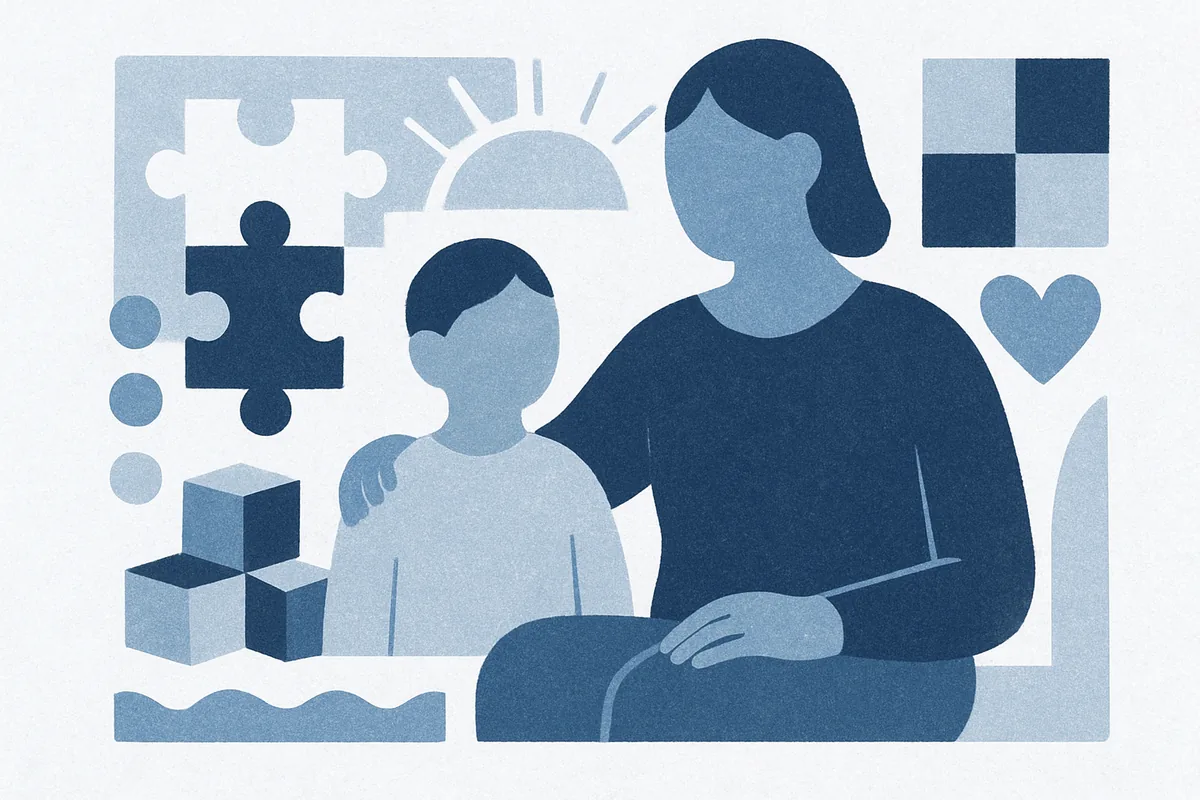
- Autism spectrum disorder is a neurodevelopmental condition affecting social communication, sensory processing, and behaviour; the word 'spectrum' reflects the fact that no two children present identically, presentations range from non-verbal with high support needs to highly verbal with subtle social differences.
- In Dubai, approximately 1 in 146 births are estimated to involve autism spectrum disorder, with 69.1% of registered cases being expatriate children, meaning the majority of families navigating this diagnosis in Dubai are expat families (Dubai Population Registry Study, 2020).
- Autism and ADHD are distinct diagnoses but co-occur in approximately 1 in 8 children diagnosed with ADHD; a child can and sometimes should receive both diagnoses, and telling the two apart requires a formal multidisciplinary assessment.
- A formal autism diagnosis in Dubai is the practical gateway to KHDA-recognised school accommodations, Individual Education Plans, learning support assistants, and modified curriculum access, through People of Determination registration with the DHA.
- The DHA recommends a three-step pathway (developmental surveillance → screening → multidisciplinary team referral) with a target of 2–4 weeks for assessment from point of referral for children under 6.
The World Health Organization estimates that approximately 1 in 100 children worldwide have autism spectrum disorder (WHO, 2023). In Dubai, a 2020 population registry study put the local figure at around 1 in 146 births, with 69.1% of registered cases being expatriate children. If you're an expat parent in Dubai who has just heard the word "autism" used in relation to your child, you are not alone, and the uncertainty you're feeling is completely understandable.
Understanding what autism actually is, not the clinical shorthand, but what it means in practice for a real child growing up in Dubai, is the first step. This guide answers the foundational questions in plain language: what autism is, why no two autistic children look the same, how it differs from ADHD, and what the diagnosis process and support pathway look like in the UAE. At CAYA World Clinic in Palm Jumeirah, Dr. Nour Al Ghriwati and our clinical team work with families at every point in this process, from initial concern through assessment and ongoing therapy.
What is autism, and why is it called a spectrum?
Autism spectrum disorder (ASD) is a neurodevelopmental condition, meaning it affects how the brain develops and processes information, beginning before birth and continuing across the lifespan. It is not a disease, not caused by parenting, and not something a child grows out of. It is a different way of experiencing and interacting with the world, one that typically involves differences in three main areas: social communication, social interaction, and restricted or repetitive patterns of behaviour or sensory processing.
The word "spectrum" matters. It communicates that autism is not a single uniform condition with a fixed presentation. Two children can both receive an autism diagnosis and look nothing alike. One might be non-verbal at age three and need substantial daily support; another might be highly articulate, academically strong, and difficult to identify as autistic without careful observation. What they share is the underlying profile of differences, but the way those differences show up, and how much they affect daily life, varies enormously.
Parents sometimes ask whether the diagnosis has "levels." The Diagnostic and Statistical Manual of Mental Disorders, Fifth Edition (DSM-5) does specify three support levels, Level 1 (requiring support), Level 2 (requiring substantial support), and Level 3 (requiring very substantial support), based on how much functional support a child needs across social communication and restricted/repetitive behaviours. But these levels are not permanent categories. A child assessed as Level 2 at age four can function at Level 1 with appropriate intervention. The levels describe the current degree of support needed, not a fixed ceiling.
What the diagnostic criteria actually look like in plain terms
For a clinical diagnosis, a child must show persistent differences in two core domains. The first is social communication and interaction: difficulty with back-and-forth conversation, reduced or unusual eye contact, challenges understanding or using nonverbal cues (like facial expressions or gestures), and difficulty forming or sustaining peer relationships appropriate to their age. The second is restricted, repetitive patterns of behaviour, interests, or activities: this can include repetitive movements (hand-flapping, rocking), insistence on sameness or rigid routines, highly focused and intense interests, and heightened or reduced sensitivity to sensory input, sounds, textures, light, smell, or taste.
Critically, these differences must be present from early in development (even if they only become clearly visible later), and they must cause meaningful difficulty in day-to-day functioning, at home, at school, or socially. A child who simply prefers routine or has strong interests does not meet the clinical threshold. It is the combination of features, their persistence, and their functional impact that defines the diagnosis.
What does autism look like in Dubai children, and why do two children with the same diagnosis seem so different?
One of the most common things we hear from parents at CAYA World is some version of: "But he makes eye contact sometimes" or "She speaks in full sentences. How can she be autistic?" The answer lies in the spectrum's breadth, and in the fact that autism looks different across ages, genders, and cultural settings.
In early childhood, the signs that tend to prompt concern most often are around language and social responsiveness. A child who does not babble or point by 12 months, does not use single words by 16 months, does not use two-word phrases by 24 months, or loses language or social skills at any age. These are the flags that typically trigger a developmental review. Our article on the early signs to watch for covers these in detail by age range.
But autism also presents in less obvious ways, particularly in children who are verbal and cognitively capable. Some children develop strong language but use it in unusual ways, talking at length about a single topic without attending to whether the other person is interested, taking language very literally, or struggling to understand sarcasm and humour. Socially, these children may desperately want friends but not understand how to sustain the give-and-take that friendships require. They may appear rule-focused or rigid in group settings, become distressed by unexpected changes, or struggle in the sensory environment of a typical Dubai school, noise, crowds, fluorescent lighting, the smell of the cafeteria.
Why girls are often missed
The CDC's 2025 ADDM data report that ASD is identified approximately 3.5 times more often in boys (4.9%) than in girls (1.4%). This is partly a genuine biological difference in prevalence, but it is also partly a detection gap. Girls with autism more frequently develop what researchers call "camouflaging" or "masking" strategies: watching and mimicking social behaviour, suppressing visible stimming, and adapting their presentation to fit in. As a result, their difficulties are often attributed to anxiety, shyness, or emotional sensitivity rather than to autism. Many girls are diagnosed significantly later than boys, often not until the secondary school years or even adulthood.
In Dubai, where the expat school environment is often high-pressure and socially demanding, masking tends to be particularly pronounced. A girl who holds it together at school and then has significant meltdowns at home is a clinical pattern we see regularly at CAYA World. The exhaustion of masking, performing neurotypicality for hours, is real and measurable, even when the behaviour at school looks fine.
The role of co-occurring conditions
Autism rarely arrives alone. Peer-reviewed reviews report that approximately 30% of children with ASD have a co-occurring intellectual disability, and 57% of verbal children with ASD show language impairment (NCBI Bookshelf, 2022–2023). Anxiety disorders, sleep difficulties, and sensory processing differences are also common co-occurring profiles. This layering of challenges is exactly why a thorough assessment, rather than a single clinician's impression, matters so much.
How is autism different from ADHD?
This is one of the questions we are asked most frequently at CAYA World, and it deserves a direct answer. Autism and ADHD are separate neurodevelopmental conditions with different diagnostic criteria, different underlying profiles, and different primary intervention approaches, but they share some surface-level features that can make them easy to confuse, and they often co-occur in the same child.
Where they overlap
Both autism and ADHD can produce inattention, impulsivity, difficulty with social situations, emotional dysregulation, and problems with organisation and transition. A child with ADHD may interrupt conversations, miss social cues, and struggle to maintain friendships, all of which can look like autism from the outside. Conversely, an autistic child who is also hyperactive and impulsive may initially present as ADHD.
The key distinguishing features are in the mechanism behind the behaviour. In ADHD, the social difficulties are typically driven by inattention and impulsivity, the child wants to connect but gets distracted, blurts things out, or can't slow down. In autism, the social differences run deeper: the child may genuinely not read social cues the same way, may not instinctively understand the implicit rules of social exchange, or may find the energy cost of socialising high regardless of attention or impulse control.
Restricted interests, repetitive behaviours, and sensory sensitivities, core autism features, are not diagnostic of ADHD. If a child has highly focused interests that dominate their day, significant distress around routine changes, or pronounced sensory sensitivities alongside attentional difficulties, autism (or co-occurring autism and ADHD) deserves careful consideration.
Co-occurrence is common and clinically significant
The same NCBI review data report that ASD and ADHD co-occur in approximately 1 in 8 children diagnosed with ADHD, meaning a child can and sometimes should carry both diagnoses. This co-occurrence matters clinically because the intervention plan for a child with both conditions looks different from the plan for a child with only one. Treating ADHD symptoms alone in a child who is also autistic will not address the social communication and sensory dimensions that are driving significant distress.
| Feature | Autism | ADHD | Can co-occur? |
|---|---|---|---|
| Social communication differences | Core feature (DSM-5 criterion) | Secondary, driven by inattention/impulsivity | Yes |
| Restricted/repetitive behaviours | Core feature (DSM-5 criterion) | Not a diagnostic feature | Yes |
| Sensory sensitivities | Common and clinically significant | Can occur but not diagnostic | Yes |
| Inattention / hyperactivity | Can occur, not a core feature | Core diagnostic feature | Yes |
| Insistence on sameness / routine rigidity | Characteristic | Not characteristic | Yes |
| Gender ratio (identified cases) | ~3.5:1 male:female (CDC, 2025) | ~2–3:1 male:female (APA) | , |
Distinguishing the two, or identifying both, requires a structured assessment by a clinical psychologist with neurodevelopmental expertise. A parent's instinct that something is more complex than just attention is worth pursuing. At CAYA World, Dr. Nour Al Ghriwati conducts assessments that evaluate both conditions concurrently when the clinical picture warrants it.
If you're in Dubai and starting to piece together whether what you're seeing in your child is autism, ADHD, or both, a brief intake conversation with our team is a low-barrier first step. Send us a WhatsApp message or call our clinic. We can help you understand what kind of assessment would be most useful before you commit to anything.
Wondering if It's Time to Talk to Someone?
Our specialist team at CAYA World offers comprehensive assessment and evidence-based treatment, conducted from our clinic in Palm Jumeirah, Dubai.
What is autism diagnosis in Dubai, and why does it matter for school?
Getting a formal autism diagnosis in Dubai is not a bureaucratic exercise. It is, practically speaking, the key that unlocks your child's right to support within both the healthcare and education systems. Understanding how the pathway works helps parents move through it with less anxiety, and less time lost.
The DHA diagnostic pathway
The Dubai Health Authority's published clinical guidelines recommend a three-step pathway for autism identification in children. The first step is developmental surveillance, ongoing monitoring of developmental milestones at routine child health visits, typically with your paediatrician. The second step is formal screening, with the DHA recommending structured autism screening tools at 18 and 24 months as standard. If concerns are identified at either of these stages, the third step is a referral for a full multidisciplinary team (MDT) assessment. The DHA's target is 2–4 weeks from referral to assessment for children under six, a timeline that reflects the clinical priority placed on early identification.
In practice, the pathway can move faster through a DHA-licensed private clinic with a specialist team. Our article on what an assessment involves explains exactly what happens across those sessions, the tools used, who is involved, and what the report covers. What matters here is that the assessment is not a single appointment. A thorough MDT evaluation for autism in a young child typically runs across multiple sessions and involves clinical psychologists, speech and language therapists, and sometimes occupational therapists, depending on the child's profile.
Why the diagnosis matters beyond the clinic
A formal autism diagnosis from a DHA-licensed assessor opens two significant doors in the UAE system. The first is People of Determination (POD) registration with the DHA. This is the UAE's formal recognition of a child's disability, and it carries tangible benefits: priority access to certain government services, reduced fees for some public facilities, and, crucially, the foundation for school-based support.
The second door is the Knowledge and Human Development Authority (KHDA) framework for Special Educational Needs and Disability (SEND) in Dubai schools. Once a diagnosis is in place and POD registration is completed, a child is entitled to request an Individual Education Plan (IEP) at their school, reasonable adjustments to their learning environment, and in some cases a Learning Support Assistant. Without a formal diagnosis, these accommodations are at the school's discretion. With one, they become a recognised entitlement under KHDA policy. For expat families whose children are enrolled in the international schools on Sheikh Zayed Road, in Jumeirah, or on the Palm, this distinction is practically significant.
At CAYA World, our assessment reports are written specifically to meet the documentation standards required by both DHA and KHDA, so families are not left navigating institutional paperwork on their own after the clinical process is complete.
What happens after a diagnosis, and what support is available in the UAE?
A diagnosis is not an ending. It is a reorientation. It gives a name to what you have been observing, provides a framework for understanding your child, and opens access to services that were not available before. What comes next depends on your child's specific profile, age, and the degree of support they need.
Evidence-based interventions available in Dubai
The most extensively researched intervention for autism, particularly for younger children with significant support needs: is Applied Behaviour Analysis (ABA). In 2024, the Abu Dhabi Department of Health published formal ABA for ASD Guidelines recommending ABA as a first-line intervention for autism spectrum disorder in the UAE. These guidelines reflect the substantial evidence base for ABA in improving communication, adaptive behaviour, and daily living skills, particularly when started early and delivered with sufficient intensity.
Alongside ABA, speech and language therapy is central to most post-diagnosis support plans. For children whose autism includes language delay or language differences, which, as noted above, affects the majority of verbal autistic children, structured work with a speech-language pathologist targets both the functional communication and the pragmatic (social) use of language. At CAYA World, our speech therapy team works closely with our psychology team to ensure the speech and language goals are embedded in the broader clinical picture, not isolated from it.
Cognitive behavioural therapy (CBT) is the intervention our clinical team uses to address the anxiety, emotional regulation difficulties, and social skills development that often sit alongside autism, particularly in older, more verbal children who can engage with a structured therapeutic approach. CBT adapted for autistic young people uses concrete, visual, and systematic techniques to teach emotion recognition, thought-event relationships, and flexible problem-solving. Our autism therapy service at CAYA World covers this in more detail.
School-based and family support
The school is often the environment where an autistic child struggles most, and it is also, with the right accommodations in place, where they can make the most visible gains. Once a diagnosis is formalised and KHDA processes are initiated, families work with the school's SEND coordinator to establish an IEP. This document sets measurable goals, identifies adjustments to teaching approach and environment, and is reviewed regularly.
Family support is not an afterthought. Parents who understand how autism affects their child's sensory experience, communication style, and need for predictability are far better placed to advocate in school meetings, adjust the home environment, and reduce daily friction. At CAYA World, Dr. Nour Al Ghriwati and our clinical team include parent consultation as a structured element of the post-diagnosis support we provide, not occasional advice, but a planned set of sessions with concrete strategies.
Our separate article on what happens after diagnosis walks through the practical sequencing, from DHA registration through school referral to building a therapy plan, so that the weeks immediately after a diagnosis are less overwhelming and more purposeful.
The PwC GCC Autism Care Report (2024) notes that UAE autism prevalence is estimated at 20–29 per 10,000 children, and that GCC autism care services remain significantly under-resourced relative to that prevalence. This makes the choice of clinical provider genuinely consequential, a team with specific neurodevelopmental expertise, rather than generalist psychology services, produces meaningfully different outcomes for autistic children and their families.
Frequently Asked Questions About Autism in Dubai
Yes. Autism and ADHD are distinct diagnoses but co-occur in approximately 1 in 8 children diagnosed with ADHD. When both are present, a child will typically show core autism features, social communication differences, restricted interests, sensory sensitivities, alongside the inattention and/or hyperactivity-impulsivity characteristic of ADHD. A formal assessment is needed to identify both accurately, because the intervention plan for a child with both conditions differs from the plan for either condition alone. At CAYA World, Dr. Nour Al Ghriwati evaluates for both when the clinical picture warrants it.
Yes, and this is one of the most common reasons autism is missed or diagnosed late. Autism is not defined by language ability alone. A child who speaks fluently can still have significant differences in the social use of language, difficulty with back-and-forth conversation, tendency to talk at length about one topic, literal interpretation of idioms and humour, and challenges reading nonverbal cues. Autistic children who are verbally capable are also more likely to develop masking strategies, appearing to manage socially at school while showing significant distress at home. If verbal fluency is coexisting with social difficulty, rigidity, or sensory sensitivities, an assessment is worth pursuing.
Effectively, yes. While some schools will implement informal accommodations, a formal autism diagnosis from a DHA-licensed assessor, paired with People of Determination registration, is what triggers a child's recognised entitlement to an Individual Education Plan, learning support, and reasonable adjustments under the KHDA's SEND framework. Without formal documentation, accommodations are discretionary. With it, they are a right the school is accountable for delivering. Families who delay diagnosis often find their child has missed months or years of structured support they were entitled to.
The DHA recommends autism screening at 18 and 24 months as part of routine child health visits, and a full multidisciplinary assessment can be conducted from around 18–24 months when there are clear developmental concerns. In practice, a reliable diagnosis is most commonly made between ages 2 and 4 for children with more apparent presentations. For children with subtler profiles, particularly girls and cognitively capable children, diagnosis often occurs later, sometimes in primary or secondary school years. There is no upper age limit. CAYA World conducts assessments for children and adolescents, and older teenagers can also be assessed where earlier identification was missed.
Raise it with your paediatrician at the next visit. They can conduct or refer for an initial screening using a validated tool. If concerns are identified, request a referral for a full multidisciplinary assessment with a team that includes a clinical psychologist and a speech-language pathologist. You do not need a GP referral to contact a DHA-licensed private clinic directly; many families in Dubai access assessment services without a referral by contacting the clinic, describing their concerns, and booking an initial consultation. At CAYA World, that initial conversation can happen over WhatsApp, no paperwork required to simply talk through what you are observing.
Sources and Further Reading
- Autism Spectrum Disorders Fact Sheet, World Health Organization (2023)
- Prevalence and Characteristics of Autism Spectrum Disorder Among Children Aged 8 Years, ADDM Network, CDC MMWR (2025)
- Autism Spectrum Disorder, StatPearls, NCBI Bookshelf (2022–2023)
- Prevalence, Trend, Determinants and Prediction of Autism Spectrum Disorders Among Dubai Population, Prime Scholars / Dubai Population Registry Study (2020)
- Elevating Autism Care in the GCC for Meaningful Change, PwC GCC (2024)
- Applied Behaviour Analysis for Autism Spectrum Disorder: Clinical Guidelines, Department of Health Abu Dhabi (2024)
- Diagnostic and Statistical Manual of Mental Disorders, Fifth Edition (DSM-5), American Psychiatric Association (2013, text revision 2022)