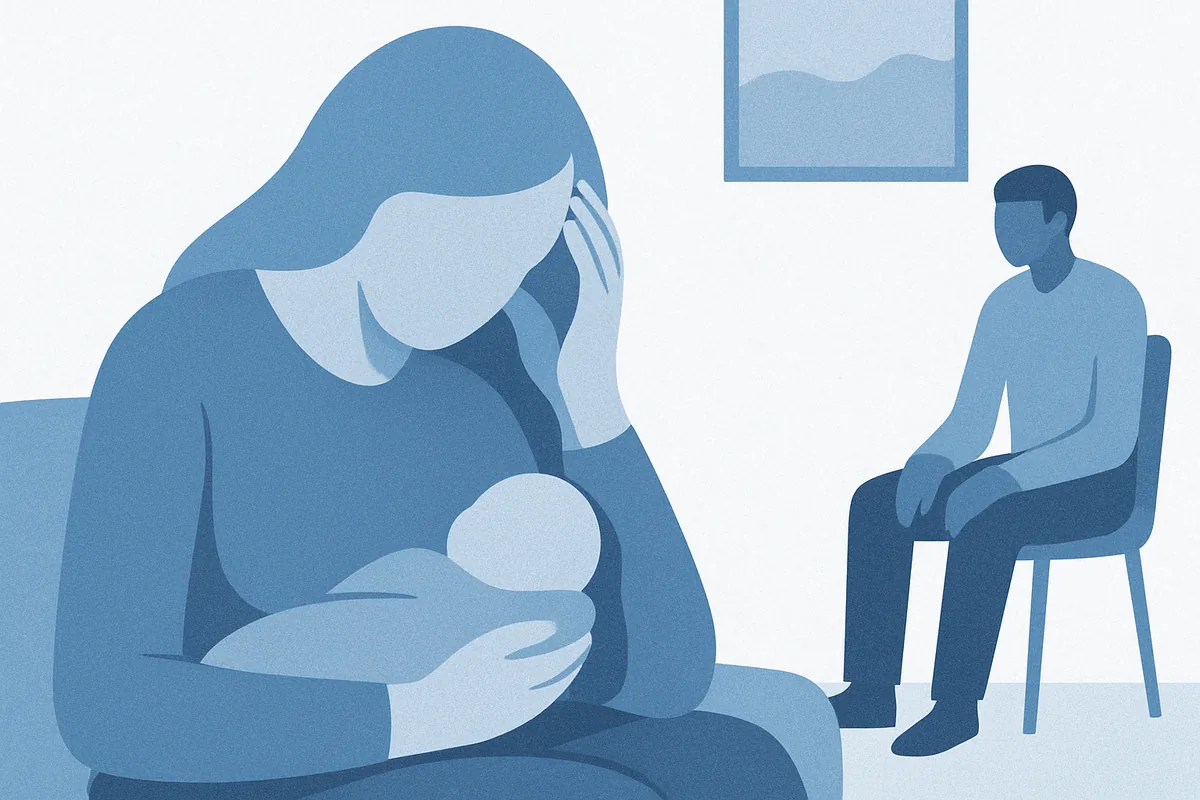
- The primary biological cause of postpartum depression is the abrupt withdrawal of oestrogen and progesterone after placental delivery, which disrupts serotonin, dopamine, and HPA-axis regulation, not a character flaw or failure to bond.
- A personal history of depression is one of the strongest single predictors of postpartum depression, associated with a 3 to 5 times increased risk across meta-analyses published in the British Journal of Psychiatry (2021).
- Birth trauma, including emergency C-sections, prolonged labour, loss of control during delivery, or a perceived lack of clinical communication, is a clinically recognised contributor to postpartum depression and can trigger PTSD symptoms alongside it.
- For mothers in Dubai, the separation from extended family networks, social comparison pressure, and cultural stigma around help-seeking all amplify universal biological risk factors, making the postpartum period structurally harder than the global baseline.
- Postpartum depression can begin any time in the first twelve months after birth, not only in the first weeks, which means delayed onset is clinically normal and a reason to seek assessment rather than dismiss symptoms as stress or exhaustion.
Globally, approximately 13% of women develop a mental health condition after giving birth, according to the World Health Organization's perinatal mental health data (2024). Postpartum depression accounts for the largest share of that figure. Yet despite how common it is, the question that brings most mothers to our clinic is not "what is postpartum depression", it is "why did this happen to me?" That question deserves a real clinical answer.
What causes postpartum depression is not a single event and not a personal failing. It is the convergence of sharp hormonal change, psychological vulnerability, and social circumstances that, in combination, can overwhelm a new mother's capacity to regulate mood and function. If you already understand what postpartum depression looks like, our guide to postpartum depression symptoms in Dubai covers that ground in detail. This article focuses exclusively on the causal mechanisms: why PPD develops, what raises the risk, and how the specific conditions of life in Dubai can amplify universal biological and psychological vulnerabilities.
At CAYA World, we work with mothers at every stage of the perinatal period. The causation picture we see clinically, and that the research confirms, is layered, personal, and deeply influenced by context. Understanding it is the first step toward addressing it purposefully.
Why Postpartum Depression Is Not Just Baby Blues, and Why the Distinction Matters
The term "baby blues" describes a brief, self-limiting period of emotional sensitivity, tearfulness, and mood instability that affects an estimated 50 to 85% of new mothers in the first two weeks after birth (American Psychological Association). Baby blues resolve on their own as hormone levels stabilise, typically within ten to fourteen days of delivery. They require no clinical intervention.
Postpartum depression is a distinct clinical condition with a different biological signature, a longer course, and consequences that do not resolve without support. The DSM-5 classifies it as a major depressive episode with peripartum onset, meaning the diagnostic criteria for depression are fully met, and the episode begins during pregnancy or within four weeks of delivery by DSM definition, though clinically it is widely recognised to emerge any time in the first twelve months postpartum. The distinction matters because the causes are also different.
Baby blues are driven primarily by the initial hormonal drop and resolve as the body adapts. Postpartum depression involves that same hormonal mechanism, but is sustained and deepened by psychological risk factors, social stressors, and in some cases neurobiological sensitivity that means the hormonal trigger does not self-correct in the way it does for most mothers. Understanding this layered causation matters for one practical reason: if you know what is driving PPD, you know where clinical intervention is most likely to help.
At CAYA World, we see mothers who have been told for weeks that what they are experiencing is "just the baby blues" and that it will pass. For some, by the time they reach us, they have been symptomatic for three months. The distinction between the two conditions is not semantic. It determines whether watchful waiting is appropriate or whether active clinical support is needed now.
What Causes Postpartum Depression? The Biological Foundations
The most well-established biological cause of postpartum depression is hormonal withdrawal. During pregnancy, the placenta produces oestrogen and progesterone at levels roughly ten times higher than baseline. Immediately after the placenta is delivered, both hormones drop sharply, reaching pre-pregnancy levels within twenty-four to seventy-two hours. This rate of hormonal decline is among the fastest of any physiological change the human body undergoes.
A 2019 PMC review of the hormone-withdrawal model of postpartum depression describes the primary mechanism: falling oestrogen reduces serotonin transporter gene expression and blunts dopamine signalling, while the sudden shift in progesterone metabolites disrupts GABA-A receptor sensitivity. The result is a biochemical environment in which mood regulation, sleep architecture, and stress response are all compromised simultaneously. In most women, the brain adapts within two weeks. In others, it does not.
The key question is why some women are more vulnerable to this hormonal transition than others. Current research points to several biological amplifiers.
Neurobiological sensitivity to hormone change
Women who experience significant premenstrual mood symptoms (PMDD or severe PMS) show greater mood sensitivity to normal fluctuations in oestrogen and progesterone across the menstrual cycle. Research suggests this same sensitivity predicts a stronger mood response to the postpartum hormonal drop. In other words, PPD in these women is not caused by an abnormally large hormonal shift, the shift is the same as in any other mother, but by a nervous system that responds more intensely to it.
HPA-axis dysregulation and cortisol
The hypothalamic-pituitary-adrenal axis governs the body's cortisol stress response. Childbirth is a significant physiological stressor, and the postpartum HPA axis is in a state of recalibration. In women who develop postpartum depression, studies consistently find blunted cortisol awakening responses, a sign that the stress-regulation system is not recovering to normal baseline function as expected. This matters because a dysregulated HPA axis sustains the low-mood, low-energy, and cognitive-fog symptoms of depression even after the initial hormonal withdrawal phase has passed.
Sleep disruption as a biological multiplier
Disrupted sleep is not simply a side effect of having a newborn. It is a clinically significant biological stressor that amplifies every other vulnerability. REM sleep deprivation impairs emotional processing, increases amygdala reactivity, and reduces the prefrontal cortex's capacity to regulate distress. For a mother already in a state of hormonal flux and HPA-axis recalibration, chronic fragmented sleep is a substantive causal contributor to postpartum depression onset and persistence, not a background inconvenience.
Psychological Risk Factors That Raise Your Vulnerability
Biology provides the terrain. Psychology determines how the landscape is navigated. Several psychological risk factors are consistently identified across the research literature as predictors of who develops postpartum depression following the universal hormonal transition of childbirth.
Prior history of depression or anxiety
A 2021 umbrella review in the British Journal of Psychiatry found that a personal history of depression is one of the strongest single predictors of postpartum depression, associated with a three to five times increased risk across meta-analyses of observational studies. This does not mean that a previous diagnosis makes PPD inevitable. It means the neurobiological pathways that were activated during a previous depressive episode are more easily re-activated by a major physiological stressor such as childbirth and the postpartum period.
A history of anxiety, panic disorder, or obsessive-compulsive disorder also raises vulnerability, and the postnatal period is a recognised trigger for the onset or relapse of anxiety conditions alongside depression. Clinically, the two often co-occur, which is why a causation-focused assessment looks at both.
Negative cognitive patterns and perfectionism
Women who hold rigid internal standards about what a "good mother" looks like, or who have a strong tendency toward self-critical thinking, face a specific psychological risk in early motherhood. The reality of newborn care rarely aligns with pre-birth expectations. When a mother's cognitive framework interprets that gap as evidence of personal failure rather than as the universal difficulty of a steep learning curve, the resulting shame and self-blame create a depressogenic internal environment on top of any hormonal vulnerability already present.
In clinical practice at CAYA World, we regularly see mothers who describe months of believing they were "not cut out for this" before recognising that the severity of their self-criticism was a symptom, not a verdict. CBT-based approaches are particularly useful here because they teach the mother to identify and test those thought patterns directly.
Relationship stress and lack of partner support
The transition to parenthood is one of the most demanding periods in any relationship. Perceived lack of partner support, unresolved conflict, and feeling alone in the caregiving role are each independently associated with higher postpartum depression risk. This is not about partner blame, it reflects the reality that social support is a buffer against the biological vulnerability of the postpartum period, and the absence of that buffer removes a protective factor that would otherwise moderate risk.
If you are concerned about your own risk profile, our postpartum support and assessment service at CAYA World can help you map your specific vulnerability factors and identify what kind of support would address them most effectively. A conversation about risk does not require a diagnosis. It requires a clinical listener.
Social and Environmental Triggers, and Why Dubai Amplifies Them
Postpartum depression does not develop in a vacuum. Social and environmental conditions shape whether biological and psychological vulnerability tips into clinical depression or is buffered by support. For mothers in Dubai, several structural features of life in the city create a risk environment that differs meaningfully from what women experience in their home countries.
Family separation and the loss of the traditional postpartum support network
In most cultures globally, the postpartum period involves intensive support from extended family, grandmothers, sisters, aunts who take on caregiving tasks, model infant care, normalise difficulty, and give the new mother rest and reassurance. For the majority of Dubai's large expat population, that network is thousands of kilometres away. A 2025 feature in The National News documented how UAE mothers are forming community groups specifically to replicate this missing structural support, precisely because the traditional postpartum scaffolding is absent for most expat families here.
This absence is not a minor inconvenience. The loss of embedded family support removes a powerful buffer against postpartum depression risk. The fatigue accumulates faster, the isolation is more acute, and the sense of being solely responsible for an infant without anyone nearby who truly knows you creates conditions in which psychological vulnerability is far less likely to be caught and interrupted early.
Social comparison pressure in an image-conscious city
Dubai's culture of visible success, curated social media presentation, and high cosmetic expectations creates a specific social comparison pressure for new mothers. When the predominant cultural image of new motherhood is a woman who has "bounced back" physically, maintains an active social schedule, and presents effortless domesticity online, the internal experience of struggling with a newborn becomes disproportionately isolating. The gap between what is seen publicly and what is felt privately amplifies shame, and shame is a reliable fuel for depressive thinking.
At CAYA World, this is one of the most consistent themes we hear from mothers who reach us in the postnatal period: not simply that they are struggling, but that they feel uniquely defective for struggling in a city where everyone else appears to be thriving.
Cultural stigma and delayed help-seeking
A 2024 study in the International Journal of Women's Health examining perinatal care in the UAE identified cultural stigma and low mental health literacy as key barriers to help-seeking among mothers in the region. Women in the study reported fear of judgment, family denial of distress ("you should be happy, you have a baby"), and concern about professional consequences as reasons for not seeking support. The longer postpartum depression goes without intervention, the harder it becomes to treat, meaning that stigma-driven delays in help-seeking have a direct clinical cost.
Climate and physical confinement
This is a trigger that rarely appears in international literature but is consistently raised by Dubai mothers in clinical settings. From May through October, outdoor activity for a new mother with an infant is severely limited by heat. The inability to walk outside, sit in a park, or introduce a routine that involves daylight and gentle movement removes what would otherwise be a natural, low-barrier strategy for mood regulation. Combined with isolation and disrupted sleep, the Dubai summer is a significant environmental risk amplifier for postpartum depression onset in mothers who give birth between March and July.
Wondering if It's Time to Talk to Someone?
Our specialist team at CAYA World offers comprehensive assessment and evidence-based treatment, conducted from our clinic in Palm Jumeirah, Dubai.
How Birth Trauma Connects to Postpartum Depression
Birth trauma is a clinically distinct pathway into postpartum depression that is frequently overlooked, particularly in healthcare contexts where a birth that produced a healthy baby is considered a success regardless of the mother's subjective experience of it.
Trauma during childbirth does not require a near-death event. Research defines birth trauma as the mother's perception of threat to her own or her baby's life, safety, or integrity during the delivery process. By that definition, common experiences qualify: an emergency C-section without adequate explanation, a prolonged and painful labour during which the mother felt out of control, poor communication from clinical staff at critical moments, or an infant requiring immediate neonatal intervention. What matters clinically is the mother's internal experience, not the obstetrically defined outcome.
When a birth experience meets the criteria for psychological trauma, two clinical pathways open simultaneously. The first is post-traumatic stress disorder, which can present alongside or independently of postpartum depression with re-experiencing, avoidance, and hyperarousal symptoms. The second is that the traumatic birth activates the same neurobiological stress pathways that underpin postpartum depression, increasing the likelihood that the hormonal postpartum transition will tip into clinical depression rather than resolve naturally.
A meta-analysis published in the British Journal of Psychiatry has noted the robust association between emergency operative delivery and postpartum depression risk, and clinical observation at CAYA World confirms this pattern. Mothers who describe their birth as frightening, chaotic, or one in which they felt invisible or unheard are more likely to present with postpartum depression symptoms that also carry a trauma quality: intrusive memories of the delivery, difficulty returning to the hospital, or avoidance of conversations about the birth.
The therapeutic implication is direct: assessing for birth trauma as a causal contributor changes the treatment approach. CBT alone may not be sufficient if unprocessed trauma is sustaining depressive symptoms. A thorough clinical assessment that includes the birth experience is essential for identifying the full causal picture.
Recognising Your Own Risk Factors and What to Do Next in Dubai
Understanding the causes of postpartum depression serves a practical purpose: it lets you identify which risk factors apply to your situation and make an informed decision about whether clinical support is warranted.
The postpartum depression risk factors with the strongest evidence base can be grouped usefully. Biological risk factors include a personal history of depression or anxiety, significant premenstrual mood sensitivity, and a difficult birth with high physiological stress. Psychological risk factors include negative or perfectionist thinking patterns, low self-compassion, and anxiety about infant health or parenting competence. Social and environmental risk factors include lack of partner support, geographic isolation from family, financial stress, and absence of a peer network that normalises difficulty.
No single risk factor determines outcome. Risk accumulates. A mother who has one biological and one social risk factor faces a different probability profile than a mother who has none, and a different profile again from one who has three or four. This is precisely why a clinical assessment is more useful than a checklist: a psychologist can map which factors are present, which are most active, and which carry the most clinical weight in a given person's situation.
Postpartum depression can begin any time in the first twelve months after birth. Delayed onset is common, clinically recognised, and not a reason to dismiss what you are experiencing as stress or adjustment difficulty. If you are three months postpartum and things are not improving, that is a reason to seek assessment, not to wait longer.
In Dubai, practical access routes include DHA-regulated private psychology clinics, some of which offer rapid intake. Referral from your OB/GYN or GP is not required for a private consultation. If you are uncertain whether what you are experiencing meets a clinical threshold, an intake conversation is a low-stakes way to get oriented. You will either receive confirmation that support is indicated and a clear plan, or reassurance and practical strategies if support is not yet needed.
If you have noticed two or more of the risk factors described in this article in your own situation, reaching out for a clinical conversation is a reasonable next step, not an overreaction. Send a WhatsApp message to the CAYA World team and a member of our clinical team will help you work out whether a full postpartum assessment makes sense for where you are right now.
Frequently Asked Questions About What Causes Postpartum Depression in Dubai
Hormones are the trigger, not the whole cause. The sharp withdrawal of oestrogen and progesterone after placental delivery disrupts serotonin, dopamine, and stress-regulation systems in the brain. For most mothers this resolves within two weeks. For others, psychological risk factors, social stressors, birth trauma, and neurobiological sensitivity to hormone change mean the system does not reset normally. Understanding postpartum depression requires all of those layers together, not hormones alone.
No, a prior history of depression does not make postpartum depression inevitable. It does, however, raise the statistical risk significantly: a 2021 British Journal of Psychiatry umbrella review found a three to five times increased likelihood compared to mothers with no psychiatric history. Knowing this in advance is clinically useful because it allows for more structured monitoring in the postpartum period and a lower threshold for seeking support if mood difficulties emerge, rather than waiting to see whether things resolve on their own.
Yes. Birth trauma is a recognised causal pathway into postpartum depression. An emergency C-section, a birth during which the mother felt out of control or inadequately informed, or a delivery involving urgent intervention for the baby can each activate the neurobiological stress pathways that underpin depression. The defining factor is the mother's subjective experience of threat or loss of control, not the clinical outcome. When birth trauma is identified as a contributing cause, the treatment approach needs to address both the depressive symptoms and the traumatic experience.
Yes, and the mechanism is well understood. Social support from trusted relationships buffers the biological vulnerability of the postpartum period. When that buffer is absent because extended family is overseas, the fatigue accumulates faster, distress goes unwitnessed for longer, and the corrective feedback that comes from experienced mothers around you never arrives. For Dubai expats specifically, this is compounded by cultural stigma around asking for help and by the social comparison pressure of life in an image-conscious city. Geographic isolation is a genuine risk amplifier, not a minor inconvenience.
Postpartum depression can begin any time in the first twelve months after birth, not only in the first days or weeks. Delayed onset is clinically common and does not make the diagnosis less valid. If you are several months postpartum and your mood has not improved, or has worsened, that timeline is a reason to seek assessment rather than continue waiting. In Dubai, DHA-regulated private psychology clinics offer direct access without a GP referral. A clinical assessment will determine whether postpartum depression is present, identify the contributing causes, and produce a specific treatment plan based on what is actually driving your symptoms.
Sources and Further Reading
- Perinatal Mental HealthWorld Health Organization (2024)
- The Neuroendocrinology of Postpartum DepressionPMC / PubMed Review (2019)
- Risk Factors of Postpartum Depression: Umbrella ReviewBritish Journal of Psychiatry (2021)
- A Scoping Review of Perinatal Mental Health in the United Arab EmiratesEuropean Journal of Midwifery (2022)
- Postpartum Depressive Symptoms in UAE Women: A Prospective StudySocial Psychiatry and Psychiatric Epidemiology, Springer (2022)
- Diagnostic and Statistical Manual of Mental Disorders, Fifth Edition (DSM-5). American Psychiatric Association