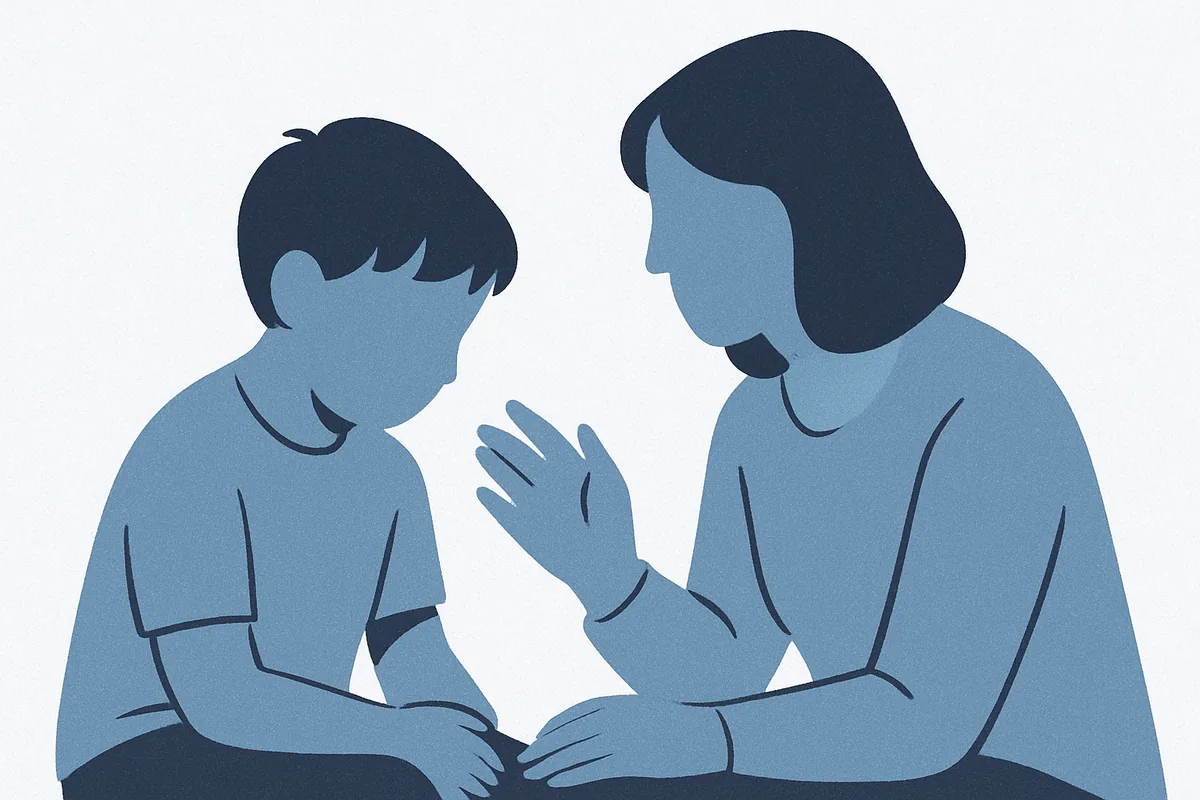
- A 2020 study of 575 parents of autistic youth found that disclosure was associated with improved self-advocacy in 60% of children and greater awareness of personal strengths in 69%, making early, honest conversation a clinically supported approach.
- There is no single correct age to tell a child they are autistic: children as young as three can absorb simple, concrete language, and research consistently shows that finding out later carries greater risk than finding out early.
- Autism disclosure differs meaningfully from ADHD disclosure: the conversation must address sensory identity, masking, and social reciprocity in ways specific to the autistic experience, including the concept that many autistic children learn to hide their differences at significant cost to their mental health.
- A 2023 study of 733 autistic children found that camouflaging (masking autistic traits) significantly predicted anxiety and depression even after controlling for age, sex, and IQ, which means naming the diagnosis can reduce the pressure children feel to perform neurotypicality.
- In Dubai's international school system, a DHA-licensed assessment report is typically required before a school activates a formal learning support plan, making school disclosure a structured, documentation-led process rather than an informal conversation.
A 2020 study of 575 parents of autistic youth, published in the journal Autism, found that 86% of autistic young people were aware of their diagnosis, and that parents who told their children directly associated it with improved self-advocacy in 60% of cases and greater awareness of personal strengths in 69%. Knowing how to tell your child about their autism diagnosis is not a peripheral concern after the assessment report arrives. It is one of the most clinically significant decisions a family makes.
This guide addresses that conversation specifically for autism, not developmental diagnoses in general. If your child has received an ADHD diagnosis and you are looking for guidance on that disclosure, that is a distinct conversation with its own considerations. Autism raises questions about identity, sensory experience, masking, and social reciprocity that require a different kind of preparation and language.
At CAYA World, we conduct autism assessments and post-diagnosis debriefs for families across Dubai and the wider UAE. The questions we hear most often from parents are not "is my child autistic?" but "how do I tell them, and what do I say next?" This article answers both.
Why telling your child about their autism diagnosis matters, and why waiting can backfire
The instinct to wait is understandable. Many parents want to protect their child from a label, or they want to gather more information before having a conversation they feel unprepared for. Some families in Dubai navigate the additional layer of extended family opinion, community perception, or cultural frameworks that make the word "autism" feel heavy before it has even been spoken aloud.
The research, however, is consistent on one point: not telling a child carries real risk. When children notice they are different from their peers but have no explanation for why, they fill the gap themselves. Some conclude they are stupid, broken, or socially failing. Others develop what researchers call a "masked" presentation, suppressing autistic traits at considerable cognitive and emotional cost in order to appear to fit in. A critical review published by Gilmour and Hanson at the University of Western Ontario in 2021 found that disclosure had a positive or neutral effect on self-esteem for 81% of children reviewed and on self-advocacy for 59.6%. The children who struggled most after disclosure were typically those who had already spent years sensing something was different without being given words for it.
In a Dubai context, this dynamic is amplified. International schools here move quickly. Children in Year 2 or Year 3 who are receiving learning support, attending social skills groups, or spending time with a specialist teacher will notice. Their classmates will notice too. A child who learns about their autism from a peer on the playground, rather than from a parent at home, loses the opportunity to receive the narrative from someone who loves them.
The neurodiversity perspective, which has become central to clinical practice in autism over the past decade, frames autism not as a disorder to be corrected but as a different way of experiencing and processing the world. This framing changes the shape of the disclosure conversation substantially. Rather than delivering news about something wrong, you are giving your child a framework for understanding something true about themselves. That distinction matters enormously for how a child integrates the information.
At CAYA World, we consistently advise parents that the question is not whether to tell but how and when, with "when" almost always meaning earlier than parents initially assume.
How to tell your child they have autism: age-by-stage guidance
There is no single script for this conversation because children at different developmental stages process information differently. The table below gives you a framework; the paragraphs that follow expand on each stage with language you can adapt.
| Age range | Cognitive readiness | Suggested framing | Language to use |
|---|---|---|---|
| 3 to 5 years | Concrete, sensory-based thinking; no abstract self-concept yet | Strengths and differences, no diagnosis label required | "Your brain works in a special way. Some things are easy for you and some things are harder." |
| 6 to 9 years | Emerging self-awareness; beginning to compare with peers | Name autism directly; frame as a different brain, not a broken one | "Your brain is called an autistic brain. It means you notice things other people miss, and sometimes big feelings or loud sounds are harder for you." |
| 10 to 12 years | Abstract reasoning developing; identity formation beginning | Neurodiversity framing; connect to real autistic people they may admire | "Autism is the reason some things feel so intense for you, and also why you can focus so deeply on things you love. It's a real part of who you are." |
| 13 and above | Full identity formation; may research independently after disclosure | Honest, collaborative; invite questions; respect their ownership of the information | "I want to tell you something important about how your brain works. You've been assessed, and the psychologist found you are autistic. I want to talk through what that means for you." |
Ages 3 to 5
Very young children do not need the word "autism" immediately, though you can use it if you choose. What matters at this age is building a narrative of difference rather than deficit. Say things like "your brain is really good at remembering train names" or "sounds feel louder to you than to some people, and that's real." You are laying groundwork so that when the word autism is introduced, it fits into a story of strengths the child already recognises in themselves.
Ages 6 to 9
This is the age at which most clinicians, including the team at CAYA World, recommend naming autism directly. Children at this stage are beginning to notice differences between themselves and their classmates, particularly in social situations and sensory environments like the school cafeteria or playground. Giving them a name for the experience before the peer group does is a protective factor. Keep the conversation short. Answer questions as they come. Repeat the conversation across days and weeks, not just once.
Ages 10 to 12 and into adolescence
Older children and teenagers often have a more complex reaction, which we discuss in a later section. What is clinically important at this stage is that the disclosure is honest, complete, and respectful of the young person's growing need for autonomy. Teenagers who feel they were told the truth, rather than a managed or softened version of it, tend to integrate the information more successfully into their developing identity. Many will go online after your conversation. Directing them to community-affirming resources, such as autistic-led social media communities or neurodiversity-affirming books, can shape what they find in a helpful direction.
Autism-specific concerns that make this conversation different from any other diagnosis disclosure
This is where autism disclosure separates clearly from disclosing other diagnoses, including ADHD. Three dimensions are specific enough to autism that they deserve deliberate preparation: masking, sensory identity, and social reciprocity.
Masking and camouflaging
Masking refers to the process by which autistic children learn to suppress or disguise their natural autistic behaviours in order to fit social expectations. It is particularly prevalent in girls and in children who are academically capable, because their competence in one domain can obscure significant social and sensory differences. A 2023 study published in Autism Research of 733 autistic children aged 4 to 17 found that camouflaging significantly predicted internalising symptoms including anxiety and depression, even after controlling for age, sex, and IQ.
This means that for many children, especially girls who have been flying under the radar socially, the disclosure conversation is also an opportunity to name something they have been doing without knowing they were doing it. You might say: "You've learned to watch carefully how other children act, and you copy it so you fit in. A lot of autistic people do this. It takes a lot of energy, and it's okay to need a rest from it." For more on how masking presents in children in Dubai, our article on autism masking in children goes deeper into the signs to look for and how to talk about it with your child.
Sensory identity
Many autistic children have spent years believing that the sensory world simply is as they experience it, not realising that other people's sensory experience is different. Telling your child they are autistic gives them permission to understand their sensory preferences as real and valid rather than dramatic or exaggerated. Name specific examples from your child's life: "Remember how the noise in the cafeteria made it hard to eat? That's part of how your brain works. It takes in sounds very intensely." Connecting the diagnosis to lived experience the child already has is more powerful than any abstract explanation.
Social reciprocity
Autistic children often know that social interactions feel different for them, and they frequently carry some degree of self-blame about it. The disclosure conversation is an opportunity to reframe social difficulty not as a personal failing but as a difference in how social information is processed. "Your brain works hard to understand what other people are thinking. For some kids that's automatic; for you it takes more effort. That doesn't mean you care less or that you're not a good friend. It means your brain approaches it differently." This reframe can shift years of accumulated self-criticism in a single conversation, provided it is done carefully and with follow-up.
If your child has recently completed an autism assessment in Dubai and you are navigating what comes next as a family, talking through the disclosure conversation with a clinical psychologist before you have it with your child can help you prepare for the range of reactions you might encounter.
Wondering how to have this conversation in a way that actually sticks? At CAYA World, we offer post-diagnosis debrief sessions specifically designed to support parents in preparing for this moment. Send us a WhatsApp message on +971 4 572 3755 and we can walk you through the process before you sit down with your child.
Anticipating your child's emotional reactions, and what to say next
There is no single reaction to expect. Children respond to the autism diagnosis disclosure across a wide range, and often the first reaction is not the most important one. What matters more is how you handle the reactions that emerge over the weeks following the initial conversation.
Relief is more common than most parents expect, particularly in children who have spent years sensing something was different without a framework for understanding it. "That's why I feel that way" is a response CAYA clinicians hear frequently from children after disclosure. Do not underestimate how much it can settle a child to finally have a name for their experience.
Grief is also common, particularly in older children and teenagers. Grief at the loss of a self-concept that did not include autism. Grief at the realisation that some things may always be harder. Grief at the possibility that peers might see them differently. This is a legitimate response, not a sign that the disclosure was handled badly. Sit with it. Do not rush to reassure. Saying "I understand that feels hard" and leaving space for silence is more supportive than listing the positives immediately.
Anger can emerge, particularly in teenagers, and it is often directed at parents. Why didn't you tell me sooner? Why didn't I know? This anger is also legitimate. Receive it without defensiveness. You might say: "You're right that this is new information to you. I wanted to make sure I understood it myself before we talked about it together." Acknowledge the feeling before you address the question.
Some children, especially younger ones, will appear to receive the information and then move on quickly. This does not mean they have processed it. The conversation will need to be repeated, revisited, and extended over time. Autism disclosure is not a single event. It is an ongoing dialogue that evolves as the child grows and their self-understanding develops.
One practical preparation: before the conversation, write down three specific, concrete strengths of your child that connect to their autism. Not generic positives, but things that are genuinely theirs. Their ability to notice patterns others miss. Their capacity for deep focus on a topic they love. Their honesty. Having these ready means that if the conversation moves to "what's wrong with me," you have specific, truthful answers that redirect without dismissing.
Wondering if It's Time to Talk to Someone?
Our specialist team at CAYA World offers comprehensive assessment and evidence-based treatment, conducted from our clinic in Palm Jumeirah, Dubai.
Talking to siblings and extended family about the diagnosis
Once you have told your child, the question of who else knows becomes immediate. Siblings, grandparents, aunts and uncles, and close family friends all occupy different positions in this conversation, and the guidance for each is different.
Siblings should generally be told around the same time as, or shortly after, the autistic child has been told, with language matched to each sibling's age. A six-year-old sibling needs a different conversation than a fifteen-year-old one. The core message for siblings is that their brother or sister's brain works differently, that some things that are easy for the sibling are harder for the autistic child, and that this is not anyone's fault and does not mean the autistic child is loved more or less. Siblings who are not told often fill the silence with their own explanations, which are frequently less accurate and more distressing than the truth.
Extended family is where cultural context matters most in a Dubai setting. Families from South Asia, the Middle East, East Africa, and many other communities represented in the UAE expat population may carry cultural frameworks around disability, fate, or family reputation that make a clinical diagnosis feel threatening. You do not owe extended family full disclosure, and your child's diagnosis is their information to share as they grow older. In the short term, a simple phrase like "we have been working with a specialist on some of his learning needs" sets a boundary without requiring a full clinical explanation. If extended family members push for more information, it is reasonable to say: "We're following professional guidance on when and how to share this more broadly."
For families navigating these extended family conversations in a UAE cultural context, our parenting support service provides a space to work through exactly these dynamics with a clinician who understands the pressures specific to expat and multicultural families in Dubai.
School disclosure in Dubai: what to share, with whom, and how
Dubai's international school system adds a layer of complexity that many families are not prepared for. Unlike a private medical conversation between parent and child, school disclosure in Dubai typically involves documentation, formal processes, and decisions that have tangible consequences for your child's educational placement and learning support.
Most international schools in Dubai will require a DHA-licensed assessment report before activating a formal Special Educational Needs (SEN) or Individual Education Plan (IEP). This means school disclosure is not a casual conversation with your child's class teacher. It is a structured process that begins with the school's SEND coordinator (sometimes called the Inclusion Coordinator or Learning Support Coordinator) and involves submitting clinical documentation.
What to share and with whom depends on what your child needs from the school. If your child needs in-class support, adjustments to assessments, or access to a specialist teacher, the school will need enough information from the report to design appropriate provision. The full assessment report is typically shared with the SEND coordinator and the school psychologist if one exists. Class teachers receive a needs-based summary, not the full clinical document.
Your child's awareness of who at school knows about their diagnosis matters enormously, particularly for older children. Many children want to control this information themselves. A teenager who discovers their diagnosis has been shared with their class teacher without their knowledge may experience this as a significant breach of trust. Before disclosing to school staff, discuss with your child what they want their teachers to know, and frame it as their decision wherever possible.
It is also worth knowing that in Dubai, the Knowledge and Human Development Authority (KHDA) uses school assessment data to inform broader provision planning. Schools that have activated formal SEN plans for a student will typically have access to more external resources, including specialist visiting teachers, than those that have not. Early, well-documented disclosure to the school often means better-resourced support for your child, which is worth weighing against any concerns about stigma within the school community.
For a comprehensive overview of what happens after the assessment report arrives, including how to approach the school process step by step, our guide to next steps after an autism diagnosis in Dubai covers the full pathway from clinical report to school provision.
How CAYA's post-diagnosis debrief supports the disclosure process
At CAYA World, we do not consider the assessment complete when the report is handed over. The post-diagnosis debrief is a dedicated session, or in some cases a short series of sessions, designed specifically to support parents in the period between receiving the diagnosis and telling their child.
In a debrief session, we work through the report with parents in practical terms: what the findings mean for your specific child, what strengths the assessment identified, and how to translate clinical language into words a child can understand. We also help parents anticipate the emotional responses they are likely to encounter and prepare specific language for the conversations ahead.
For children who are older, a separate child-facing debrief can be arranged, where the psychologist talks directly with the young person about their results in a way that is age-appropriate and neurodiversity-affirming. Many adolescents find it easier to receive this information from a clinician initially, and then process it further with their parents in subsequent conversations.
We also support parents in thinking through how to talk to siblings, how to approach the school, and whether and how to involve extended family. These are not peripheral concerns. They are part of the clinical picture of how a family integrates an autism diagnosis, and they deserve the same care as the assessment itself.
Our autism therapy service can follow on from this process to provide ongoing support for your child as they develop their own understanding of their diagnosis and what it means for their life in Dubai and beyond.
Frequently Asked Questions About Telling Your Child About Autism in Dubai
There is no minimum age. Children as young as three can benefit from simple, honest language that names their differences without requiring them to understand a clinical definition. Research consistently shows that later disclosure carries more risk than earlier disclosure, because children who are not told tend to develop their own, often negative, explanations for why they feel different from their peers. Most clinicians recommend telling children directly, with age-appropriate language, as soon as the diagnosis is confirmed. At CAYA World, we can help you find the right words for your child's specific developmental stage.
Upset and anger are legitimate and common responses, particularly in older children and teenagers. Receiving the information with calm acknowledgement rather than immediately moving to reassurance is more helpful: "I hear that this is hard" is a more supportive response than listing the positives before your child has had time to feel what they feel. Grief, anger, and confusion can all be part of how a child processes information that reshapes their self-understanding. What matters is that you stay available for follow-up conversations over the days and weeks ahead, because the first reaction is rarely the final one.
There is no legal obligation to disclose a diagnosis to your child's school in Dubai. However, if your child needs formal learning support, assessment accommodations, or access to specialist provision, most international schools in Dubai will require a DHA-licensed assessment report before activating those adjustments. Without disclosure, your child may not have access to the support they are entitled to. The decision about what to share, with whom, and when is yours to make, and discussing it with your SEND coordinator before submitting documentation can help you understand exactly what the school will use the information for.
This is one of the most important questions a child can ask, and the autism diagnosis gives you a truthful, affirming answer. You might say: "Everyone's brain works a little differently. Yours is an autistic brain, which means sounds and feelings can feel more intense for you, and some social situations take more energy. That's also why you're so good at noticing things other people miss." Anchoring the answer in specific, real examples from your child's life makes it more concrete and more believable than a general explanation about brains being different.
For children with limited expressive language, disclosure is less about a conversation and more about building a supportive environment and a consistent narrative over time. Visual supports, social stories written to match your child's communication level, and consistent use of the word "autism" in positive, low-pressure contexts all contribute. Working with a speech-language pathologist and a psychologist together helps ensure that the communication tools you use are matched to your child's actual comprehension, which may be significantly higher than their expressive language suggests. At CAYA World, our multidisciplinary team can support this process alongside your child's broader therapy programme.
Sources and Further Reading
- Disclosure of autism spectrum disorder and associated outcomes in youthAutism (2020)
- Diagnostic disclosure in autism: a critical reviewGilmour and Hanson, University of Western Ontario (2021)
- Camouflaging and internalising symptoms in autistic children aged 4-17Autism Research (2023)
- Autism spectrum disorders fact sheetWorld Health Organization (2023)
- Autism identification rates in the UAE: registered cases 2017-2019. UAE Ministry of Community Development, cited in Dubai Autism Centre data (2019)
- PwC GCC Autism Report. PricewaterhouseCoopers (2024); data on specialist autism service provision and costs in the GCC region