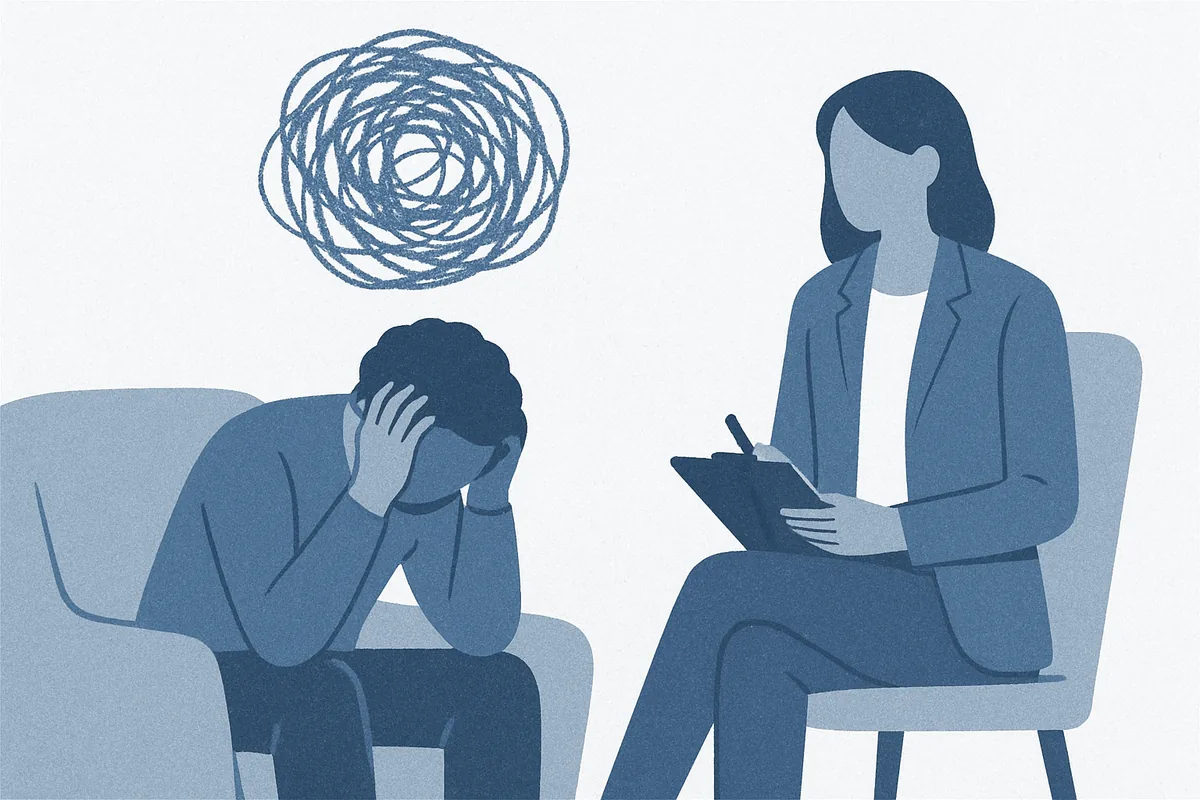
- Panic disorder has a lifetime prevalence of approximately 4.7% globally and is twice as common in women as in men; in the UAE, approximately 11% of adults report anxiety disorders, with panic disorder estimated to affect 2–3% of the population.
- A panic attack is a discrete episode of intense physical and psychological fear that peaks within 10 minutes and typically subsides within 20–30 minutes. It is not dangerous, but without treatment, approximately 35% of people who experience one will go on to develop panic disorder.
- Cognitive Behavioural Therapy (CBT), specifically a protocol combining psychoeducation, cognitive restructuring, and interoceptive exposure, achieves remission rates of 70–90% in clinical trials, with gains maintained at two-year follow-up.
- Dubai's expat population faces specific panic attack risk factors including visa-dependent employment, geographic separation from family support networks, extreme heat limiting physical activity, and a high-performance social environment where seeking help carries perceived professional risk.
- Fewer than 1 in 5 people with anxiety disorders in the GCC region seek professional help, early intervention with a licensed psychologist in Dubai significantly improves outcomes and reduces the risk of panic disorder becoming chronic.
Panic disorder has a lifetime prevalence of approximately 4.7% globally, making it one of the most common anxiety disorders an adult will ever experience, and it is twice as common in women as in men, according to the DSM-5-TR published by the American Psychiatric Association. If you have recently had what felt like a heart attack that turned out to be nothing medically wrong, or if you have started avoiding situations because you are afraid of the feeling returning, this article is written directly for you. Panic attacks therapy in Dubai is effective, evidence-based, and far more accessible than most people realise, and the sooner treatment begins, the better the outcome.
At CAYA World, we see adults who have often spent weeks, sometimes months, cycling through emergency departments and cardiology clinics before anyone suggests that what they are experiencing is a panic attack. That delay matters clinically. Approximately 35% of people who experience a panic attack will go on to develop panic disorder if left untreated, according to the National Institute of Mental Health, a condition defined not just by the attacks themselves, but by persistent worry about having another one and the behavioural changes that follow. Understanding what is happening in your body and brain during a panic attack is the first step toward stopping it from taking over your life.
This article covers the clinical definition of panic attacks, what distinguishes them from panic disorder, why the specific conditions of expat life in Dubai create heightened risk, and exactly what therapy involves: session by session, so you know what to expect before you walk through the door.
What Is a Panic Attack, and Is What You Experienced Really One?
The DSM-5-TR defines a panic attack as an abrupt surge of intense fear or intense discomfort that reaches a peak within minutes, accompanied by at least four of the following thirteen physical and cognitive symptoms:
- Pounding, racing, or palpitating heartbeat
- Sweating
- Trembling or shaking
- Shortness of breath or a feeling of being smothered
- Feelings of choking
- Chest pain or discomfort
- Nausea or abdominal distress
- Dizziness, unsteadiness, light-headedness, or faintness
- Chills or hot flushes
- Numbness or tingling sensations (paraesthesia)
- Feelings of unreality (derealisation) or being detached from oneself (depersonalisation)
- Fear of losing control or "going crazy"
- Fear of dying
The episode peaks within 10 minutes and typically resolves within 20–30 minutes, though the exhaustion and residual anxiety can persist for hours. That peak-within-10-minutes criterion is clinically significant. It is part of what distinguishes a panic attack from generalised anxiety, which tends to be a lower-level, more sustained state of worry rather than a discrete, explosive episode.
Panic attack versus panic disorder, a distinction that changes your treatment
A panic attack is a symptom, not a diagnosis. Many people have a single panic attack, triggered by extreme stress, sleep deprivation, caffeine, or a medical procedure, and never have another. That is not panic disorder. Panic disorder, as defined by the DSM-5-TR, requires recurrent unexpected panic attacks plus at least one month of either persistent worry about future attacks, worry about the consequences of attacks (such as believing you are having a heart attack or "going crazy"), or significant maladaptive behavioural change, typically avoidance of situations associated with attacks.
The avoidance piece is where panic disorder becomes genuinely disabling. At CAYA World, we regularly see adults in Dubai who have stopped driving on the Sheikh Zayed Road, avoided the Mall of the Emirates, or begun refusing business travel because they associate those environments with previous attacks. The avoidance provides short-term relief, the anxiety drops when you leave the feared situation, but it reinforces the brain's threat signal, making the next encounter more frightening, not less. This is the maintenance cycle that therapy is specifically designed to interrupt.
Nocturnal panic attacks
One variant that catches people completely off guard is the nocturnal panic attack, an episode that occurs during sleep, typically in the transition from Stage 2 to Stage 3 sleep (non-REM sleep), waking the person in a state of acute terror with no identifiable trigger. These are not nightmares; the person is not dreaming. Nocturnal panic attacks occur in approximately 40–70% of people with panic disorder at some point during the condition, according to research published in the Journal of Clinical Sleep Medicine. They are clinically important because they tend to increase fear of sleep itself, which compounds the overall anxiety burden. The same CBT protocols used for daytime panic attacks are effective for nocturnal episodes.
What Causes Panic Attacks in Adults, and Why Dubai Creates Specific Risk
Panic attacks do not have a single cause. The most widely supported model is the cognitive model developed by David Clark (1986), which proposes that panic attacks arise from a catastrophic misinterpretation of normal bodily sensations. A slightly elevated heart rate, from caffeine, mild exertion, or even standing up quickly, is perceived as evidence of a heart attack. That perception triggers genuine fear. Fear triggers the sympathetic nervous system. The sympathetic nervous system produces exactly the symptoms the person was already misinterpreting as dangerous: racing heart, shortness of breath, dizziness. The cycle escalates within seconds.
Biological vulnerability also plays a role. First-degree relatives of people with panic disorder are up to eight times more likely to develop it themselves, suggesting a heritable component involving the brain's threat-detection system, particularly the amygdala and the locus coeruleus, which regulates the norepinephrine response. But biology is not destiny. The cognitive-behavioural model is compelling precisely because it explains why the same biological predisposition produces panic disorder in some people and not others: what you believe about the sensations you feel determines whether a racing heart becomes a panic attack.
Why expat life in Dubai is a specific risk environment
Generic mental health content rarely addresses the specific stressors of the Dubai expat experience, but they matter clinically. Dubai's expat population comprises approximately 88–92% of the UAE's total population. Many of those residents are living with a constellation of background stressors that significantly elevate physiological and psychological arousal, the very conditions that prime the panic cycle.
Visa-dependent employment creates a chronic, low-level threat state that is qualitatively different from job insecurity in a person's home country. Losing a job in Dubai can mean losing the legal right to remain in the country within a defined period, which adds an existential dimension to ordinary workplace stress. Geographic distance from family networks removes the informal support buffers that typically absorb acute stress. Extreme summer heat in Dubai, with temperatures regularly exceeding 40°C, limits outdoor physical activity, which is one of the most evidence-supported regulators of the stress response. And the high-performance social environment of Dubai, where visible success is culturally prominent, creates pressure to suppress signs of vulnerability, meaning many people experiencing panic attacks delay seeking help for far longer than they would in a different environment.
A 2022 survey by the UAE's National Program for Happiness and Wellbeing found that anxiety was among the top three mental health concerns reported by UAE residents, yet fewer than 30% of those experiencing anxiety symptoms had sought professional support. A 2019 study published in the Journal of Affective Disorders examining mental health in the Gulf Cooperation Council region found that anxiety disorders were significantly underdiagnosed, with fewer than 1 in 5 affected individuals seeking professional help, partly due to stigma and limited mental health literacy. These figures are consistent with what the clinical team at CAYA World observes in practice: most adults who come to us for panic attacks therapy in Dubai have been experiencing symptoms for six months to two years before making contact.
Common triggers in the Dubai context
While panic attacks can be unexpected and apparently unpredictable, which is part of what makes them so frightening, they are frequently associated with identifiable triggers in the Dubai population. The most common ones our clinical team encounters include:
- Crowded or enclosed public spaces such as metro stations, shopping malls, or airport terminals
- High-speed motorway driving, particularly on the Sheikh Zayed Road or during heavy traffic on the E311
- Extreme heat combined with dehydration, which mimics many panic symptoms physiologically
- Caffeine overload, common in a city with a strong café culture and long working hours
- Sleep deprivation, which significantly lowers the threshold for amygdala activation
- Periods of acute visa or employment uncertainty
- Social isolation, particularly among newly arrived expats who have not yet built a local support network
Identifying a person's specific triggers is part of the assessment process at CAYA World, and it directly shapes the exposure hierarchy used in therapy, more on that below.
If you are experiencing panic attacks and are based in Dubai, our anxiety therapy team at CAYA World can carry out a thorough clinical assessment and develop a treatment plan tailored to your specific triggers and history. We work with adults across Palm Jumeirah, Dubai Marina, JLT, and across the wider UAE.
Experiencing panic attacks in Dubai?
Our licensed psychologists offer structured CBT-based panic disorder treatment from our clinic in Palm Jumeirah. Initial assessments available now.
How Is Panic Disorder Diagnosed in Dubai?
Diagnosis of panic disorder begins with a clinical interview conducted by a licensed psychologist. In Dubai, all practising psychologists are required to hold a licence issued by the Dubai Health Authority (DHA) or, for clinicians practising in Abu Dhabi and the Northern Emirates, the relevant emirate-level health authority. Before booking an assessment anywhere in the UAE, it is worth confirming that the clinician holds a valid licence. This is a patient safety requirement, not a formality, and the DHA maintains a publicly searchable register of licensed practitioners.
At CAYA World, the assessment process for panic disorder involves a structured clinical interview covering the frequency, duration, and nature of episodes; a review of medical history to rule out conditions that can mimic panic attacks (including cardiac arrhythmias, hyperthyroidism, hypoglycaemia, and vestibular disorders); a review of current medications and substances; and standardised self-report measures including the Panic Disorder Severity Scale (PDSS) and, where relevant, the Agoraphobic Cognitions Questionnaire.
A critical part of the assessment is distinguishing panic attacks from other anxiety presentations. Panic attacks can occur in the context of several different diagnoses, including social anxiety disorder (where attacks are triggered specifically by social evaluation), specific phobias, post-traumatic stress disorder, and generalised anxiety disorder, and the treatment approach differs depending on the primary diagnosis. Panic disorder specifically refers to recurrent unexpected panic attacks plus the anticipatory anxiety and avoidance described above. Getting that distinction right determines whether the primary treatment target is the panic cycle itself, the underlying trauma, or the broader worry pattern. Our clinical team at CAYA World is experienced in making these differential assessments, and we take the time to get it right before beginning treatment.
It is also worth noting that panic attacks carry a significant cardiovascular misdiagnosis rate. Research published in the Annals of Emergency Medicine has found that a substantial proportion of patients presenting to emergency departments with chest pain and cardiovascular symptoms receive a cardiac workup, are cleared medically, and are discharged without any psychological referral, despite meeting criteria for panic disorder. If you have been through that cycle, you are not alone, and it does not mean your symptoms were "not real." They were entirely real. The cause was neurological and psychological rather than cardiac.
What Does Panic Attacks Therapy in Dubai Actually Involve?
Cognitive Behavioural Therapy (CBT) is the gold-standard psychological treatment for panic disorder. CBT for panic disorder achieves remission rates of 70–90% in clinical trials, the highest of any psychological intervention for this condition, and those gains are maintained at two-year follow-up, according to meta-analytic evidence reviewed by the Cochrane Collaboration. This is not a treatment that works for a while and then stops; for most people, the changes in thinking and behaviour that CBT produces become permanent.
What does that actually look like in practice? The CBT protocol for panic disorder developed by David Clark and colleagues, and validated across multiple large randomised controlled trials, typically runs across 10–14 sessions. The structure is as follows.
Phase 1, Psychoeducation and the panic model (sessions 1–3)
The first phase of therapy is educational, and it is genuinely therapeutic in itself. Understanding the physiology of a panic attack. That the symptoms are produced by the sympathetic nervous system doing exactly what it is designed to do, that they are not dangerous, and that they will pass, begins to disrupt the catastrophic misinterpretation cycle immediately. Many people experience significant relief simply from having the mechanism explained clearly. At CAYA World, we use detailed physiological diagrams and personalised symptom mapping in this phase, so the explanation is grounded in the person's own specific experience rather than generic descriptions.
This phase also introduces the concept of the panic cycle: sensation → catastrophic thought → fear → more sensation → more fear. Once a person can see the cycle drawn out and recognise their own thoughts within it, the cycle loses some of its automatic quality. That is the beginning of cognitive change.
Phase 2, Cognitive restructuring (sessions 3–6)
Cognitive restructuring targets the specific catastrophic beliefs that fuel the panic cycle. Common examples in the adults we work with at CAYA World include: "My heart is racing, I am having a heart attack," "I cannot breathe, I am going to suffocate," and "I am losing control, I am going to collapse in public." These thoughts feel completely real and completely logical in the moment of a panic attack. The goal of cognitive restructuring is not to dismiss them as irrational, but to examine the evidence for and against them systematically, and to develop more accurate, proportionate interpretations of the same sensations.
Crucially, this is not positive thinking. It is not about telling yourself "I am fine" and hoping the anxiety subsides. It is about building a genuinely different understanding of what is happening in your body, supported by evidence, including the evidence that you have survived every panic attack you have ever had, that your heart has not stopped, and that the feared catastrophe has not occurred.
Phase 3, Interoceptive exposure (sessions 6–10)
Interoceptive exposure is the component that most distinguishes CBT for panic disorder from general anxiety therapy, and it is the component that produces the most lasting change. The principle is straightforward: the brain has learned to treat internal body sensations as threats. The only way to unlearn that association is to experience those sensations repeatedly, in a controlled context, without the feared catastrophe occurring.
In practice, this means deliberately inducing the physical sensations of panic, through exercises such as spinning in a chair to produce dizziness, breathing through a narrow straw to produce shortness of breath, or doing jumping jacks to elevate heart rate, and remaining with those sensations until the anxiety reduces. The exercises sound alarming on paper. In practice, they are conducted gradually, collaboratively, and with full explanation of the rationale. The clinical evidence for interoceptive exposure is robust: it produces significantly better outcomes than cognitive restructuring alone, particularly for people whose panic disorder has become associated with agoraphobic avoidance.
Phase 4, Situational exposure (sessions 8–14)
Where panic disorder has led to avoidance of specific situations, driving, crowded malls, public transport, social gatherings, situational exposure addresses those directly. The therapist and client construct a hierarchy of avoided situations, ordered from least to most anxiety-provoking, and work through them systematically. In Dubai, this frequently involves exercises specific to the local environment: returning to a specific motorway junction, re-entering a particular mall, using the metro during peak hours. The Dubai-specific nature of these exposures is one reason why working with a therapist who understands the local context matters.
At CAYA World, our clinical team approaches exposure work collaboratively and at a pace that is challenging but not overwhelming. The research is clear that the exposure needs to be sufficient to produce anxiety reduction within the session, not so brief that the person escapes before habituation occurs, but the specific pace is always calibrated to the individual.
What about medication?
Medication is sometimes used alongside CBT for panic disorder, and in some cases it is appropriate as a short-term support while therapy begins. Selective serotonin reuptake inhibitors (SSRIs) and serotonin-norepinephrine reuptake inhibitors (SNRIs) are the first-line pharmacological options, typically prescribed by a psychiatrist. Benzodiazepines are sometimes used for acute episodes but are not recommended as a long-term treatment due to dependence risk and evidence that they can interfere with the habituation process that makes CBT effective. As a psychology clinic, CAYA World does not prescribe medication, but our clinical team works collaboratively with psychiatrists where a combined approach is clinically appropriate, and we can advise on and facilitate that coordination.
If you are already taking medication for panic disorder and want to understand how therapy fits alongside it, or if you are considering therapy as an alternative to medication, our team can discuss this with you during an initial consultation. You can learn more about our approach on our anxiety therapy page.
How Panic Disorder Relates to Other Anxiety Conditions
Panic attacks do not exist in isolation. They frequently co-occur with other anxiety presentations, and understanding those connections matters for treatment planning. The most common co-occurring conditions in the adults we assess at CAYA World are generalised anxiety disorder, social anxiety disorder, and OCD.
Generalised anxiety disorder (GAD) involves persistent, difficult-to-control worry across multiple life domains, work, health, finances, relationships, that is qualitatively different from the acute, episodic terror of a panic attack. Many people with panic disorder also carry a background level of chronic worry that keeps their overall arousal elevated, lowering the threshold for panic. Treating the GAD alongside the panic disorder typically produces better outcomes than treating either alone.
OCD co-occurs with panic disorder more frequently than chance would predict, and the relationship is clinically meaningful: obsessional fears about health, contamination, or harm can trigger panic attacks, and the compulsive checking behaviours that follow can inadvertently maintain the panic cycle. If you recognise this pattern, our OCD therapy team at CAYA World uses Exposure and Response Prevention (ERP), a protocol that shares important principles with the interoceptive exposure used in panic disorder treatment.
Depression is also a common comorbidity. Research consistently shows that panic disorder significantly increases the risk of developing major depressive disorder, partly through the direct impact of the attacks themselves, partly through the isolation and activity restriction that avoidance produces. Panic attacks are associated with a 7-fold increase in the risk of suicidal ideation and a 2-fold increase in suicide attempts compared to the general population, according to Goodwin and Roy-Byrne's research published in the Archives of General Psychiatry, replicated in subsequent meta-analyses. This is not intended to alarm. It is intended to underscore that panic disorder is a serious condition that warrants proper clinical attention, not just breathing exercises from a wellness app. If you are also experiencing low mood, our depression therapy team can address both presentations within an integrated treatment plan.
Trauma history is another important factor. Post-traumatic stress disorder (PTSD) frequently involves panic-like episodes triggered by trauma reminders, and a significant proportion of adults presenting with what appears to be panic disorder have an underlying trauma history that requires specific treatment. At CAYA World, our assessment process always screens for trauma history, and where PTSD is a primary factor, we use trauma-focused protocols, including Trauma-Focused CBT and EMDR, rather than standard panic disorder CBT. Our trauma therapy page has more information on how we approach this.
Finding a Panic Disorder Psychologist in Dubai: What to Look For
The quality of panic disorder treatment in Dubai varies significantly, and not all practitioners offering "anxiety therapy" are trained in the specific CBT protocols that the evidence supports. When looking for a panic disorder psychologist in Dubai, the following factors are worth verifying.
- Licensing: All psychologists practising in Dubai must hold a valid DHA licence. In Abu Dhabi and the Northern Emirates, the relevant health authority licence applies. This is verifiable through each authority's online practitioner register.
- Training in CBT for panic disorder specifically: General counselling training is not the same as CBT training. Ask whether the clinician has specific training in CBT for panic disorder and whether they use interoceptive exposure as part of their protocol. This is the component most often omitted by less specialised practitioners.
- Assessment before treatment: A responsible clinician will conduct a thorough assessment before beginning therapy, not just start with breathing techniques in the first session. The assessment should include differential diagnosis and a review of medical history.
- Language and cultural competency: Dubai's population is diverse. At CAYA World, our team works in multiple languages and has extensive experience with the specific cultural and social context of expat life in the UAE, including the stigma around mental health that can delay help-seeking in many communities.
- Transparency about the treatment plan: You should know, before the third session, what the treatment plan looks like, how many sessions are anticipated, and what the goals are. Indefinite, open-ended therapy without clear structure is not the standard of care for panic disorder.
At CAYA World, our clinical team includes US-trained and globally trained psychologists with specific expertise in anxiety disorders. Every client presenting with panic attacks receives a structured clinical assessment before treatment begins, and treatment plans are discussed openly so you know what to expect at every stage. You can meet our team on the psychologists page.
What to Do During a Panic Attack, and What Not to Do
This section is for people who are currently experiencing panic attacks and need practical guidance while they wait for their first therapy appointment, or while they are deciding whether to seek help.
The single most important thing to know is this: a panic attack will not kill you, cause a heart attack, make you lose consciousness, or cause you to "go crazy." Every panic attack ends. The physiological response that produces the symptoms, the sympathetic nervous system activation, is self-limiting. Your body cannot sustain that level of activation indefinitely, and it will begin to regulate within 20–30 minutes at most, usually sooner.
What helps during a panic attack is not fighting the sensations or trying to make them stop. Attempting to suppress the sensations, leaving the situation, sitting down, calling someone for reassurance, provides short-term relief but reinforces the avoidance cycle. What the evidence supports is allowing the sensations to be present without adding the catastrophic interpretation layer. This is easier said than done without therapy, but even a partial shift, "this is uncomfortable but not dangerous, and it will pass", can reduce the peak intensity of an episode.
Controlled breathing techniques, specifically diaphragmatic breathing at a rate of approximately 4 seconds in and 6 seconds out, can reduce hyperventilation-driven symptoms such as dizziness and tingling. However, breathing techniques are not a cure for panic disorder. They are a short-term management tool. Over-reliance on controlled breathing as a "safety behaviour" can actually maintain the panic cycle by preventing full habituation. This is one of the nuances that a trained therapist will address in treatment.
What not to do: avoid the situation where the panic attack occurred, seek repeated medical reassurance, carry medication "just in case" as a primary coping strategy, or reduce activity levels in response to attacks. Each of these behaviours, while understandable, feeds the avoidance cycle and increases the likelihood of panic disorder becoming established.
Frequently Asked Questions About Panic Attacks Therapy in Dubai
The standard CBT protocol for panic disorder runs across 10–14 sessions, typically held weekly or fortnightly. Some people with milder presentations or a shorter history of panic attacks see significant improvement in 8 sessions. People with longstanding avoidance, comorbid depression, or a trauma history may need a longer course. At CAYA World, we provide a clear treatment plan after the initial assessment so you know the anticipated duration before committing to a full course of therapy.
Some people experience a single panic attack and never have another, particularly if the attack was triggered by a clear, temporary stressor such as extreme sleep deprivation or a one-off medical procedure. However, approximately 35% of people who experience a panic attack will develop panic disorder without treatment, according to the National Institute of Mental Health. Once the avoidance cycle is established, spontaneous recovery becomes significantly less likely, the avoidance maintains the fear. Early intervention with CBT produces the best outcomes and prevents the condition from becoming chronic.
Yes, in important ways. The core CBT protocol for panic disorder includes interoceptive exposure, deliberately inducing physical panic sensations to extinguish the fear of those sensations, which is not a standard component of general anxiety therapy. General anxiety therapy typically focuses on worry management, relaxation, and cognitive restructuring around life concerns. Panic disorder treatment targets the specific catastrophic misinterpretation of bodily sensations and the avoidance behaviours that follow. Receiving the right type of therapy for your specific presentation matters for outcomes.
This is one of the most common questions people ask after a first panic attack, and it is a reasonable one, the symptoms overlap significantly. Both can involve chest pain, shortness of breath, racing heart, and a sense of impending doom. Key differences: a panic attack typically peaks within 10 minutes and resolves within 20–30 minutes; the chest pain in a panic attack is more often sharp and localised rather than the pressure or squeezing sensation typical of cardiac events; and panic attacks frequently involve neurological symptoms such as tingling, numbness, and derealisation that are less common in cardiac events. If you are ever uncertain, seek medical assessment first. This is always the right call. Once a cardiac cause has been ruled out, a psychological assessment is the appropriate next step.
No referral is required to book an appointment at CAYA World. You can contact us directly by phone, WhatsApp, or email and book an initial assessment. Many of our clients self-refer after researching their symptoms online or after a GP or cardiologist has ruled out a physical cause. If you do have a GP or specialist who has been involved in your care, we are happy to liaise with them, but it is not a prerequisite for beginning treatment.
Yes, and this is an important distinction that affects treatment. In PTSD, panic-like episodes are frequently triggered by reminders of a traumatic event, sensory cues, anniversaries, or situations that resemble the original trauma. These episodes can be difficult to distinguish from panic disorder on the surface, but the treatment is different: trauma-focused CBT or EMDR rather than standard panic disorder CBT. At CAYA World, our assessment process always screens for trauma history, and if trauma is a primary factor, treatment is tailored accordingly. You can read more about our approach on the trauma therapy page.
Sources and Further Reading
- American Psychiatric Association, Diagnostic and Statistical Manual of Mental Disorders, Fifth Edition, Text Revision (DSM-5-TR), American Psychiatric Publishing, 2022
- National Institute of Mental Health (NIMH), Panic Disorder: Statistics, https://www.nimh.nih.gov/health/statistics/panic-disorder
- Clark, D.M. A cognitive approach to panic, Behaviour Research and Therapy, 1986, 24(4), 461–470, https://doi.org/10.1016/0005-7967(86)90011-2
- Goodwin, R.D. & Roy-Byrne, P. Panic and suicidal ideation and suicide attempts: results from the National Comorbidity Survey, Depression and Anxiety, 2006, 23(3), 124–132
- Furukawa, T.A. Watanabe, N. Churchill, R. Combined psychotherapy plus antidepressants for panic disorder with or without agoraphobia, Cochrane Database of Systematic Reviews, 2009, https://doi.org/10.1002/14651858.CD004364.pub2
- Charara, R. et al. Mental health in the GCC: burden, knowledge gaps, and the need for evidence-based interventions, Journal of Affective Disorders, 2019
- UAE National Program for Happiness and Wellbeing, Mental Health and Wellbeing Survey, 2022
- WHO Eastern Mediterranean Regional Office, Mental Health Atlas: Eastern Mediterranean Region, World Health Organization, 2021