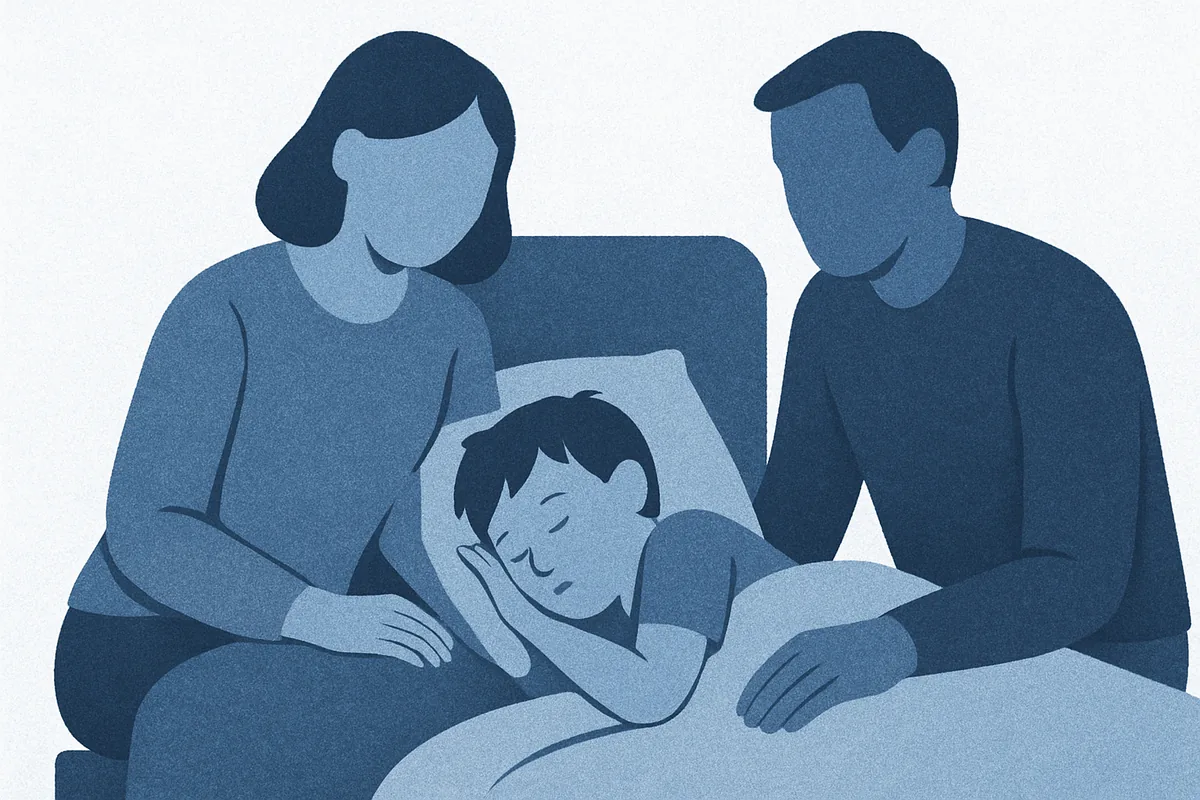
- Approximately 60% of autistic children experience sleep problems, driven by three distinct mechanisms: melatonin dysregulation, sensory hypersensitivity, and co-occurring anxiety disorders - not simply a failure of routine or parenting.
- The Dubai Health Authority Autism Clinical Practice Guideline (2021) recommends a sleep diary and behavioural strategies as first-line treatment; melatonin is considered only when psychosocial interventions prove insufficient.
- A 2024 RCT of the Sleeping Sound brief behavioural sleep intervention showed significant improvements in sleep-onset delay, bedtime resistance, sleep duration, and parasomnias, with benefits sustained at 12-month follow-up.
- In autistic children, 58.5% have at least one co-occurring anxiety disorder, and separation anxiety disorder shows the strongest individual link to worse sleep outcomes - meaning that addressing anxiety directly is often as important as adjusting the bedroom environment.
- Poor child sleep in autism significantly impairs caregiver sleep quality and family quality of life, making the child's sleep difficulty a whole-family clinical concern that warrants specialist support rather than prolonged self-management.
Approximately 60% of autistic children experience sleep problems, with study-level estimates ranging from 26% to 92% depending on measurement method, according to a 2024 systematic review published in PubMed Central. That figure alone is striking. But the more clinically important point is why it happens: autism sleep difficulties are not the same as the garden-variety bedtime resistance most children go through. The roots lie in measurably different melatonin biology, a sensory nervous system that stays activated long after lights-out, and anxiety patterns that neurotypical children rarely carry to bed in the same way.
This article is written specifically for parents of autistic children in Dubai. It explains the biological, sensory, and anxiety-driven mechanisms behind autism sleep problems in children, then works through a clear hierarchy of evidence-based strategies: behavioural approaches first, sensory environment second, melatonin when indicated, and specialist referral when needed. If you are already familiar with general sleep hygiene guidance, this is a different conversation. The interventions that work for neurotypical children often need significant modification to be effective for autistic children, and some standard advice can actively make things worse.
Why are sleep problems so common in autistic children?
Parents sometimes blame themselves when an autistic child cannot sleep. The data makes clear that is not a productive frame. A 2021 study published in PubMed Central found that 53% of parents of autistic children aged 2 to 5 reported at least one sleep problem occurring frequently or always, compared with 32% of parents of children without ASD. The gap is real, it is large, and it reflects biological differences rather than inconsistent parenting.
In clinical samples specifically, figures are higher still. A 2024 review in Psychiatry Investigation found sleep disorder prevalence of 67% to 89% in autistic children across clinical populations, with insomnia rates ranging from 41% to 86%. The width of those ranges reflects genuine variation in how sleep problems are measured, not uncertainty about whether the problem is real.
Three mechanisms drive this elevated prevalence, and they interact with one another. Autistic children can experience all three simultaneously, which is part of why the problem is often so resistant to simple fixes.
- Melatonin dysregulation: the timing and quantity of melatonin production is measurably different in many autistic children, delaying the biological signal to sleep.
- Sensory processing differences: a nervous system that registers textures, sounds, light, and temperature at higher intensity stays in a state of physiological alertness that is incompatible with sleep onset.
- Co-occurring anxiety: separation anxiety and generalised worry generate cognitive activation at bedtime that directly delays sleep onset and increases night waking.
Understanding which of these three mechanisms is driving the problem in your child shapes every decision that follows. At CAYA World, Dr. Nour Al Ghriwati begins any sleep consultation with a structured assessment of all three, because treating the wrong driver rarely produces lasting improvement.
What causes autism sleep problems in children: the biology, senses, and anxiety
The melatonin story
Melatonin is the hormone that signals to the brain that darkness has arrived and sleep should begin. In neurotypical children, melatonin secretion follows a reliable circadian rhythm: levels rise in the early evening, peak around midnight, and fall before morning. Research on autistic children consistently shows that this rhythm is disrupted. Some children produce lower total amounts of melatonin; others show a delayed phase shift, meaning the secretion peak arrives significantly later than it should. The result is a child who is genuinely not biologically ready to sleep at the time parents are trying to settle them. Lying in bed unable to sleep is not defiance. It is biology.
This melatonin dysregulation is thought to relate to differences in the serotonin pathway, since serotonin is the precursor to melatonin production. The precise mechanisms are still being studied, but the clinical implication is clear: for some autistic children, behavioural strategies alone cannot overcome the biological timing problem, and a careful conversation about melatonin supplementation becomes relevant.
How sensory processing makes the bedroom a difficult place
The bedroom environment that most sleep hygiene guides describe as ideal: dark, cool, quiet, with soft bedding, is built on neurotypical sensory thresholds. An autistic child with tactile sensitivity may find the texture of standard cotton sheets genuinely uncomfortable. A child with auditory hypersensitivity may register the sound of an air conditioning unit, traffic, or a sibling in the next room at an intensity that prevents relaxation. A child sensitive to light may find a room that appears adequately dark to an adult to be uncomfortably bright.
In Dubai's climate, this problem has additional local texture. Because outdoor activity in the evening is limited for much of the year by heat, autistic children often have fewer opportunities for the physical exercise that would otherwise support sleep pressure. Sensory demands also accumulate during school hours: the sensory load of international school environments, including crowded canteens, open-plan classrooms, and the unpredictability of social interaction, can leave an autistic child in a state of physiological dysregulation that persists well into the evening. That dysregulation makes the transition to sleep significantly harder.
Anxiety as a distinct sleep driver
Anxiety and autism frequently co-occur. A 2023 study published in Frontiers in Psychiatry found that 58.5% of autistic children had at least one co-occurring anxiety disorder, and that separation anxiety disorder was the co-occurring condition most strongly linked to worse sleep outcomes. Separation anxiety at bedtime has a straightforward mechanism: the child fears being apart from the caregiver, and the bedroom represents that separation most acutely.
Generalised anxiety produces a different pattern: rumination, replaying events from the school day, worry about tomorrow's schedule. For autistic children, who often have strong needs for predictability, any uncertainty in the following day's routine can generate enough cognitive activation to delay sleep by an hour or more. This is distinct from melatonin dysregulation and requires different strategies, specifically anxiety-focused cognitive behavioural approaches rather than purely environmental adjustments.
The table below summarises the three main drivers of autism sleep difficulties and their distinguishing features:
| Driver | Core mechanism | Clinical sign to look for | Primary intervention |
|---|---|---|---|
| Melatonin dysregulation | Delayed or reduced melatonin secretion phase | Child is fully alert at 10pm regardless of environment or routine | Behavioural first; melatonin supplementation if insufficient |
| Sensory hypersensitivity | Nervous system registers environmental stimuli at higher intensity | Child is distressed by specific textures, sounds, or light in the bedroom | Sensory environment audit and targeted modifications |
| Co-occurring anxiety | Cognitive activation, worry, and separation distress at bedtime | Child asks repetitive questions, seeks reassurance, or clings to caregiver at bedtime | CBT-based anxiety management and graduated separation |
How autism sleep problems affect the whole family
It is worth naming this directly, because parents often focus entirely on the child and minimise their own experience. A 2022-2023 study published in PubMed Central found that caregiver sleep quality was significantly impaired in families of autistic children with sleep difficulties, and that poor child sleep quality mediated higher caregiver strain and worse overall family quality of life. This is not a peripheral finding. When a child is waking repeatedly or settling two hours after bedtime every night, the adults in the household are also sleep-deprived, and sleep deprivation affects every aspect of parenting capacity.
The clinical implication is that autism sleep problems are a whole-family concern, not solely a child-management task. At CAYA World, when families come to us about an autistic child's sleep, we always ask how the parents are sleeping too. A caregiver who has been functioning on broken sleep for months is less able to implement the consistent behavioural strategies that actually produce change, which creates a cycle that is hard to break without professional support.
In Dubai's expat community, this is compounded by distance from extended family. Many families here do not have grandparents or familiar support networks nearby who could offer occasional overnight help or relief. The isolation is real, and it makes early professional involvement more warranted, not less.
If your autistic child's sleep difficulties have been running for more than a few weeks and you feel you have tried the basics without success, our autism therapy team at CAYA World can help you build a structured plan that addresses the specific drivers in your child's case. An initial conversation takes about 30 minutes and can happen over WhatsApp or phone before any formal commitment.
Behavioural strategies that actually help autistic children sleep
The Dubai Health Authority's Clinical Practice Guideline for Autism Spectrum Disorder is explicit: sleep hygiene and behavioural strategies are the first-line intervention for sleep problems in autistic children, with a baseline sleep diary recommended before any treatment begins. This is consistent with international evidence. Behavioural approaches should be tried systematically before melatonin is considered, because they address the conditioned patterns that perpetuate sleep difficulties rather than simply overriding them chemically.
The strongest evidence base currently belongs to brief behavioural sleep interventions. A 2024 RCT of the Sleeping Sound intervention, a structured brief behavioural programme, showed significant improvements in bedtime resistance, sleep-onset delay, sleep duration, parasomnias, and overall sleep problems in autistic children. Critically, benefits were sustained at 12-month follow-up with small-to-moderate effect sizes. This is not a placebo response. It is evidence that a structured behavioural approach, applied consistently, produces durable change.
Starting with a sleep diary
Before implementing any strategy, track the baseline for at least one week. Record what time your child begins the bedtime routine, what time they get into bed, what time they actually fall asleep (as best as you can observe), how many times they wake, and what time they rise. This data does two things: it shows you the true pattern (which is often different from the perceived pattern), and it gives a clinician the information needed to tailor an intervention rather than guess.
Building a predictable, visualised bedtime routine
For autistic children, predictability is not a preference: it is a neurological need. A consistent bedtime routine reduces the anticipatory anxiety that spikes at the transition from the structured day to the unstructured night. The routine should be the same sequence, at the same time, every night. Visual schedules, either printed cards or a digital sequence, allow the child to know where they are in the routine without relying on verbal cues from a parent who may themselves be exhausted and inconsistent.
The routine itself should be calming. Activities that increase physiological arousal: screens, rough physical play, emotionally demanding conversations, should end at least 60 minutes before the routine begins. This is not standard advice rephrased. For autistic children, the nervous system often requires longer than neurotypical children to downregulate from stimulating input, and a 30-minute screen-free period before bed is frequently insufficient.
Graduated approaches to staying in the bedroom
Trained psychologists use graduated exposure approaches drawn from CBT to help children with separation anxiety at bedtime. The principle is to reduce caregiver presence incrementally over days or weeks, rather than abruptly removing it, so the child's nervous system adapts at a pace it can tolerate. The Sleeping Sound protocol mentioned above includes a version of this approach. At CAYA World, our clinical team tailors the pace of graduation to the individual child, and we coach parents through each step so they can implement it consistently at home.
Wondering if It's Time to Talk to Someone?
Our specialist team at CAYA World offers comprehensive assessment and evidence-based treatment, conducted from our clinic in Palm Jumeirah, Dubai.
Sensory environment adjustments for better sleep
Generic sleep hygiene advice tells you to make the bedroom dark, cool, and quiet. For autistic children, the question is more granular: dark how? Cool to what temperature? Quiet relative to what baseline? The answers vary between children, and some autistic children actually sleep better with low-level sensory input rather than complete sensory deprivation.
Lighting
Some autistic children are hypersensitive to light and need a room that is darker than a parent would find comfortable. Blackout curtains are often necessary in Dubai, where ambient light from buildings and streets is significant, and where the sun rises early and strongly. Other children are actually distressed by complete darkness and sleep better with a dim nightlight at a specific warm colour temperature. Identify your child's pattern through observation, then modify accordingly.
Sound
For children who are hypersensitive to sound, white noise or low-frequency nature sounds can mask unpredictable environmental noise, including air conditioning cycling, neighbours, or traffic. The key is consistency: the sound should be present from the start of the routine and run through the night, so waking is not paired with a sudden change in the auditory environment. For children who find any background noise intrusive, a quieter room is the priority, which in Dubai sometimes means reviewing whether air conditioning units in older buildings are generating excessive noise.
Tactile comfort
Bedding texture deserves specific attention. Seams in sheets, the weight of blankets, and the texture of pyjama fabric are all potential sensory triggers. Some autistic children sleep significantly better under a weighted blanket, which provides deep pressure input that many find regulating. Others find weighted blankets too warm in the Gulf climate, in which case a lighter weighted lap pad or tight-fitting pyjamas can provide similar proprioceptive input without overheating.
If you are unsure whether sensory factors are driving your child's sleep difficulties, a full sensory profile assessment can map your child's specific sensory thresholds. Our autism assessment team at CAYA World can help identify these patterns as part of a broader evaluation, and our sleep support service can translate the findings into concrete bedroom modifications tailored to your child.
When is melatonin appropriate, and what the evidence says
Melatonin is widely used in Dubai for autistic children's sleep difficulties, and it is available over the counter in many international pharmacies. Its accessibility can give the impression that it is a straightforward first-line option. The evidence and DHA guidelines say otherwise: it is a second-line consideration, after behavioural and environmental strategies have been implemented and found insufficient.
A 2023 review published in PubMed Central confirmed that melatonin supplementation in autistic children shortens sleep latency, reduces night wakings, and increases total sleep time, with minimal reported short-term side effects. That is a meaningful finding. The review also noted, clearly, that evidence confidence is low-to-moderate and longer-term effects require further study. The DHA Autism Clinical Practice Guideline echoes this: melatonin is a consideration when psychosocial interventions prove insufficient, but the guideline explicitly cautions that long-term benefits and adverse effects require further investigation.
What the evidence supports specifically
The most consistent finding across studies is that melatonin reduces sleep-onset latency: the time it takes to fall asleep after lights-out. For children whose core problem is a biologically delayed sleep phase, this is directly relevant. It is less consistently effective for night waking that is driven by anxiety or sensory arousal, because it does not address those underlying mechanisms.
Dosing in children is typically low. Most paediatric protocols start at 0.5 to 1 mg given 30 to 60 minutes before the target bedtime, with dose adjustments based on response. The timing relative to bedtime matters as much as the dose: melatonin works by shifting the biological clock, so it needs to be given at a consistent time relative to the intended sleep window. These are clinical decisions that should be made in consultation with a paediatrician or developmental paediatrician, not based on dosing information from a pharmacy label.
What melatonin does not replace
Melatonin does not resolve conditioned bedtime resistance, anxiety-driven night waking, or sensory discomfort. Families who start melatonin without addressing these factors often find that sleep improves initially and then plateaus, because the biological timing has shifted but the behavioural and sensory drivers remain. At CAYA World, we work alongside the child's paediatrician when melatonin is under consideration, and we continue behavioural work concurrently rather than pausing it while waiting to see whether medication is sufficient.
When to see a specialist about your autistic child's sleep in Dubai
Most parents wait considerably longer than is clinically useful before seeking specialist help. Given that sleep deprivation affects mood regulation, behaviour, learning, and adaptive functioning, early involvement typically produces better outcomes for the child and significant relief for the family.
Signs that a specialist conversation is warranted now
- Your child is taking more than 60 minutes to fall asleep on most nights despite a consistent routine.
- Your child wakes more than twice most nights and cannot return to sleep without significant parental involvement.
- Sleep difficulties have been present for more than four weeks and show no improvement with consistent effort.
- Daytime behaviour, including emotional regulation, attention, and learning, is noticeably affected.
- You or your partner are experiencing significant sleep deprivation as a result of your child's difficulties.
- You have co-occurring concerns about your child's anxiety level, school refusal, or sensory difficulties that you believe are connected.
Who to see first: psychologist or paediatrician?
This is one of the most common questions we hear. The short answer: both conversations can happen at roughly the same time, and neither cancels the other out. A paediatrician should rule out medical causes of sleep disruption, including obstructive sleep apnoea, restless legs syndrome, and gastrointestinal discomfort, all of which occur at elevated rates in autistic children. A psychologist focuses on the behavioural, anxiety, and sensory drivers and can implement structured intervention programmes.
If the primary concern is behavioural or anxiety-driven, a psychologist with specialist autism experience is the most direct route. If there is any suspicion of a medical cause, start with the paediatrician simultaneously. For families in Dubai, the international schools' SEN coordinators are often a useful first contact: they can share observations of the child's daytime functioning and sometimes have referral pathways they have used for other families.
Frequently Asked Questions About Autism Sleep Problems in Children in Dubai
The most common biological cause is melatonin dysregulation: many autistic children produce melatonin later in the evening than neurotypical children, meaning their brain's sleep signal genuinely arrives later. Sensory hypersensitivity keeps the nervous system in an alert state that is incompatible with sleep onset, and co-occurring anxiety, particularly separation anxiety, generates cognitive activation at bedtime. Often more than one of these factors is present simultaneously. A structured sleep diary for one to two weeks, followed by a clinical consultation, is the most reliable way to identify which mechanism is dominant in your child.
A 2023 systematic review found melatonin supplementation in autistic children shortens sleep latency and increases total sleep time, with minimal reported short-term side effects. However, evidence confidence is low-to-moderate, and the long-term effects in children require further study. The Dubai Health Authority guidelines position melatonin as a second-line option after behavioural strategies. Dosing should be determined by a paediatrician or developmental paediatrician: most paediatric protocols begin at 0.5 to 1 mg given 30 to 60 minutes before the target bedtime, with the timing of administration being as important as the dose itself.
Start with an audit of the three main sensory channels: light, sound, and tactile input. In Dubai, blackout curtains are often essential given ambient city light and early sunrise. For sound, consistent white noise or low-frequency nature sounds can mask unpredictable environmental noise; for highly sound-sensitive children, a quieter room matters more than any masking sound. For tactile comfort, assess the texture and weight of bedding: some autistic children regulate better under a weighted blanket, while others find it too warm. Identify your child's specific sensory profile before making changes, rather than applying all modifications at once.
Consider a specialist consultation if sleep-onset takes more than 60 minutes on most nights, if your child wakes more than twice nightly without returning to sleep independently, if the pattern has continued for more than four weeks without improvement, or if daytime behaviour, learning, or emotional regulation are noticeably affected. You do not need to exhaust every home strategy first. If your own sleep is significantly impaired, that is itself a clinical indicator: caregiver sleep deprivation makes consistent behavioural implementation significantly harder, which can prevent any approach from working.
For some children, yes: sleep difficulties reduce as they gain greater emotional regulation skills and predictability in their environment. For others, the difficulties persist into adolescence and adulthood without specific intervention. Age-related improvement is more likely when the underlying drivers have been identified and addressed, rather than simply managed night by night. There is no evidence that sleep problems in autistic children reliably resolve on their own without some form of structured support. Early behavioural intervention, with or without melatonin, produces the best documented outcomes based on current evidence.
Sources and Further Reading
- Prevalence of sleep problems in autism spectrum disorder: systematic review and meta-analysisPubMed Central (2024)
- Sleep problems in young autistic children: parent-reported prevalence and associationsPubMed Central (2021)
- Sleeping Sound: RCT of a brief behavioural sleep intervention for autistic childrenPubMed Central (2022/2024)
- Melatonin supplementation in autistic children: systematic review of efficacy and safetyPubMed Central (2023)
- Sleep disorders in autism spectrum disorder: prevalence and clinical considerationsPsychiatry Investigation (2024)
- Anxiety disorders and sleep outcomes in autistic children: role of separation anxietyFrontiers in Psychiatry (2023)
- Caregiver sleep quality and family wellbeing in autism: mediating role of child sleepPubMed Central (2022/2023)
- Dubai Health Authority Clinical Practice Guideline for Autism Spectrum Disorder. Dubai Health Authority (2021)